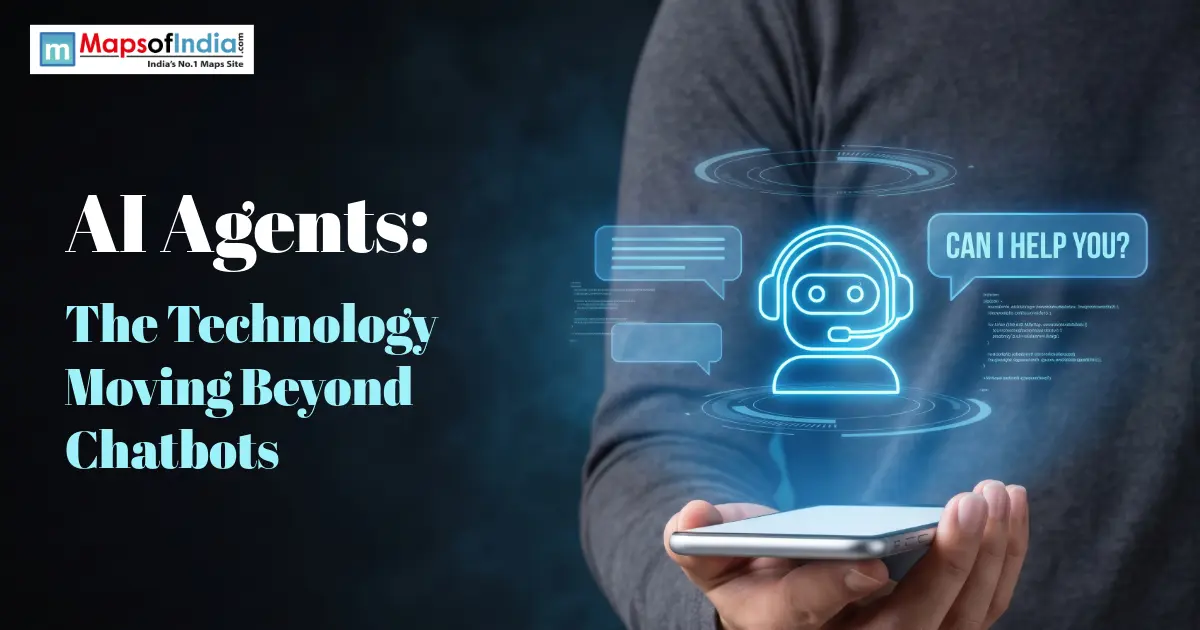
Type a query into a chatbot, and it responds. That's it. Conversation over. Next, you give the same objective to an AI agent, and another thing occurs. It divides the goal into steps. It picks up tools. It goes and does, and then only if it needs to. That is a change that's happening quietly in the software development world in 2026. So, let's dissect what AI agents are, how they work behind the scenes, and where this new space is going next.
What Are AI Agents?
Here's the simplest way to think about it. An AI agent is software that can look at its surroundings, plan out a sequence of steps, and carry out real tasks with very little hand-holding, often reaching for outside tools along the way. A chatbot responds. An agent acts. That one distinction explains almost everything else in this guide.
Key Components — Reasoning, Memory, Tool Use, Planning
An AI agent has four things that make it tick. Reasoning is a way to divide up a large problem into manageable steps. Memory helps the agent remember what it has already tried and doesn't repeat what it has already done or where it went. With tool use, it can step outside itself, looking for information on the web, running code or retrieving data from somewhere else. Planning connects the other three in a way that they embrace what has come before them and lead to the next phase.
AI Agents vs. Chatbots: What's the Real Difference?
Reactive vs. Autonomous Behaviour
A chatbot waits for you. You ask, it answers, and the exchange ends there. An autonomous AI agent doesn't wait around the same way. Give it a goal, and it keeps working, adjusting its own plan as it goes, until the job is genuinely finished.
Single-Turn Responses vs. Multi-Step Task Execution
Chatbots are built for one exchange at a time. Agents are built for entire workflows. Think about booking a trip, fixing a bug, or pulling together a research report. None of that happens in one step. An agent can chain dozens of small steps together without you nudging it along each time.
Static Knowledge vs. Tool and Data Access
A basic chatbot only knows what's already baked into it. An agent can reach further. It pulls live data, calls APIs, and uses real tools to get current, accurate answers, instead of just recycling whatever it already had stored away.
Feature | Chatbots | AI Agents |
| Behavior | Reactive | Autonomous |
| Task handling | Single-turn responses | Multi-step task execution |
| Knowledge | Static, built-in | Dynamic, tool and data access |
| Memory | Limited or none | Tracks progress across steps |
| Output | Answers a question | Completes a task |
How Do AI Agents Work?
The Perceive-Plan-Act Loop
Most agents run on a loop, and it's a genuinely simple one once you see it. First, perceive: take stock of the current situation. Second, plan: decide the smartest next move. Third, act: actually do it, whether that's calling a tool, writing some code, or asking a quick follow-up question. Then the loop just starts again, using whatever just happened to shape the next step.
Role of Large Language Models in Agent Reasoning
Large language models are usually the brains behind this whole loop. They read the goal, sketch out a plan, and decide which tools to reach for and in what order. In short, they're doing the actual thinking that drives the agent forward.
Tool Calling and API Integration
This is how agents step outside their own walls. Searching the web, querying a company database, or triggering another piece of software- all of it happens through tool calls. A standard called the Model Context Protocol, or MCP, has caught on widely here, with more than 200 known server implementations by mid-2026 alone.
Memory and Context Retention
A good agent remembers. It tracks what worked, what didn't, and what still needs doing, across the whole task, not just the last message. That's exactly what lets it handle something genuinely long without losing the thread halfway through.
Types of AI Agents
Single-Task Agents
These stick to one job and do it well. Summarising documents, answering support tickets, that sort of thing. No attempt to be a jack-of-all-trades here.
Multi-Agent Systems
Some jobs are just too big for one agent alone. So they get split across several, each handling a piece and talking to the others as they go. This approach has genuinely taken off through 2026, with frameworks like CrewAI and Microsoft's own Agent Framework built specifically around it.
Autonomous vs. Human-in-the-Loop Agents
Fully autonomous agents just run with it, start to finish, no check-ins. Human-in-the-loop agents pause at the important moments, waiting for a nod before doing anything risky or hard to undo. Most serious business systems in 2026 still lean toward that second, safer model, at least for anything with real stakes attached.
Real-World Applications of AI Agents
AI Agents in Customer Support
Support agents now handle full tickets, start to finish, not just canned FAQ answers. They pull account details, issue refunds, and know when to hand a genuinely tricky case over to a human.
AI Agents in Software Development
Coding agents can read through a codebase, write and test new code, and fix bugs with barely any hand-holding. This is exactly where agentic AI has landed hardest. Coding-focused agent platforms have become genuinely everyday tools for plenty of development teams this year.
AI Agents in Research and Data Analysis
Research agents dig through multiple sources, pull out what's relevant, and pull it all into one structured report- work that used to eat up an analyst's entire afternoon.
AI Agents in Business Process Automation
Beyond single tasks, agents are increasingly running whole workflows now, processing invoices start to finish or steering multi-step approvals across different departments, without a human touching every single stage.
Benefits of AI Agents Over Traditional Chatbots
Agents finish real work, not just answer questions, so there's far less back-and-forth needed from you. They scale well too, since one agent can often juggle a genuinely high volume of tasks at once. And they cut down on constant human babysitting for repetitive work, freeing people up for the calls that actually need a human brain behind them.
Challenges and Limitations of AI Agents
Reliability and Error Handling
Agents still trip up in unpredictable ways, especially when instructions are vague, or something genuinely unusual comes up. Plenty of 2026 industry chatter now frames reliability, not raw capability, as the real battleground between platforms.
Security and Data Privacy Risks
Handing an agent access to tools, data, and outside systems also widens what can go wrong if something's set up carelessly or gets exploited. Careful permissions and close monitoring matter a lot here, especially once an agent can actually send emails or make purchases on its own.
Cost and Infrastructure Considerations
Running agents at real scale costs real money, both in raw compute and in the engineering hours it takes to keep everything reliable. Pricing swings wildly by platform too, anywhere from flat monthly subscriptions to pure pay-as-you-go API costs.
The Future of AI Agents
Where the Technology Is Headed
Every major AI lab ships its own agent framework now, and things are standardising fast. Protocols like MCP and A2A are making it easier for agents from completely different platforms to actually talk to each other, instead of staying locked inside one vendor's walled garden.
What This Means for Businesses and Users
The real question for most businesses in 2026 isn't whether to use agents anymore. It's which platform actually fits their workflow, and how much control they're comfortable handing over. The future of AI agents looks a lot less experimental than it did even a year ago, and the companies that moved past pilot testing are already pulling ahead of everyone still stuck in trial mode.
Conclusion
AI agents are a genuine shift, not just a new label slapped on the same old chatbot. They plan, they act, and they get real, multi-step work done with far less babysitting than earlier AI tools ever needed. The tech is still maturing, and reliability remains a real, unsolved problem. But the direction is obvious. Agents are moving out of pilot projects and straight into everyday use, and they're doing it fast.
FAQs
What is an AI agent in simple terms?
It's software that understands a goal, plans out the steps to get there, and carries out those steps mostly on its own, often reaching for outside tools and data along the way.
Is ChatGPT an AI agent or a chatbot?
Depends on the mode you're using. Regular ChatGPT conversation acts mostly like a chatbot, just answering what you ask. OpenAI's dedicated agent tools, built on those same underlying models, are made specifically for autonomous, multi-step work.
Can AI agents work without human supervision?
Some genuinely can, especially for lower-stakes, well-defined tasks. Plenty of production systems still keep a human in the loop for bigger decisions, though, pausing for a green light before doing anything irreversible.
What skills are needed to build AI agents?
You'll want solid programming skills, a real grasp of how large language models reason and call tools, and hands-on familiarity with at least one agent framework, whether that's LangGraph, CrewAI, or one of the major labs' own agent SDKs.
Which companies are leading in AI agent technology?
Anthropic, OpenAI, Google, and Microsoft all ship major agent frameworks and SDKs as of 2026. Fast-growing open-source projects like LangGraph and CrewAI are right there too, alongside dedicated platforms built for specific jobs like coding or customer support.
What is the difference between a single-task agent and a multi-agent system?
A single-task agent sticks to one job and does it well. A multi-agent system splits a bigger job across several agents that coordinate with each other, usually reserved for work too complex for any single agent to handle alone.
How do AI agents access external tools and data?
Mostly through standardised protocols. The Model Context Protocol, or MCP, has become one of the most widely used standards for connecting agents to outside data and services.
Are AI agents replacing human jobs?
Mostly, they're automating specific tasks and workflows, not whole jobs outright, at least in how they're being used right now. Human oversight is still the norm for anything high-stakes, and a lot of roles are shifting toward directing and supervising agents rather than being replaced by them entirely.