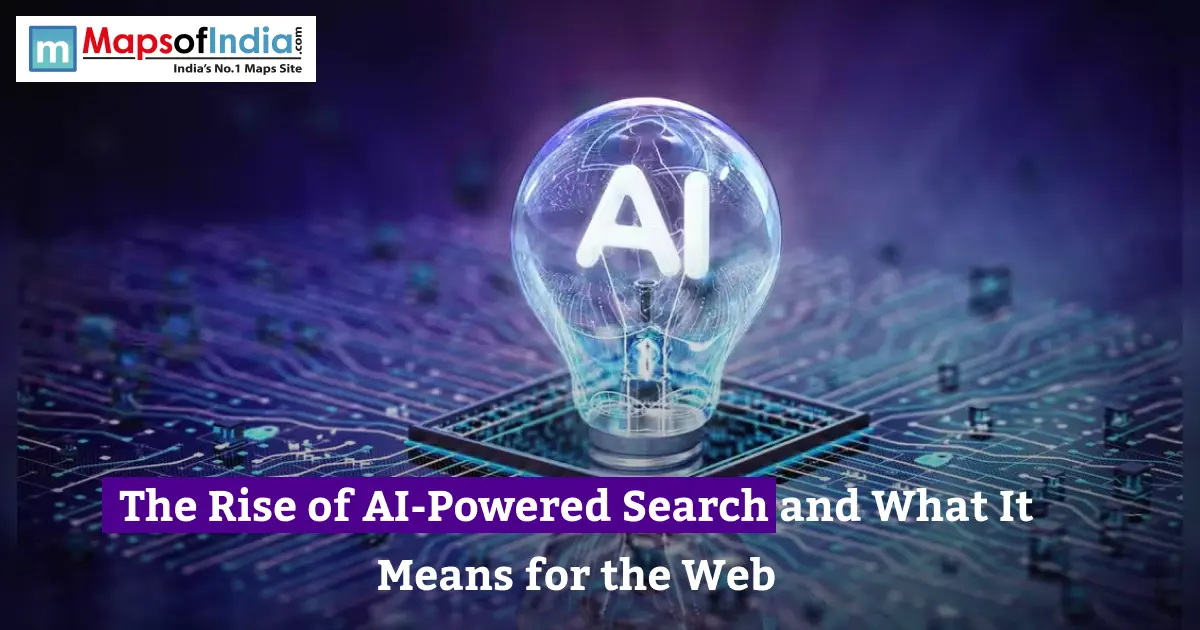
People no longer depend on ten blue links to find information. AI-powered search now provides answers, compares products, summarizes difficult topics, and follows up in a conversation. With Google AI Mode, AI Overviews, ChatGPT Search, and Perplexity changing how people search, websites are adjusting to a new reality: being seen depends on being mentioned—not just on being at the top of the list. This guide explains how AI-powered search works, who the leading companies are, and what publishers and businesses need to do.
What Is AI-Powered Search?
AI-powered search is a way to search that uses search engines along with large language models to understand questions, find relevant information, and make answers that sound like real conversations with links to sources. Unlike old-style search that matches words, it looks at what people want, the situation, and follow-up questions.
How AI search differs from traditional keyword search
Traditional search mainly finds matches between words and pages that are stored. AI-powered search understands speech, splits hard questions into smaller bits, and gives answers that put together information and link to sources.
Key technologies behind it
* Large Language Models (LLMs): Make responses that sound like people.
* Retrieval-Augmented Generation (RAG): Gets up-to-date web info before answering.
* Semantic understanding: Knows what words mean by just looking for exact matches.
Traditional Search vs. AI-Powered Search
Feature | Traditional Search | AI-Powered Search |
| Main Output | List of web links | Direct, conversational answers |
| Query Style | Keyword-based searches | Natural language queries and follow-up questions |
| Understanding | Matches keywords and relevant terms | Interprets intent and context |
| Source Retrieval | Users open multiple pages to find information | AI retrieves, processes, and summarizes information from sources |
| Citations | Primarily displays links to web pages | Often includes cited sources, depending on the platform |
| Follow-up Questions | Usually requires a new search | Continues the conversation using previous context |
| Speed | Depends on the number of sources and browsing time | Often faster for straightforward informational queries |
| Best For | In-depth research, source verification, and exploring multiple websites | Quick explanations, summaries, comparisons, and conversational queries |
How Does AI Search Work?
Most AI search systems work in three parts.
Step 1: Understanding the query
The AI finds the purpose, background and hidden meaning, not just looking for words.
Step 2: Retrieving relevant sources
Search systems collect info from many reliable websites. Google's AI Mode uses a way to search related topics at the same time.
Step 3: Generating and citing an answer
The model puts the found information into a simple answer and usually includes links so people can check or learn more.
How AI Search Works
1. Understand intent and context
2. Retrieve multiple web sources
3. Generate answer with citations
The Major Players in AI Search
Companies are now trying to become the main AI search experience.
Google AI Overviews and AI Mode
Google AI Mode uses Gemini models with Google's search systems to answer questions, help with follow-up talks, and search through text, images, and files.
ChatGPT Search
ChatGPT Search mixes talking AI with web search, letting users get summarized answers with links to support them.
Perplexity
Perplexity focuses on answers that have sources, and its Pro Search feature does research for hard questions.
Microsoft Copilot
Microsoft Copilot brings AI into Bing and Microsoft's products, mixing web search with tools for work.
AI Search Platform Comparison
Platform | How It Works | Cites Sources? | Best For |
| Google AI Overviews | Summarizes relevant web results directly in Google Search | Yes, with links to supporting web pages | Quick answers within Google Search |
| Google AI Mode | Offers a conversational search experience powered by Google's AI | Yes, with links to relevant sources | Multi-step research and complex queries |
| ChatGPT Search | Searches the web and synthesizes information into conversational responses | Yes, with links to web sources when available | Explanations, research assistance, and follow-up questions |
| Perplexity | Generates answers using retrieved web sources and provides citations | Yes, with source links | Fact-checking, source discovery, and in-depth research |
| Microsoft Copilot (Bing) | Combines web search with AI-generated conversational answers | Yes, with links to supporting sources | Web research, summaries, and productivity tasks |
Why AI Search Is Growing So Fast
Several trends explain why it is becoming popular quickly.
Changing user behavior
People ask longer, natural questions instead of typing short words.
Time savings and convenience
By opening many tabs, users often get answers right away.
Better integration
AI search now works with voice, pictures, documents, and phone search.
Recent statistics
* AI Overviews have more than 1.5 billion users each month.
* Google tells us AI Mode has more than 1 billion users around the world.
What AI-Powered Search Means for the Web
This is where the big changes are happening.
The rise of zero-click searches
More people get answers without clicking a link, which makes traffic go down for questions that give direct answers.
Impact on website traffic and publishers
Publishers now compete to be the source that is mentioned inside AI answers, not just the first on the list.
Advertising changes and monetization
Search ads are changing as AI answers become part of the search process.
Original expertise matters
First-hand experience, real knowledge, and trustworthy content become more important when AI systems choose which sources to mention.
Trust, accuracy, and misinformation risks
AI can still be wrong, so being clear about where information comes from is still important. Google also says that AI Mode might give answers sometimes and tells people to check them.
Pros and Cons of AI-Powered Search
Pros | Cons |
| Delivers answers faster than traditional search for many queries | Can produce inaccurate, incomplete, or outdated information |
| Understands natural language and follow-up questions | Zero-click searches may reduce website traffic |
| Summarizes information from multiple sources into one response | Source quality and citation accuracy vary across platforms |
| Saves time during research and information gathering | May oversimplify complex topics or omit important details |
| Makes information easier to understand for beginners | Publishers may lose advertising revenue if fewer users click through to their websites |
Benefits for users
* Faster research
* comparisons
* Better explanations for hard topics
Benefits for creators
* More visibility because of being mentioned
* New chances for strong and trustworthy content
Challenges
* Fewer clicks from search
* Worry about being correct
* More competition to be mentioned in AI answers
How to Optimize Content for AI Search
Content optimization now goes beyond SEO.
AI Search Optimization Checklist
- Place answers at the top of each part.
- Use questions as the headlines.
- Make E-E-A-T stronger with writer details and experience.
- Add things like an article and FAQ structure.
- Build knowledge on a topic by writing about things.
- Get mentions from trusted sites.
- Keep the info updated.
- Make the website load fast. Have clean code.
Google says AI Mode continues linking users with web content, making clear and trusted information more valuable.
The Future of Search: What Comes Next
AI search is growing past text.
Personalized and agent-based search
Google has created AI helpers that can do complicated things inside Search.
Multimodal Search
Voice, image, file, and video search are becoming common features in AI search tools.
What this means for SEO
SEO is not disappearing. Success now depends on making content that AI systems trust to use.
Conclusion
AI-powered search is changing how people find information online. By just using word rankings, new search gives rewards to trustworthy content, direct answers, and real knowledge. As talking search becomes more common, companies that focus on being accurate, having organized content, and being an expert will be better ready to get seen in both search results and AI answers.
FAQs
What is AI-powered search?
AI-powered search uses regular search tools and language models to make answers that sound like real people while linking to sites on the web.
Will AI search replace Google?
Google now has AI through AI Overviews and AI Mode, so AI is part of search, not a replacement.
How does AI search affect website traffic?
Zero-click searches can make visits go down for some questions that have answers readily available, but top sites still get more mentions in AI answers.
Is SEO still important?
Yes. SEO now works with AEO and GEO, focusing on answers, knowledge, and organized content.
How can a website get mentioned in AI answers?
Making sure the content is correct and well-organized, has E-E-A-T, clear details, and direct answers helps get mentioned.
What is the difference between SEO, GEO, and AEO?
SEO is about improving search rankings on search engines. SEO is focused on optimizing content so that AI systems can use it to generate answers. GEO is about increasing content visibility on AI platforms. Each one targets a way users find information.