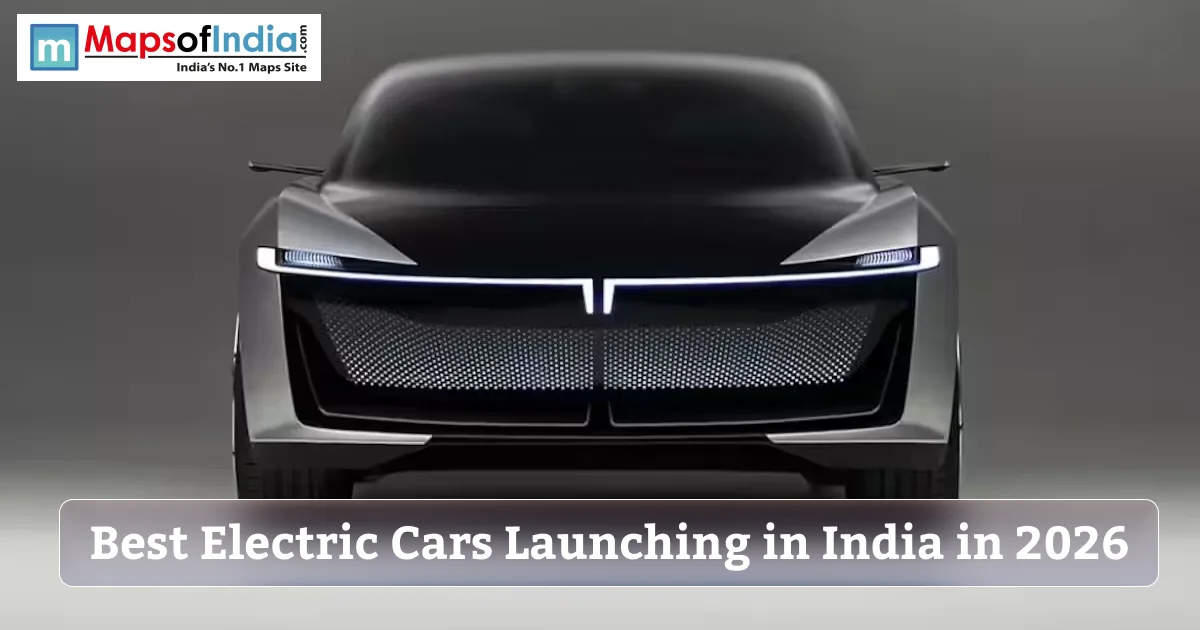
The standout launches this year include the Tata Sierra EV, Maruti e-Vitara, Mahindra BE 6, and Hyundai Creta Electric, spanning roughly ₹16 lakh to ₹28 lakh ex-showroom. 2026 has genuinely turned into India's biggest EV launch cycle yet, with nearly every major carmaker now fielding a serious electric SUV rather than a token compliance model.
All New EVs at a Glance
Car Model | Ex-Showroom Price | Range (Claimed) | Battery | Segment | Launch Status |
| Maruti e-Vitara | ₹15.99–20.01 lakh | 440–543 km | 49/61 kWh | Mid-size SUV | Launched, Feb 2026 |
| Hyundai Creta Electric | ₹18.02–24.55 lakh | Up to ~473 km | 42/51.4 kWh | Mid-size SUV | Launched |
| Tata Sierra EV | ₹18.79–25.99 lakh | 565–665 km | 63/75 kWh | Mid-size SUV | Launched, June 2026 |
| Mahindra BE 6 | ₹18.90–28.49 lakh | 557–683 km | 59/79 kWh | Coupe SUV | Launched |
| Toyota Urban Cruiser eBella | Up to ₹23.60 lakh | TBC | TBC | Mid-size SUV | Launched |
Best Electric Cars Launching in India in 2026
A quick, honest note before diving in: this list focuses on models with confirmed, verified pricing rather than every rumoured launch. A few others, like the Kia Syros EV and VinFast's India range, remain genuinely anticipated but did not have solid enough pricing confirmed at the time of writing to detail responsibly here.
Maruti e-Vitara — ₹15.99–20.01 Lakh
Maruti's first-ever EV launched in February 2026, priced from ₹15.99 lakh and running up to ₹20.01 lakh for the top Alpha trim. It comes with 49kWh and 61kWh battery options, offering a claimed range between 440 and 543 km depending on variant, with a 10–80% DC fast charge taking around 45 minutes. Built on the Heartect-e platform and co-developed with Toyota, it earned a 5-star Global NCAP safety rating and offers Level 2 ADAS, a genuine first for the brand. It suits buyers who value Maruti's enormous service network over outright driving excitement.
Hyundai Creta Electric — ₹18.02–24.55 Lakh
Hyundai's electric take on its best-selling Creta nameplate starts at ₹18.02 lakh for the base Executive trim and tops out at ₹24.55 lakh. It offers 433 litres of boot space, competitive against most rivals in this segment, and leans on Hyundai's established service and dealership reach across India. It suits buyers who want an EV that still feels thoroughly familiar, since it shares most of its cabin and design language with the wildly popular petrol Creta.
Tata Sierra EV — ₹18.79–25.99 Lakh
Tata revived one of its most nostalgic nameplates as a fully electric SUV, launched on 30 June 2026. Pricing starts at ₹18.79 lakh and climbs to ₹25.99 lakh, with 63kWh and 75kWh battery pack options delivering a claimed range of 565 km and 665 km respectively. The larger battery is also available with a dual-motor, all-wheel-drive setup producing 504Nm of torque, and DC fast charging can add 263 km of range in just 15 minutes. It suits buyers chasing the longest range in this price bracket, paired with genuinely striking retro-inspired styling.
Mahindra BE 6 — ₹18.90–28.49 Lakh
Mahindra's boldest styling statement in years, the BE 6 starts at ₹18.90 lakh and reaches ₹28.49 lakh for the range-topping Batman Edition. Built on Mahindra's dedicated INGLO platform, it offers 59kWh and 79kWh battery packs, with claimed range stretching from 557 km up to a segment-leading 683 km. DC fast charging from 20–80% takes under 20 minutes on a high-power charger. It suits buyers who want the most distinctive design and the longest range on this list, provided they are comfortable paying a bit more at the top end.
Toyota Urban Cruiser eBella — Up to ₹23.60 Lakh
Toyota's first EV built specifically for India shares underpinnings with the Maruti e-Vitara, and its top-spec variant is priced at ₹23.60 lakh. Full variant-wise pricing and range figures were still being confirmed at the time of writing, so treat this one as a promising but not yet fully detailed option. It suits buyers who trust Toyota's reliability reputation and are willing to wait slightly longer for complete specifications to firm up.
Best Upcoming EVs by Budget
Best Electric Cars Under ₹20 Lakh
The Maruti e-Vitara is the clear pick here, starting at ₹15.99 lakh, with the Hyundai Creta Electric's base variant also sneaking in just above ₹18 lakh.
Best Electric Cars Under ₹25 Lakh
The Tata Sierra EV and Toyota Urban Cruiser eBella both fit comfortably in this bracket, offering some of the longest claimed ranges available at this price point.
Best Premium Electric SUVs
The Mahindra BE 6's top-spec Batman Edition, at ₹28.49 lakh, currently sits at the upper end of this mainstream comparison, offering the longest range of the group alongside its standout design.
Best Upcoming EVs by Segment
Best Upcoming Electric SUVs
All five models covered above fall into the mid-size or coupe-SUV segment, currently the single most competitive category in India's EV market by a wide margin.
Best Upcoming Electric Hatchbacks/City Cars
This segment remains comparatively thin in India right now, with most manufacturers prioritizing SUVs, though smaller and more affordable EVs are widely expected to follow as battery costs continue falling.
Best Upcoming Electric Sedans and 7-Seaters
Neither segment has a confirmed, price-verified 2026 launch worth detailing yet, though several manufacturers have hinted at larger, family-oriented EVs further down their roadmaps.
Why 2026 Is a Big Year for EVs in India?
A handful of factors are converging at once. GST on electric vehicles sits at just 5%, compared to 18–40% on comparable petrol and diesel cars under the revised tax slabs, which means that the upfront price gap is meaningfully narrowed. Running costs favour EVs even more heavily day to day, typically working out to roughly ₹1–1.5 per km compared to ₹6–8 per km for petrol. Public charging infrastructure has also expanded quickly, reaching around 29,000 stations nationally by the end of 2025. Put together, these shifts explain why nearly every major carmaker chose this year to finally launch a serious, mainstream electric SUV rather than a low-volume halo model.
How to Choose the Right Upcoming EV for You?
Range vs. Daily Usage
Be honest about your actual daily driving distance rather than chasing the highest claimed figure, since real-world range typically falls short of MIDC or ARAI numbers, especially with air conditioning running or on highway speeds.
Charging Infrastructure in Your City
Check how many public fast chargers actually exist near your home and workplace before assuming home charging alone will cover your needs, particularly if you live in an apartment without dedicated charging access.
Budget vs. Features
Decide early whether ADAS, a bigger battery, or all-wheel drive genuinely matters to you, since stepping up to a variant often adds ₹2–4 lakh quickly across most of these models.
Resale Value and Brand Support
Established brands like Maruti, Hyundai, and Tata currently carry a service-network advantage over newer entrants, which is worth weighing alongside raw specifications.
Which Upcoming EV Should You Buy?
Best Budget Option: Maruti e-Vitara, owing to its low On-Board Price and Unparalleled Service Network of Maruti.
Best SUV choice: Tata Sierra EV, offering impressive range, an offbeat style and a very competitive top price.
Best range pick: The Mahindra BE 6, which boasts a claimed 683 km on its larger battery pack, the longest on this list.
Best for familiarity: Hyundai Creta Electric, suitable for those who are looking for an EV that feels like the petrol car that they are familiar with.
FAQs
Which electric cars are launching in India in 2026?
The Tata Sierra EV, Maruti e-Vitara, Mahindra BE 6, Hyundai Creta Electric, and Toyota Urban Cruiser eBella all count among 2026's biggest confirmed EV launches.
Which will be the lowest-cost EV car in the upcoming years in India in 2026?
Currently, it's Maruti's e-Vitara, which is priced at ₹15.99 lakh ex-showroom.
What is the farthest range of the upcoming EV?
Mahindra BE 6 outshines, with up to 683 km range from its larger 79kWh battery pack.
In 2026, is the rate of GST on electric cars still 5%?
While standard EVs will continue to face the 5% GST, a proposal to increase the rate to EVs that are more expensive, at a limit of around ₹40 lakh, is under discussion by the government, and this could change for the luxury segment only.
Should I wait for a 2026 EV or should I purchase the EV now?
So, if a particular model you are interested in has already been released, such as the ones mentioned in this article, you need not wait, as the big mainstream releases of 2026 are already here by the middle of the year.
What are the differences between the Tata Sierra EV and the Mahindra BE 6?
The BE 6 is a little more radical in its design, has a higher top-end price, but upped the ante in terms of maximum range, while the Sierra EV has a lower starting price and comparable range.
Do these EVs qualify for any government subsidies?
Aside from the 5% reduced GST rate, incentive initiatives such as PM E-DRIVE, which are available for two- and three-wheelers, have been limited largely to these two classes and should be discussed with your dealer in real time, as the amount of subsidy support for 4-wheelers continues to change and is not guaranteed.
Are VinFast and Kia's upcoming EVs worth waiting for?
They might be, but the pricing for the India range for VinFast and the rumoured Kia Syros EV were not communicated sufficiently at the time of writing to be considered against the models listed above, and so it is safer to confirm official pricing before deciding on either of the models.