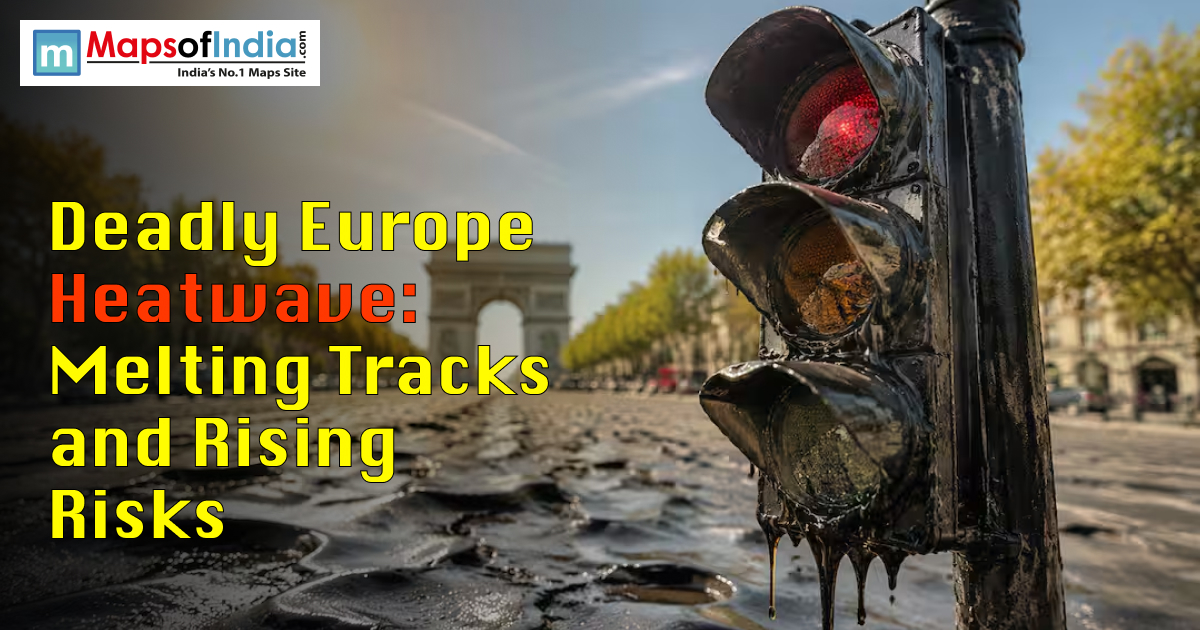
Deadly Europe Heatwave: Melting Tracks and Rising Risks
Abhishree Sharma June 30, 2026
Europe is facing one of its most challenging weather events as an intense heatwave sweeps across several countries, bringing dangerously high temperatures, health emergencies, transport disruptions, and widespread concerns about climate change. Extreme heat has had a significant impact on living conditions throughout regions of Europe, triggering reports of heat-related fatalities, property damage and other notable images documenting the severity of the heat.The phrase “Deaths, melting tram tracks, cooking food under Sun” has entered the lexicon as a metaphor of the cities and communities being pushed to their limits in Europe by the heatwave. From crowded cooling centres to disrupted transport networks, the continent is experiencing the growing impact of extreme temperatures.
Europe Heatwave 2026: Record Temperatures Create Emergency
The heatwave has had an impact on several regions of Europe, with some areas getting temperatures around or above 40°C, and authorities issuing warnings and public safety guidelines in a number of countries, such as France, Germany, Italy, Spain, and others.In Europe, the frequency and intensity of heatwaves have been increasing, and extreme summer temperatures are now commonplace. Hot weather for a few days is not as dangerous as hot weather over a long period of time, as the human body and infrastructure do not have as much time to recuperate.It has been recommended that people stay inside during the hottest time of day, drink plenty of water, avoid unnecessary outdoor activities, and be particular with the elderly, children and vulnerable persons.
Rising Heat-Related Deaths and Health Risks
During extreme heat events, one of the major concerns is human health impacts. Excessive heat can cause heatstroke, dehydration, breathing difficulties and cardiovascular issues.Heat waves usually lead to higher pressure on hospitals in the affected areas due to higher demands for medical services. Elderly persons and persons with medical conditions are particularly vulnerable as they may not be able to regulate their temperature.Other workers who work for long periods outdoors, such as delivery workers, construction workers, and workers in agriculture, can also be affected by more extreme heat conditions.One of the other important factors is night temperatures. High temperatures also mean that the body will not have enough time to cool down and recuperate during the night, which will result in an accumulation of health risks over a few days of hot weather.
What Does “Melting Tram Tracks” Mean?
Melting tram tracks is a good example of how high temperatures impact transportation. The rail or tram tracks do not actually melt, but rather expand because they are so hot.The railway track may bend, warp and even lose alignment during abnormally hot weather. This could cause safety concerns and cause slower operations, disruptions to services or temporary closure of facilities by transport operators.European cities have large railway and tram networks, serving thousands of passengers daily, and these could be affected by heat-induced disruption. During extreme weather, engineers and transport operators need to implement extra measures like track monitoring and adjusting operations.
“Cooking Food Under the Sun”: Viral Signs of Extreme Heat
In the event of an extreme heat wave, social media can be filled with videos of things getting very hot in the direct sun. Some people show reactions of food, chocolate or other objects when exposed to very high temperatures. Some show how food, chocolate or other objects react when put under very high heat.The examples are provided to illustrate the strength of the heat wave, but typically are symbolic rather than a method for food preparation.Such videos are viral because there is a concern and a curiosity about the unusual weather conditions from the public. They also provide examples of how surfaces, like streets, cars or buildings, can become very hot in extreme heat.
Why Is Europe Experiencing Such Extreme Heat?
The growing severity of European heatwaves can be attributed to a number of factors, scientists say. Climate change is one of the primary reasons, as it has made extreme weather events in the world more likely.Warming climate conditions can result in increases in the length, intensity, and frequency of heatwaves. Global warming is influencing the weather, and hot air is building up over areas for longer.Another factor is the “urban heat island effect.” Major heat absorption occurs during the day, and significant heat release occurs at night in urban areas where there is a substantial concrete surface, buildings, and asphalt. This contributes to the urban heat island phenomenon, making urban areas hotter than their neighbouring rural areas.Hot air can also be trapped over a region by the weather pattern of High pressure.
Impact on Daily Life and Infrastructure
Heatwaves not only affect temperatures. Challenges are there in the business, transportation and agriculture sectors as well.As temperatures go up, more people are running their air conditioning and cooling systems, causing electricity demand to increase. This may add strain to power lines.Extremely hot and dry weather can cause crop damage and have impacts on water supply and the likelihood of wildfires, which can also harm agriculture.Infrastructure, such as public facilities, roads, and buildings, built for moderate climates could be compromised over time by multiple extreme heat events. Increasing green spaces, improving cooling systems and developing heat emergency plans are some of the climate adaptation measures that are being increasingly promoted in many European cities.
Climate Change and the Future of Extreme Heat
The Europe heat wave is another warning sign of the changing climate. Global warming has been repeatedly pointed out as contributing to extreme weather events such as heatwaves, floods and storms.Climate change is influencing individual heatwaves, increasing their likelihood and intensity, whilst natural weather patterns influence individual heatwaves.Both governments and communities are more and more concerned with not only cutting GHGs but also adapting to the warmer city. Awareness building, upgrading infrastructure and protection of vulnerable populations have become essential elements of climate planning.
Conclusion
The Europe heatwave is not just a time of hot and uncomfortable weather. A serious environmental and public safety problem that affects health, transportation and daily living.The extreme weather, broken transportation systems and viral videos of things going "hopelessly wrong" demonstrate the magnitude of the problems. With the growing frequency of these heatwaves, Europe and the rest of the world need to adapt to a changing climate and face more extreme events.