Bhai Dooj is an important Hindu festival that celebrates the special bond between brothers and sisters. Also known as Bhaiya Dooj, Bhau Beej, Bhai Phonta, and Yama Dwitiya in different parts of India, the festival is observed on the second day of the bright fortnight (Shukla Paksha) of the Hindu month of Kartik. It marks the concluding part of the five-day Diwali celebrations and is traditionally associated with prayers, family gatherings, and the exchange of gifts.
The festival is celebrated through traditional rituals in which sisters apply a ceremonial tilak on their brothers' foreheads and pray for their long life, health, and prosperity. Brothers, in return, express their affection by giving gifts and reaffirming their bond with their sisters. Beyond these customs, Bhai Dooj has deep mythological and religious significance, particularly through the story of Lord Yama and his sister Yamuna.
When Is Bhai Dooj 2026?
Bhai Dooj in 2026 will be celebrated on Wednesday, November 11. The festival is celebrated on the second lunar day of the bright fortnight in the Hindu month of Kartik.
The Dwitiya Tithi, as per the Hindu calendar, will start from 2:00 PM on November 10 till 3:53 PM on November 11. The festival is celebrated on November 11 as per the rules of Panchang. The auspicious tilak ceremony in New Delhi is from 1:10 PM to 3:20 PM. Times are subject to change according to the location.
What Is the Religious Significance of Bhai Dooj?
Bhai Dooj is a celebration of the love, affection, and relationship that brothers and sisters have with each other throughout their lives. The religious essence of this day is linked with the belief in happiness, good health, and long life for those who pray and bless their brothers on this day.
The festival is also known as Yama Dwitiya, due to the association with the Hindu God of death, Yama, and his sister, Yamuna. Traditionally, it's believed that seeing and doing the festival and its rituals will bless and protect siblings.
The event also serves as a reminder of the significance of family relationships, mutual respect, and emotional support. It's a chance for siblings to reconnect, show some appreciation, and deepen their relationship.
The Mythological Story Behind Bhai Dooj
Bhai Dooj story is one of the most popular stories linked with Bhai Dooj is that of Lord Yama and Yamuna.
Hindu mythology says that Yamuna invited her brother Yama to her house many times. But due to his commitments, he was unable to go and see her for a long period of time. Kartik Shukla Dwitiya was the day when Yama visited his sister for the first time. Yamuna embraced him with great affection, drew a tilak on his forehead, cooked a special dish, and prayed for his welfare.
Yama was happy with her love and goodwill and granted her a wish. Yamuna requested that all the brothers who visit her sister be blessed on this auspicious day for happiness and longevity, upon receiving her prayers and blessings. She was granted her wish by Yama.
This story is believed to be one of the reasons for celebrating Bhai Dooj. It is the reason for the tilak ceremony and praying for the welfare of brothers on this day by sisters.
Important Bhai Dooj Rituals and Traditions
On Bhai Dooj, people observe a number of rituals, which vary from place to place. The common ritual is that sisters pray for brothers' happiness, prosperity, and longevity, but the central one is the same.
1. Applying Tilak on the Brother's Forehead
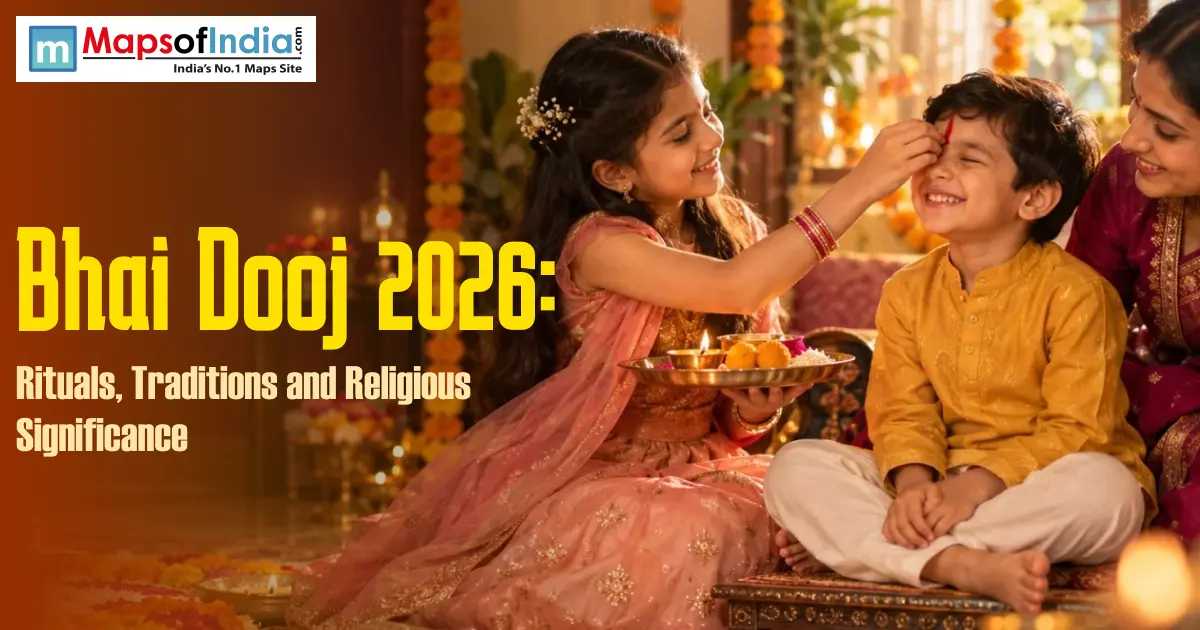
The tilak ceremony is the most important ritual of Bhai Dooj. Sisters put a tilak on their brothers' foreheads, typically using vermilion, sandalwood, or any other traditional substance. It is accompanied in many homes by a ritualistic aarti.
The tilak symbolizes blessings, protection, and good fortune. Sisters pray for the health, success, and happiness of their brothers.
2. Performing Aarti and Offering Prayers
The sister applies tilak and does an aarti for the brother. Usually, the puja thali is decorated with a diya, roli, akshat (rice grains), sweets, and some other ritual items.
The aarti is done as a prayer for the brother's welfare and protection. In certain traditions, the sisters also say religious verses or pray to gods during the ceremony.
3. Preparing Special Meals and Sweets
In the celebration of Bhai Dooj, food takes an important role. Sisters prepare traditional foods, sweets, and festive foods for their brothers. Laddoos, barfi, kaju katli, etc., are popular sweets, along with those from other parts of the country.
Eating is a way to show love and generosity. Also, it provides an opportunity to bring family members together and enhance the festive atmosphere.
4. Exchanging Gifts
Another popular Bhai Dooj tradition is exchanging gifts. Brothers give gifts, money, clothes, jewellery, or other gifts to their sisters as a way of expressing their love and appreciation. Sisters can also give some sweets or thoughtful gifts to their brothers.
Gifts are not the main religious focus of the festival, but are an important part of modern celebrations.
5. Visiting Sisters and Family Gatherings
Traditionally, brothers visit their sisters' homes to participate in the Bhai Dooj ceremony. Families are together, exchange greetings, share meals, and sit together. Phone and video calls have also been a means of celebrating for siblings in different cities.
How Is Bhai Dooj Celebrated in Different Parts of India?
Bhai Dooj is celebrated across India under different names and with regional customs.
- North India: Known as Bhai Dooj or Bhaiya Dooj, the festival is marked by tilak ceremonies, aarti, prayers, sweets, and gift exchanges.
- Maharashtra and Goa: It is popularly known as Bhau Beej or Bhav Bij. Sisters apply tilak and perform aarti, while brothers visit their sisters and exchange gifts.
- West Bengal: Known as Bhai Phonta, the festival involves sisters applying a traditional mark on their brothers' foreheads and praying for their long lives.
- Nepal: The occasion is celebrated as Bhai Tika during the Tihar festival. Sisters apply colourful tika to their brothers and offer prayers for their health and prosperity.
- Other regions: The festival is observed with local variations, but the central theme of sibling affection and blessings remains common.
Bhai Dooj and Raksha Bandhan: What Is the Difference?
There are different rituals and religious backgrounds of Bhai Dooj and Raksha Bandhan, both of which celebrate the bond between brothers and sisters.
Raksha Bandhan is celebrated in the Hindu month of Shravan, when sisters tie a rakhi on their brothers' wrists and pray for their well-being. Bhai Dooj, on the other hand, happens after Diwali and focuses on the application of tilak, aarti, and prayers for longevity and prosperity.
As Raksha Bandhan marks a symbolic commitment to protect, Bhai Dooj celebrates blessings, love, and the bond between brothers and sisters.
Why Is Bhai Dooj an Important Festival?
Bhai Dooj is more than just a religious festivity. It gives an opportunity for the family to be affirmed and for siblings to share their feelings of love, gratitude, and appreciation.
The festival also safeguards the ancient traditions and mythology passed on from generation to generation. It is celebrated in a traditional way, with a tilak ceremony, or through a meal of the family, or with an exchange of greetings and it is message that remains valid.
Bhai Dooj is a reminder of the love, trust, respect, and support that a brother and a sister should have for each other throughout their lives.
FAQs
1. When is Bhai Dooj in 2026?
Bhai Dooj 2026 will be celebrated on Wednesday, November 11, 2026. It falls on the Dwitiya Tithi of the Shukla Paksha in the Hindu month of Kartik, two days after Diwali.
2. Why is Bhai Dooj celebrated?
Bhai Dooj is celebrated to honour the special bond between brothers and sisters. Sisters perform tilak and aarti rituals and pray for their brothers' long life, happiness, and prosperity. The festival also symbolises love, care, and mutual support among siblings.
3. What is the story behind Bhai Dooj?
According to Hindu mythology, Lord Yama visited his sister Yamuna on Kartik Shukla Dwitiya. She welcomed him, applied tilak on his forehead, and prayed for his well-being. Pleased with her affection, Yama granted her a boon that brothers who receive their sisters' blessings on this day would be blessed with happiness and longevity.
4. Why is Bhai Dooj also known as Yama Dwitiya?
Bhai Dooj is called Yama Dwitiya because of its association with Lord Yama, the Hindu god of death, and his sister Yamuna. The festival is observed on Dwitiya Tithi and commemorates their meeting, which is believed to have established the tradition of sisters praying for their brothers' well-being.
5. What are the main rituals performed on Bhai Dooj?
The main Bhai Dooj rituals include applying tilak on brothers' foreheads, performing aarti, offering prayers, preparing festive meals, and exchanging gifts. Sisters pray for their brothers' long life and prosperity, while brothers express their love and appreciation.
6. What is the difference between Bhai Dooj and Raksha Bandhan?
Both festivals celebrate the relationship between brothers and sisters, but their rituals differ. Raksha Bandhan involves sisters tying a sacred thread or rakhi around their brothers' wrists, while Bhai Dooj involves applying tilak and performing aarti. Raksha Bandhan falls in Shravan, whereas Bhai Dooj is celebrated after Diwali in Kartik.
7. What are the different names of Bhai Dooj across India?
Bhai Dooj is known by different names in various regions. It is called Bhaiya Dooj in North India, Bhau Beej in Maharashtra and Goa, Bhai Phonta in West Bengal, and Yama Dwitiya in religious traditions. In Nepal, a related celebration is observed as Bhai Tika during the Tihar festival.