Diwali, also known as Deepavali, is one of the most widely celebrated festivals in India. Popularly called the Festival of Lights, Diwali symbolises the victory of good over evil, light over darkness, and knowledge over ignorance. The festival brings families and communities together through prayers, traditional rituals, festive decorations, sweets, and the lighting of earthen lamps called diyas. Diwali 2026 will be celebrated on November 8, 2026, with Lakshmi Puja forming an important part of the festivities.
Although the festival is associated with several religious stories and regional traditions, its central message remains the same: the triumph of righteousness, hope, and positivity. From illuminated homes and colourful rangolis to fireworks and family gatherings, Diwali reflects India's rich cultural and spiritual heritage.
When Is Diwali 2026?
Diwali 2026 will fall on Sunday, November 8. The festival is observed on the Amavasya (new moon) of the Hindu lunar month of Kartik. The date is usually in October or November (Gregorian) calendar.
There are also several days of festivities leading up to the main Diwali, including Dhanteras, Naraka Chaturdashi (Choti Diwali), and other regional celebrations. Lakshmi Puja is performed on the main evening of Diwali when devotees worship Goddess Lakshmi, the goddess of wealth and prosperity, and also Lord Ganesha.
Why Is Diwali Celebrated? The Story Behind the Festival
The meaning of Diwali and its religious connotations vary throughout India. One of the most popular tales is from the Hindu epic of the Ramayana.
Lord Rama's Return to Ayodhya
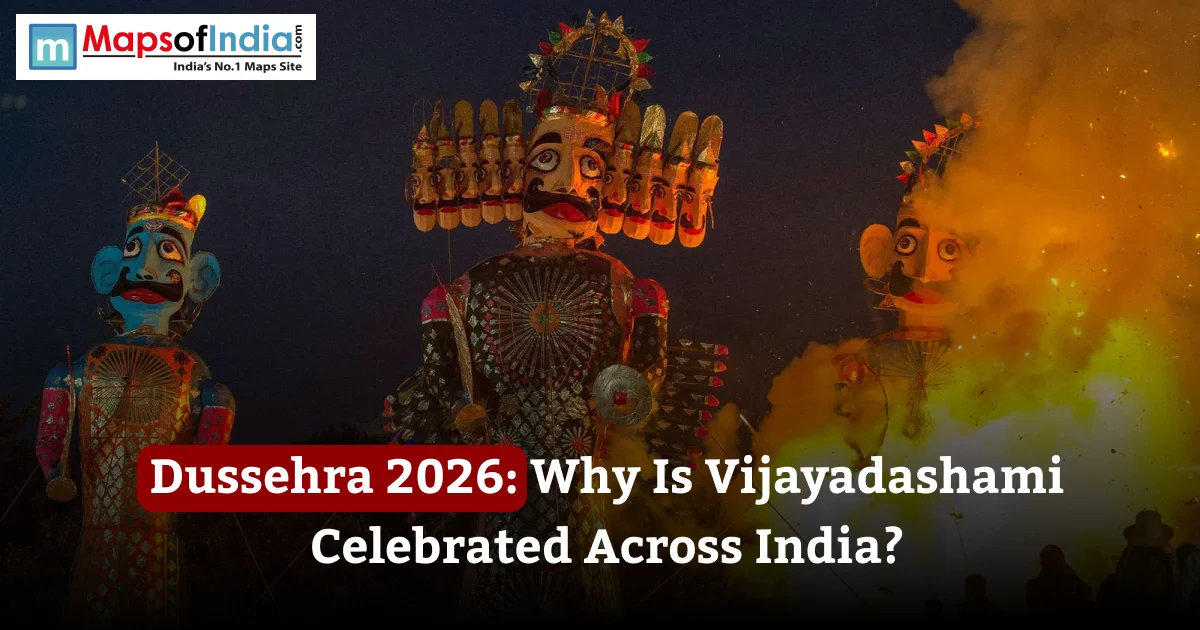
According to the Ramayana, Lord Rama, his wife Sita, and his brother Lakshmana returned to Ayodhya after spending 14 years in exile. During this period, Lord Rama defeated Ravana, the king of Lanka, who had abducted Sita. His victory represented the triumph of good over evil.
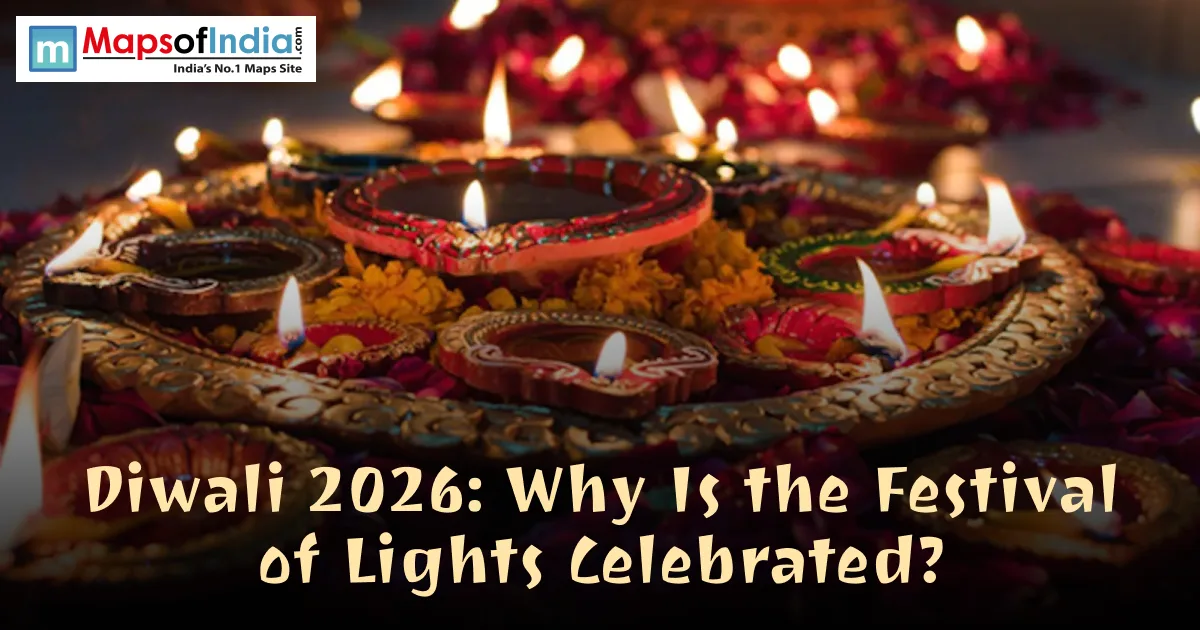
When Lord Rama returned to Ayodhya, the people of the kingdom celebrated his homecoming by lighting rows of oil lamps and decorating their homes and streets. This tradition is considered one of the reasons behind Diwali's association with the lighting of diyas.
The celebration represents the return of hope, justice, and righteousness. It also reminds people that good and truth prevail over evil.
Goddess Lakshmi and the Significance of Prosperity
Goddess Lakshmi is another important reason for celebrating Diwali. In Hindu mythology, Goddess Lakshmi appeared when the cosmic ocean was churned in the Samudra Manthan and is worshipped as the Goddess of wealth, prosperity, and good fortune.
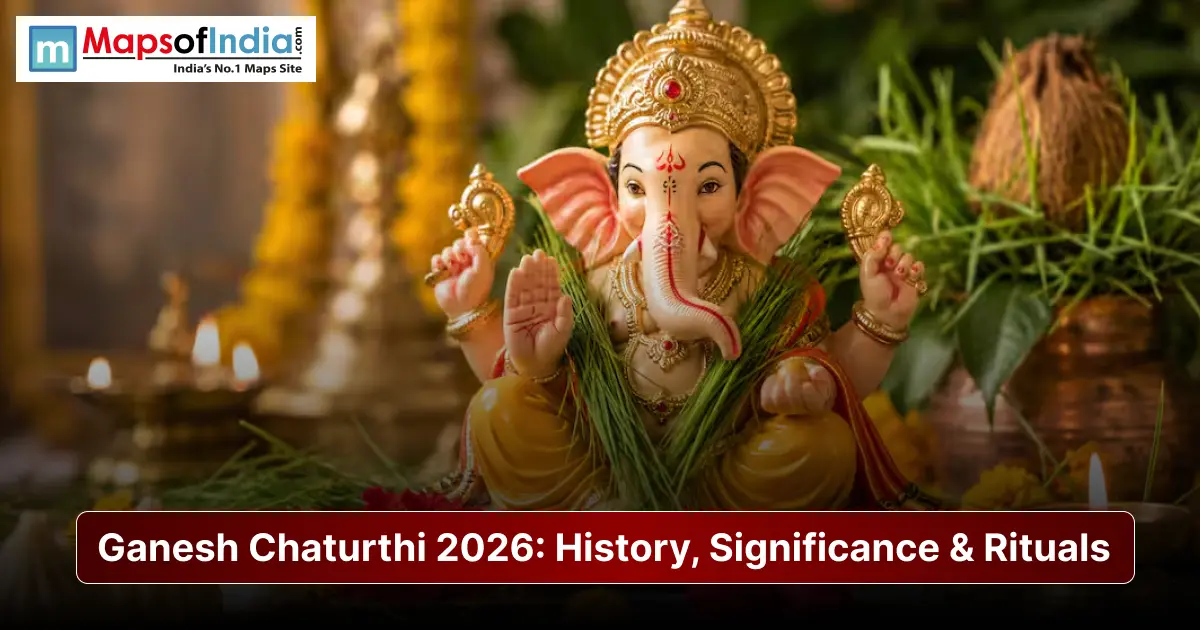
Before Diwali night, families clean and decorate their homes, light the diyas, and pray to Lakshmi for happiness, prosperity, and financial stability. Lord Ganesha is also venerated along with Goddess Lakshmi for his wisdom and to remove obstacles.
This tradition is based on the idea that good luck should be followed by wisdom, good intentions and proper behaviour.
Why Is Diwali Called the Festival of Lights?
The biggest practice of Diwali is the lighting of diyas. Earthen lamps, candles and electric lights adorn the homes, temples, shops and public areas.
Deepavali is a combination of two Sanskrit words, 'Deepa ', which means lamp and 'Avali ', which means row. They are joined together to form a row of lamps.
In Indian traditions, light has a great symbolic value, not just in its physical form, but also in its spiritual form. It is a sign of knowledge, awareness, hope, and positivity, while darkness is a sign of ignorance and negativity.
The lighting of a diya on the occasion of Diwali is thus not just a decorative gesture. It embodies the wish to cast away negativity and to bring happiness, wisdom and new beginnings.
How Is Diwali Celebrated Across India?
Diwali celebrations vary across different parts of India, reflecting the country's cultural and religious diversity.
North India: Diwali in states like Uttar Pradesh, Delhi, Rajasthan and Punjab is always linked to Lord Rama's return to Ayodhya. Diyas are lit, Lakshmi Puja is conducted, sweets are exchanged, and family gatherings are held.
South India: In several southern states, the story of Lord Krishna's victory over Narakasura is linked with Diwali. Naraka is an important day as oil is traditionally taken after an early morning bath and a celebration is held to mark the eradication of evil.
Western India: In Gujarat and Maharashtra, Western India, Diwali is celebrated by performing Lakshmi Puja, sharing traditional food, making rangoli, and worshipping wealth and prosperity. The festival is also celebrated as the onset of the Hindu New Year in many communities in Gujarat.
Eastern India: Diwali is also in the same time period as Kali Puja in many communities in West Bengal, Odisha, and Assam. They offer light to Goddess Kali and light the homes and temples.
These variations illustrate the way in which the same festival can have multiple cultural significance, while having a shared message of positivity and renewal.
What Are the Five Days of Diwali?
Diwali is observed over five days, and every day of the festival has its own importance from a religious and cultural background.
- Dhanteras: The festival starts with the festival of Dhanteras for wealth, prosperity, and good health. Traditionally, people buy gold, silver, household items, or utensils.
- Naraka Chaturdashi (Choti Diwali): It is a day to celebrate the defeat of Lord Krishna over Narakasura. It's also linked to purifying and preparing for the principal festival.
- Diwali: The primary festival is on Amavasya. Families conduct Lakshmi Puja, light diyas, decorate homes, exchange gifts, and have festive meals.
- Govardhan Puja: This day commemorates Lord Krishna lifting the Govardhan Hill to protect the people of Vrindavan from heavy rainfall sent by Lord Indra. It is also associated with Annakut celebrations.
- Bhai Dooj: The final day celebrates the bond between brothers and sisters. Sisters pray for their brothers' well-being, and families exchange gifts and sweets.
Why Is Diwali Important in Indian Culture?
Diwali is more than a religious festival. It is a symbol of family life, cultural heritage, civic engagement, and new possibilities.
Diwali is a significant time for many businesses and traders as it symbolizes financial renewal and the start of a new financial year. People tend to buy homes, cars, jewellery, and furniture around this time.
The festival is also meant to make people reconcile old differences and become kinder to others in need, share food, and enhance relationships. The decoration of the house entrance with rangoli, the preparation of sweets, and the visits to relatives are the traditional practices that are still carried on to keep the customs alive through generations.
Another recent trend in the celebrations is the increasing importance of environmentally-friendly celebrations. A lot of people are opting for traditional diyas, minimizing the use of fireworks, plastic toys, and decorations, and using eco-friendly items to celebrate.
Conclusion
Diwali 2026 will once again bring people together to celebrate the timeless message of light over darkness and good over evil. Whether observed through Lord Rama's return to Ayodhya, Lord Krishna's victory over Narakasura, or the worship of Goddess Lakshmi, the festival carries a shared message of hope, prosperity, and righteousness.
The lighting of diyas, exchange of sweets, family gatherings, and prayers make Diwali one of India's most cherished celebrations. Beyond its religious significance, the Festival of Lights reminds people to welcome positivity, spread happiness, and allow goodness to guide their lives.
FAQs
1. When is Diwali in 2026?
Diwali 2026 will be celebrated on Sunday, November 8, 2026. The festival falls on the Amavasya (new moon day) of the Hindu month of Kartik.
2. Why is Diwali celebrated in India?
Diwali is celebrated to mark the victory of good over evil and light over darkness. It is widely associated with Lord Rama's return to Ayodhya after defeating Ravana and completing 14 years of exile. The festival also honours Goddess Lakshmi, the deity of wealth and prosperity.
3. Why is Diwali known as the Festival of Lights?
Diwali is called the Festival of Lights because people illuminate their homes, temples, and streets with rows of earthen lamps, candles, and decorative lights. These lights symbolise the victory of knowledge over ignorance, hope over despair, and good over evil.
4. What is the significance of Lakshmi Puja on Diwali?
Lakshmi Puja is performed on Diwali to seek the blessings of Goddess Lakshmi, who represents wealth, prosperity, and good fortune. Devotees also worship Lord Ganesha for wisdom and the removal of obstacles.
5. What are the five days of Diwali celebrations?
The five days of Diwali are Dhanteras, Naraka Chaturdashi (Choti Diwali), Diwali, Govardhan Puja, and Bhai Dooj. Each day has a distinct religious and cultural significance and is associated with different traditions.
6. How is Diwali celebrated across different states of India?
Diwali is celebrated with regional variations across India. North India associates it with Lord Rama's return to Ayodhya, while parts of South India commemorate Lord Krishna's victory over Narakasura. In West Bengal, Odisha, and Assam, Kali Puja is an important part of the celebrations.
7. What is the spiritual significance of lighting diyas on Diwali?
Lighting diyas symbolises the removal of darkness, ignorance, and negativity. It represents the arrival of knowledge, positivity, peace, and prosperity. The tradition also reflects the belief that goodness and righteousness ultimately triumph over evil.