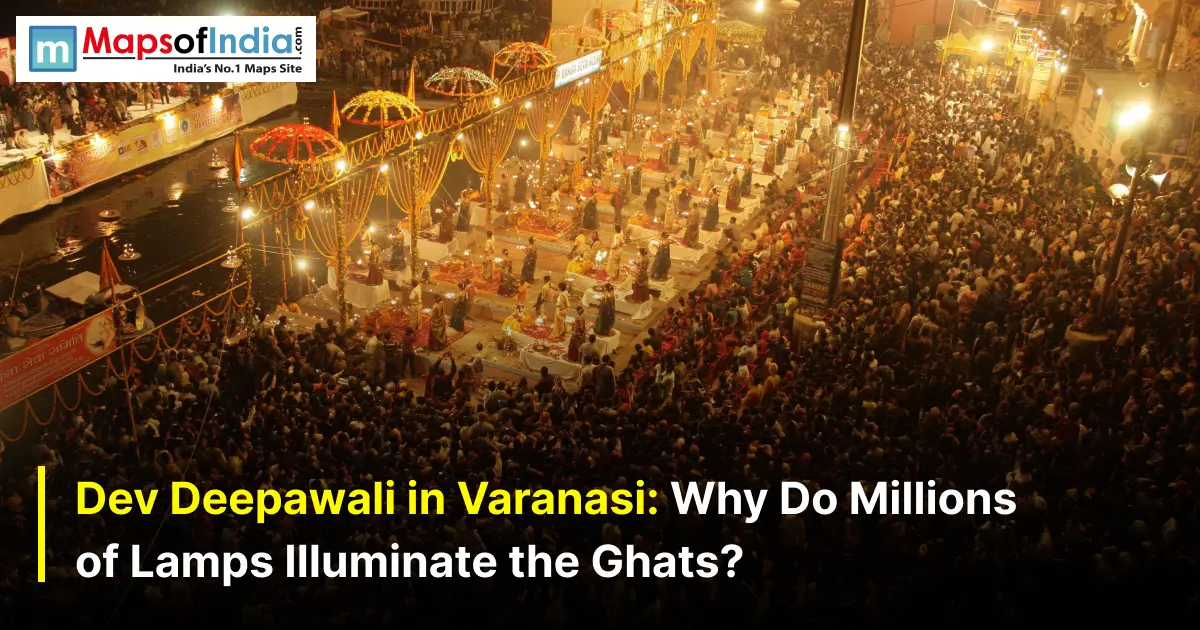
Every year, on the full moon night of Kartik Purnima, the ancient city of Varanasi transforms into a spectacular celebration of light. Millions of earthen lamps, known as diyas, illuminate the ghats, temples, riverbanks and buildings along the sacred River Ganga. This grand celebration is known as Dev Deepawali, one of the most beautiful religious and cultural festivals in India. The sight of countless glowing lamps reflecting on the waters of the Ganga attracts millions of devotees, tourists and photographers from across the country and around the world.
Unlike Diwali, which is celebrated on the new moon night of Kartik Amavasya, Dev Deepawali takes place approximately 15 days later, on Kartik Purnima. The festival holds deep religious significance in Hindu traditions and is associated with the belief that gods and goddesses descend to Earth to celebrate Diwali in Varanasi.
What Is Dev Deepawali and Why Is It Celebrated?
Dev Deepawali literally translates to the 'Diwali of the Gods'. According to Hindu mythology, the festival commemorates the victory of Lord Shiva over the demon Tripurasura. The demon had created three powerful cities, collectively known as Tripura, which became a source of destruction and suffering. Lord Shiva defeated Tripurasura on Kartik Purnima, an event celebrated as Tripurari Purnima.
The occasion is also known as Tripurotsav and symbolises the victory of good over evil. Lighting lamps on this auspicious day is considered an expression of devotion and an offering to Lord Shiva.
Varanasi, also known as Kashi or Banaras, is considered one of the holiest cities in Hinduism and is closely associated with Lord Shiva. According to popular belief, the gods visit the sacred city on Kartik Purnima to take a holy dip in the Ganga and celebrate the divine victory. Lighting millions of lamps along the riverbanks is a symbolic way of welcoming the deities and expressing gratitude.
Why Do Millions of Lamps Illuminate the Ghats of Varanasi?
The lighting of millions of diyas is the most recognisable feature of Dev Deepawali. The tradition carries deep religious, cultural and symbolic meanings.
Welcoming the Gods and Goddesses: According to Hindu beliefs, the gods descend to Varanasi on Kartik Purnima to bathe in the sacred River Ganga. The illuminated ghats are believed to welcome these divine visitors. The lamps represent devotion, purity and an offering of light to the deities.
Celebrating the Victory of Good Over Evil: The festival commemorates Lord Shiva's victory over Tripurasura. The countless lamps symbolise the triumph of righteousness over darkness and ignorance. Lighting diyas is also considered an expression of faith and gratitude.
Honouring the Sacred River Ganga: The River Ganga occupies a special place in Hindu religious traditions. Devotees consider its water sacred and believe that bathing in it on Kartik Purnima brings spiritual merit. During Dev Deepawali, lamps are offered to the river as a mark of respect and devotion.
Preserving an Ancient Cultural Tradition: The festival also celebrates the religious and cultural identity of Varanasi. Lighting lamps along the ghats brings together local residents, priests, volunteers and visitors, creating a shared experience that connects generations.
How Is Dev Deepawali Celebrated in Varanasi?
Dev Deepawali celebrations begin early in the morning and continue until late at night. The city witnesses a series of religious rituals, cultural programmes and public celebrations.
The day begins with devotees gathering at the ghats before sunrise to take a holy dip in the Ganga. Kartik Purnima is considered an auspicious occasion for ritual bathing, prayers and charitable activities. Many devotees also visit temples to offer prayers to Lord Shiva and other deities.
As evening approaches, the most spectacular part of the celebration begins. Earthen lamps are arranged along the steps of the ghats, temples, riverfront buildings and public spaces. Local residents, volunteers, religious organisations and visitors participate in lighting the diyas. Gradually, the entire riverfront glows with thousands of golden lights.
The grand Ganga Aarti at Dashashwamedh Ghat is another major attraction. Priests perform elaborate rituals using large brass lamps, incense and traditional prayers. Devotees gather along the riverbanks and on boats to witness the ceremony. The sound of bells, conch shells and devotional chants creates a deeply spiritual atmosphere.
Cultural programmes, classical music performances, devotional singing and traditional dance events are also organised at different locations. Another beautiful tradition involves offering small floating lamps to the Ganga. These lamps, placed on small leaf boats, create sparkling reflections across the river.
Which Ghats Are the Main Attractions During Dev Deepawali?
Varanasi has more than 80 ghats along the River Ganga, and many of them participate in the Dev Deepawali celebrations. Each ghat offers a different experience of the festival.
Dashashwamedh Ghat: One of the most famous ghats in Varanasi, Dashashwamedh Ghat is particularly popular for its grand Ganga Aarti. It attracts large crowds during Dev Deepawali.
Assi Ghat: Located towards the southern end of the main riverfront, Assi Ghat is known for its spiritual atmosphere, cultural activities and religious gatherings.
Panchganga Ghat: This is an important religious location associated with the traditional belief in the confluence of five sacred rivers.
Raj Ghat: Situated towards the northern part of the riverfront, Raj Ghat also becomes part of the illuminated celebrations.
Manikarnika Ghat: One of the most significant cremation ghats in Varanasi, Manikarnika Ghat holds a distinct place in Hindu religious beliefs and traditions.
A boat ride along the Ganga is another popular way to experience Dev Deepawali. From the river, visitors can witness the illuminated ghats, decorated buildings and countless lamps creating a beautiful reflection on the water.
Why Does Dev Deepawali Attract Millions of Tourists?
Dev Deepawali has grown beyond a religious celebration to become one of India's most recognised cultural and tourism events. The combination of mythology, architecture, spirituality, music and spectacular lighting makes it a unique experience.
For photographers, the illuminated ghats and reflections on the Ganga provide extraordinary visual opportunities. For pilgrims, the festival offers an opportunity to participate in sacred rituals and seek blessings. International visitors are drawn to the celebration because it provides a glimpse into India's religious traditions and living cultural heritage.
The festival also contributes significantly to the local economy. Hotels, restaurants, boat operators, transport providers, local artisans and small businesses experience increased activity during the celebrations. Demand for accommodation and boat rides rises considerably, making advance planning important for visitors.
When Is Dev Deepawali Celebrated?
Dev Deepawali is celebrated every year on Kartik Purnima, the full moon day of the Hindu month of Kartik. It generally falls in November, although the exact date changes according to the Hindu lunar calendar.
The main celebrations take place in the evening, when the lamps are illuminated across the ghats. Visitors planning to attend should arrange accommodation and transport well in advance because Varanasi receives a significant number of tourists during this period. Reaching the ghats early is also advisable, as popular viewing locations become crowded.
Conclusion
Dev Deepawali is much more than a festival of lights. It represents the spiritual connection between Varanasi, Lord Shiva and the sacred River Ganga. The tradition of illuminating millions of lamps celebrates the victory of good over evil, honours the gods and preserves the city's centuries-old religious heritage. As golden lights spread across the ghats and shimmer on the Ganga, Varanasi offers a spectacular celebration that brings together faith, culture and tradition. It is this extraordinary combination that makes Dev Deepawali one of the most memorable festivals in India.
FAQs
1. What is Dev Deepawali and why is it celebrated in Varanasi?
Dev Deepawali is a Hindu festival celebrated on Kartik Purnima, approximately 15 days after Diwali. It commemorates Lord Shiva's victory over the demon Tripurasura and is celebrated in Varanasi as the Diwali of the Gods.
2. Why are millions of diyas lit on Dev Deepawali?
Millions of earthen lamps are lit to welcome the gods and goddesses believed to descend to Varanasi on Kartik Purnima. The lamps also symbolise devotion, purity and the victory of good over evil.
3. When is Dev Deepawali celebrated in Varanasi?
Dev Deepawali is celebrated every year on the full moon day of the Hindu month of Kartik, known as Kartik Purnima. The festival generally falls in November, around 15 days after Diwali.
4. What is the difference between Diwali and Dev Deepawali?
Diwali is celebrated on Kartik Amavasya, the new moon night, to mark the return of Lord Rama to Ayodhya. Dev Deepawali is celebrated on Kartik Purnima and commemorates Lord Shiva's victory over Tripurasura. Diwali is popularly known as the festival of lights, while Dev Deepawali is known as the Diwali of the Gods.
5. Which ghat is famous for Dev Deepawali in Varanasi?
Dashashwamedh Ghat is among the most famous locations for Dev Deepawali celebrations because of its grand Ganga Aarti. Assi Ghat, Panchganga Ghat, Raj Ghat and other ghats also participate in the celebrations.
6. What is the religious significance of Kartik Purnima in Varanasi?
Kartik Purnima is considered highly auspicious in Hinduism. Devotees believe that taking a holy dip in the River Ganga, offering prayers, and lighting lamps on this day bring spiritual merit and blessings.
7. How can tourists enjoy Dev Deepawali in Varanasi?
Tourists can experience Dev Deepawali by visiting the illuminated ghats, attending the grand Ganga Aarti, taking a boat ride on the Ganga and watching cultural performances. Arriving early and booking accommodation in advance are recommended because the city attracts large crowds during the festival.