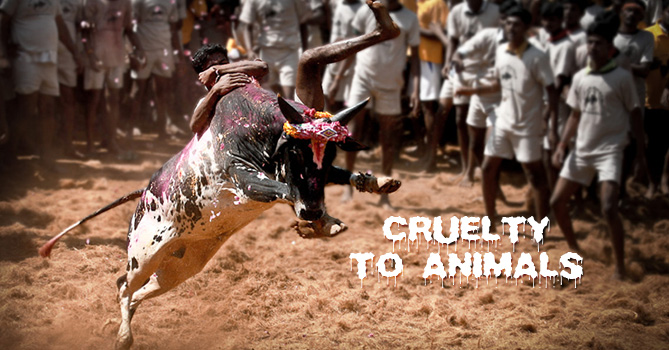
 With the recent ban on Jallikattu, a traditional bull-vaulting event of Tamil Nadu, the focus has been driven towards many other such practices across the country. Though these practices carry religious meaning with them and have been a part of the culture for ages now, but the main question that lies here is that whether such treatment and involvement of animals in these practices is ethical. It also raises eyebrows over the sheer necessity of the so-called ‘human bravado’ that often results in death.
As in the case of Jallikattu, it has resulted in over 200 human deaths over the past two decades, along with causing serious fatalities and injuries to the bulls. It is on these grounds that People for the Ethical Treatment of Animals (PETA) has pressed for the continuation of the ban on the event. Cows, bulls, buffaloes and goats are primarily the main animals used in such cultural practices.
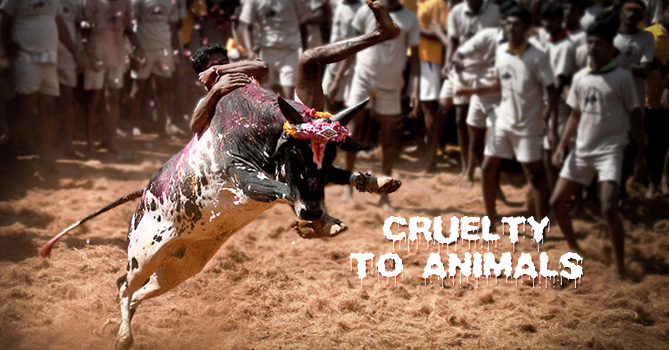
With the recent ban on Jallikattu, a traditional bull-vaulting event of Tamil Nadu, the focus has been driven towards many other such practices across the country. Though these practices carry religious meaning with them and have been a part of the culture for ages now, but the main question that lies here is that whether such treatment and involvement of animals in these practices is ethical. It also raises eyebrows over the sheer necessity of the so-called ‘human bravado’ that often results in death.
As in the case of Jallikattu, it has resulted in over 200 human deaths over the past two decades, along with causing serious fatalities and injuries to the bulls. It is on these grounds that People for the Ethical Treatment of Animals (PETA) has pressed for the continuation of the ban on the event. Cows, bulls, buffaloes and goats are primarily the main animals used in such cultural practices.
- Another such act like the Jallikattu is ‘Kambala’, not essentially a gruesome act but definitely aggressive. An annual buffalo race held traditionally in the state of Karnataka just for the sake of entertainment. Infact, when Jallikattu was banned, there was a little confusion that even Kambala would be banned, however, the ban only applies to Jallikattu as of now.
- Yet another gory practice is the Govardhan festival at Bhiwdawad village, Maharashtra. It is celebrated a day after Diwali and the villagers decorate their cattle with flowers, colours and henna. The people, who have been on a 5-day fast, then lie down on the ground allowing the fleet of cows to trample them over. The belief is that such an act would make the gods answer their prayers. The sheer idea of a motley crowd cheering at agitated overdecorated bovines walking over men is detestable and unacceptable.
- In Subarnapur, during the months of September and October, Orrisaan is celebrated annually and animal sacrifice is an integral part of the ritual. This is organized for the worship of deities of Sureswari, Samaleswari and Khambeswari. The name of this annual fest is Bali Jatra, where ‘Bali’ refers to Animal Sacrifice.
- Kaalapoottu, on the other hand, is primarily a traditional ox or cattle race festival of the farmers in the state of Kerala. It is usually conducted in wide and muddy paddy fields of Kerala during the last days of Onam. The cattle reared for the purpose of racing are maintained carefully and properly fed. Owners with their two pairs of cattle run simultaneously on the muddy track for the competition. This festival not only sees humans getting hurt, but also witnesses helpless cattle running in frenzy to feed mankind’s thirst for entertainment.