Japan is home to 111 volcanoes. About 10% of all active volcanoes on Earth. This high number comes from Japan's location on the Pacific Ring of Fire. Among the well-known are Mount Fuji, Sakurajima, Mount Aso and Mount Asama. These volcanoes are spread across Honshu, Kyushu and Hokkaido. The reason Japan has many volcanoes is that it sits at the meeting point of four tectonic plates.
Why Japan Has Many Volcanoes?
Japan's position on the Pacific Ring of Fire
Japan lies along the Pacific Ring of Fire, a horseshoe-shaped zone that circles the Pacific Ocean. This area contains 75% of the world’s active and dormant volcanoes. The four main islands of Japan run directly through one of the active parts of this ring, stretching from Hokkaido in the north through Honshu down to Kyushu and the Ryukyu Islands in the south.
Plate tectonics behind Japanese volcanoes
Japan sits where four major tectonic plates meet: the Pacific, Philippine Sea, Eurasian, and North American plates. The Pacific Plate moves under Japan at a rate of 8 to 10 centimetres per year. As it sinks, water from the plate lowers the melting temperature of the mantle rock above. This creates magma, which rises to form volcanoes. Because of this subduction process, Japan’s volcanoes are not scattered randomly. Instead, they follow north-south lines called volcanic arcs.
List of Major Volcanoes in Japan
| Volcano | Location | Elevation (m) | Status |
| Mount Fuji | Shizuoka/Yamanashi Prefecture | 3,776 | Dormant (last erupted 1707–08) |
| Mount Ontake | Nagano/Gifu Prefecture | 3,067 | Active |
| Mount Asama | Nagano/Gunma Prefecture | 2,568 | Active, frequently erupting |
| Mount Aso | Kumamoto Prefecture | 1,592 | Active |
| Kirishima Volcanic Complex | Kagoshima/Miyazaki Prefecture | 1,700 (Karakuni-dake) | Active |
| Mount Unzen | Nagasaki Prefecture | 1,483 | Active |
| Sakurajima | Kagoshima Prefecture | 1,117 | Continuously active |
| Showa-Shinzan | Hokkaido | 398 | Formed 1943–45, now dormant |
Mount Fuji — Shizuoka/Yamanashi Prefecture
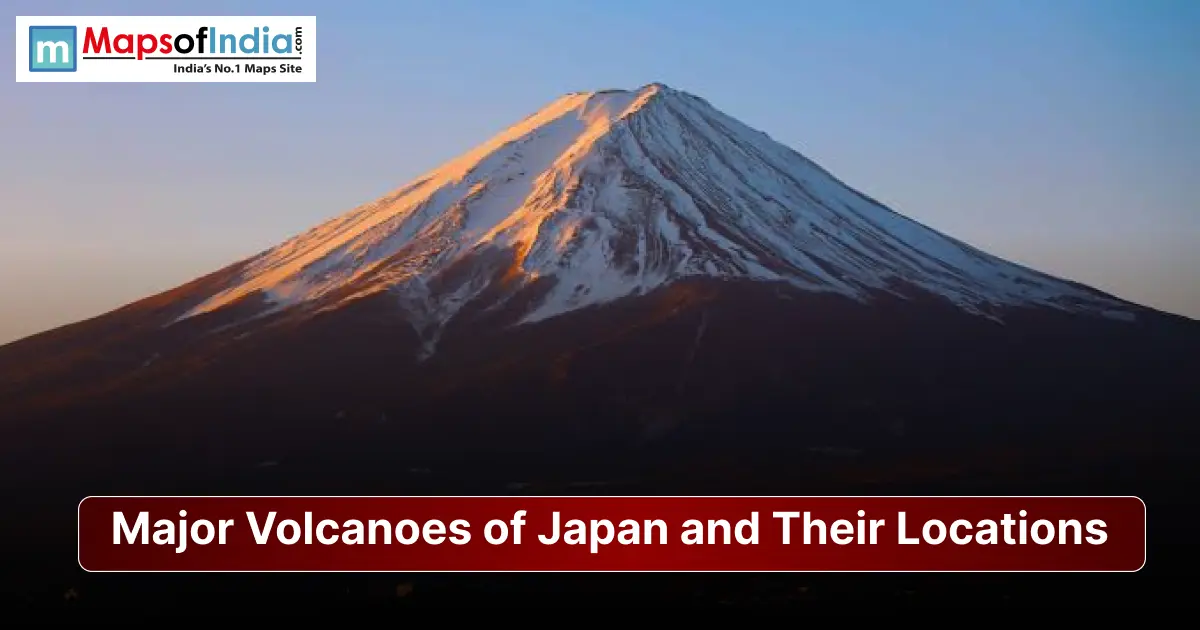
At 3,776 meters, Mount Fuji is Japan’s highest mountain and its most famous volcano. It is technically dormant because it last erupted between 1707 and 1708. Still, it remains a symbol in Japanese culture. It is also a UNESCO World Heritage Site and one of the popular hiking destinations in the country. Each year, more than 200,000 people climb it during the official climbing season, which runs from early July to early September.
Sakurajima — Kagoshima Prefecture
Once an island, Sakurajima became connected to the Osumi Peninsula after an eruption in 1914. It is one of the continuously active volcanoes on Earth. Located within the Aira Caldera, it produces hundreds of small eruptions every year. Its constant activity makes it stand out among volcanoes in Japan. It looms over the city of Kagoshima, and locals have grown used to the ash and smoke.
Mount Aso — Kumamoto Prefecture
Mount Aso is home to one of the calderas in the world measuring about 25 kilometres across. In the centre of the caldera is Nakadake, a crater that still releases steam and gas. What makes Mount Aso especially unique is that thousands of people live inside the crater rim. This is rare anywhere in the world. The area is both a wonder and a place of daily life.
Mount Unzen — Nagasaki Prefecture
Located on the Shimabara Peninsula, Mount Unzen is remembered for its eruption in 1991. During the eruption, a lava dome collapsed, sending flows down the slopes. These moving clouds of hot gas and debris killed dozens of people, including several scientists who were studying the volcano up close.
Mount Asama — Nagano/Gunma Prefecture
Mount Asama is often considered the most active volcano on Honshu. It has documented more eruptions than almost any other volcano in Japan. Its most recent confirmed eruption took place in 2019. Since 1972, its crater has been off-limits to hikers due to ongoing risks. Today the area remains closely watched by geologists and local authorities.
Mount Ontake — Nagano/Gifu Prefecture
At 3,067 meters, Mount Ontake is Japan’s highest volcano. It is also known for one of the volcanic events in modern Japanese history. In September 2014, a sudden eruption caught hikers by surprise. The eruption killed 63 people near the summit. This tragedy led to changes in how Japan monitors volcanic activity and warns climbers.
Kirishima Volcanic Complex — Kagoshima/Miyazaki Prefecture
Unlike volcanoes, Kirishima is not a single peak but a group of more than 20 volcanic cones. These peaks stretch across the border between Kagoshima and Miyazaki prefectures. The highest point in the complex is Karakuni-dake, standing at 1,700 meters. The area attracts visitors who enjoy hiking and soaking in hot springs.
Showa-Shinzan — Hokkaido
Showa-Shinzan stands apart from the others because of its age. It formed rapidly between 1943 and 1945 in a wheat field near Lake Toya. Over two years, it rose to 398 meters. This was one of the volcanic constructions ever recorded. Although it stopped growing after 1945, it remains a site for scientists studying new volcano formation.
Active vs. Dormant Volcanoes in Japan
Currently Active Volcanoes
Some of Japan’s most active volcanoes include Sakurajima, Mount Asama, Mount Aso, Mount Unzen, Kirishima, and Suwanosejima in the Ryukyu Islands. These volcanoes show signs of activity ranging from tiny explosions at Sakurajima to bigger explosive events at Asama.
Extinct volcanoes
Mount Fuji is classified as dormant, not extinct. It last erupted in 1707–08. It is still closely monitored due to its proximity to Tokyo. Showa-Shinzan, though it formed decades ago, is now considered dormant. There has been no activity since its growth phase ended.
Most Recent Volcanic Eruptions in Japan
Sakurajima continues to erupt every day with small Vulcanian explosions. This pattern of activity has persisted into 2026. Suwanosejima has also maintained low-level eruptions for years. Mount Asama's most recent confirmed eruption occurred in 2019. Mount Aso has seen activity since then, with noticeable eruptions in 2021. The 2014 eruption of Mount Ontake remains the most significant recent event in terms of human impact. That disaster changed how Japan handles warnings for hikers and improved its monitoring systems.
Best Volcanoes to Visit in Japan
Mount Fuji remains the choice for visitors, especially during its climbing season from early July to early September. For those who want an experience, Mount Aso offers opportunities to get close to the crater rim when conditions allow. Sakurajima is easy to reach by ferry from Kagoshima city and pairs with visits to local hot springs. Kirishima-Yaku National Park is a favourite among hikers who want to explore craters and relax in onsen. No matter which volcano you plan to visit, always check the alert level issued by the Japan Meteorological Agency before heading out.
Conclusion
From Mount Fuji’s majestic shape to Sakurajima’s constant eruptions, Japan’s volcanoes reflect the country’s geological situation. They sit on the Pacific Ring of Fire where four tectonic plates collide. This powerful combination explains why Japan has such a concentration of volcanoes. It brings beauty and cultural richness, like springs and scenic views. It also carries risk. The 2014 eruption of Mount Ontake showed that seemingly quiet volcanoes can turn dangerous without warning.
FAQs
1. What is the most famous volcano in Japan?
Mount Fuji is the most famous volcano in Japan. Standing at 3,776 meters, it is Japan’s highest mountain, a UNESCO World Heritage Site, and the most climbed peak in the country. Despite being currently dormant, it holds importance in Japanese culture.
2. How many volcanoes are there in Japan?
Japan officially recognizes 111 volcanoes. That accounts for 10% of all active volcanoes worldwide.
3. Is Mount Fuji dangerous?
Mount Fuji is dormant, not extinct. It last erupted in 1707–08. Scientists monitor it closely because a future eruption could be possible. Models suggest that if it erupted, volcanic ash could fall heavily around Tokyo due to its distance.
4. Which volcano in Japan is most active?
Sakurajima in Kagoshima Prefecture is generally considered the most active volcano in Japan. It produces hundreds of eruptions each year, almost on a daily basis.