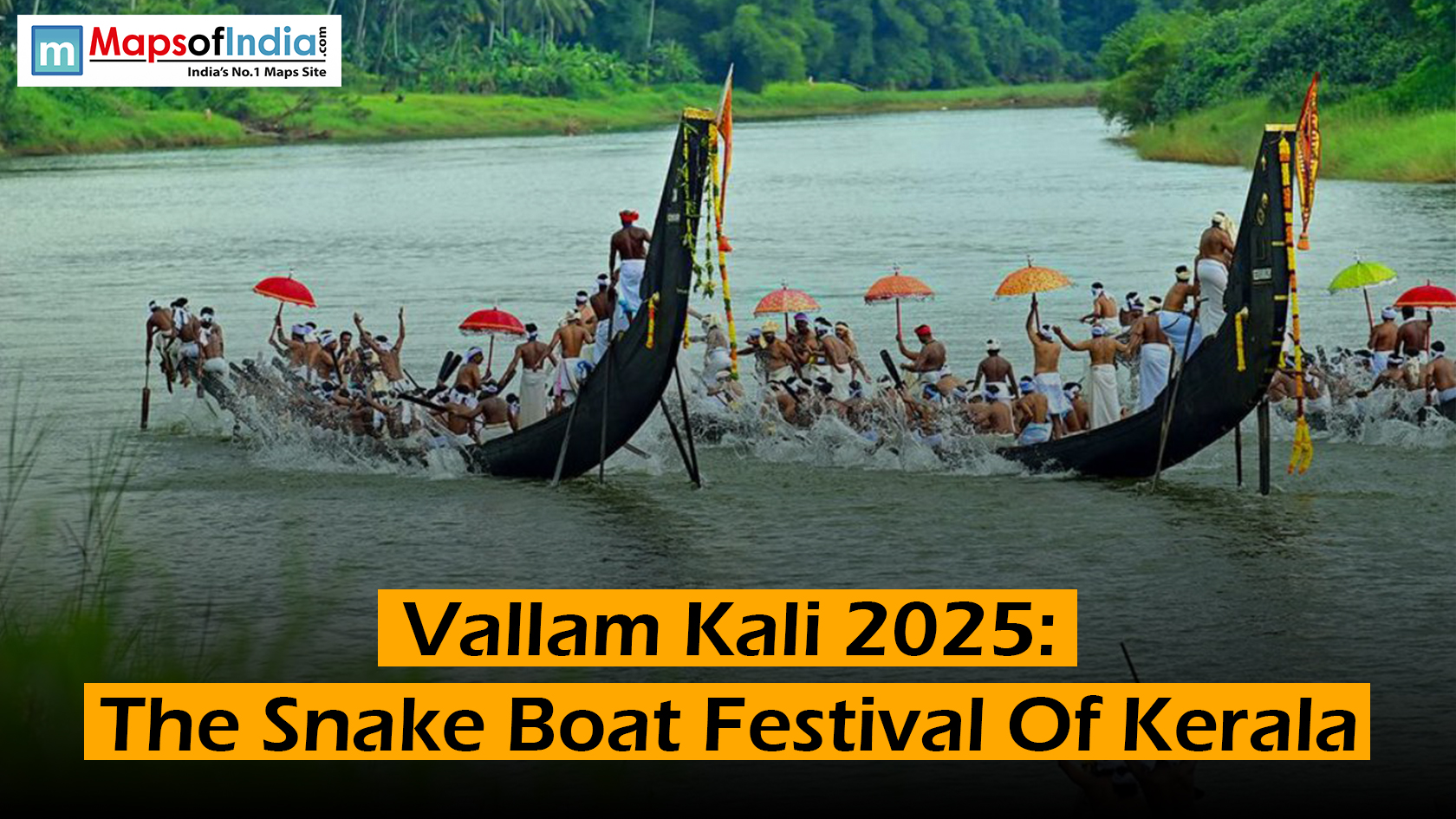
Historical Roots: From Warfare to Festivity
Kerala’s snake boat races originated in the 13th century and were an odd resolution to a feud’s conflict. Historical records show that during the conflicts between the Kayamkulam and Chembakassery empires, King Devanarayana of Chembakassery decided to run a sailing competition instead of engaging in warfare. This led to the invention of the Chundan Vallam(snake boat), a remarkable warcraft over 100 feet long with a raised ‘cobra’ prow that functioned as the helm. These splendid vessels were initially intended for warfare and transport but gradually evolved into symbolic embodiments of cultural manifestation and pride. The Parthasarathi Chundan is the oldest recorded snake boat, which denounces the continued craftsmanship of generations of Keralites. As a remarkable event preserved to this day, these activities evolved to become a peculiar intersection of festival in the history of Kerala, when a total of men all get united.The Boats: Traditional Treasures of Engineering
The snake boats are pretty good examples of traditional engineering. These slender giants are made of *anjili* wood for the hull and bamboo as structural support. Since the making of such boats requires precision, it is artistry in itself. Artisans used to combine coconut fibre with the boat skeleton. These boats can move with astonishing quickness, even though they are huge. Each serves as a small village in itself.- Capacity: 90-110 rowers, four helmers and 25 singers.
- Dimensions: Length should be 100-120ft; the raised prow shall be 15-20ft.
The Races: A Symphony of Synchronised Motion
The enthusiasm witnessed from an adrenaline-infused boat racing event travels deep within one’s soul. Hundreds of people witness these gigantic human spectacles, where hundreds of oars are lifted and beaten ‘in time’ with the chants of ‘Vanchipattu,’ which are essentially songs explicitly designed to be sung on ships and accompanied by extensive beatings of drums. Certain aspects which stand out and make these races extraordinary include the following: 1. Team Structure Dynamics: Each village forms its entrant, with representatives chosen for the rowers at the village’s discretion. They must compete for selection as they go through the grilling processes during selection camps held by senior oarsmen. 2. Rhythmical Singing Controls: Every singer and drummer has a rhythmic line for paddling their voices above the splashes of the oars. 3. Types of Competitions: Although the majority of the attention is drawn to the snake boat races, different kinds of vessels, including Churulan, Odi, and Parunthuvalan, are used in the other events as well. 4. Distance Covered: The distance to be covered during racing is always between 1,000 and 1,400 metres, except for the Nehru Trophy race, which is 1370 meters long but always held on Punnamada Lake. The Punnamada Lake will host the much-awaited 71st Nehru Trophy Boat Race on August 9, 2025. An estimated 200,000 people are expected to participate, fueling expectations that the next season will be particularly exciting.Cultural and Religious Significance
Kerala Snake Boat Festival is also full of the spirit of competition, and it is an enormously crucial point in Kerala's spiritual and cultural identity. Most of these races occur during Onam (between August and September), and the Keralites consider the races a part of some major religious events.Notable examples include
- Aranmula Uthrattathi: This race celebrates Lord Krishna and is part of the temple celebrations at Aranmula Parthasarathy Temple, ending with *Vallasadya*, a sumptuous meal for the rowers believed to be served to them by the god.
- The Payippad Jalotsavam is a three-day celebration associated with the installation of a deity in the temple of Subramanya Swamy. It is associated with racing and cultural exhibitions.
Key Highlights of the 2025 Season
The boat races on the calendar of Kerala have fencing experiences on different dates and in other places. 1. Nehru Trophy Boat Race (August 9, 2025)- Venue: Punnamada Lake, Alappuzha
- Highlight: Hosted as the most festive Indian boat race ever conducted, it has a Neheru’s silver snake boat trophy, which was presented to the race in 1952 as its jewel of honour.