What is the PM JANMAN Scheme all about?
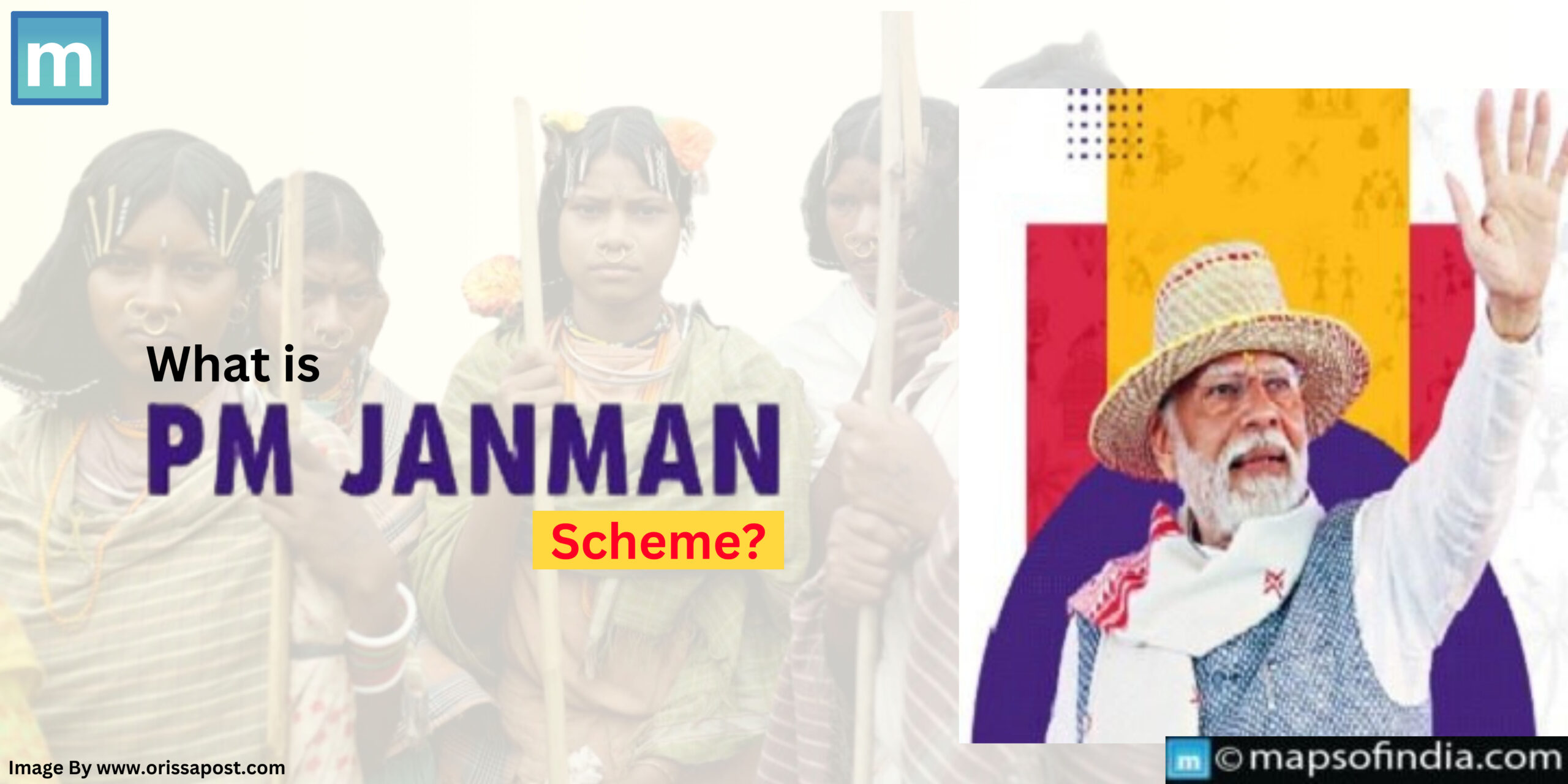
- The Indian government's PM JANMAN program seeks to assimilate tribal people into the mainstream.
- The Ministry of Tribal Affairs would implement the Central Sector and Centrally Sponsored Schemes program in collaboration with state governments and PVTG communities.
- To guarantee the implementation of current programs in PVTG communities, the project will concentrate on 11 significant interventions that 9 Ministries will oversee.
- It provides chances for sustainable livelihoods, road and telecommunications connectivity, clean drinking water access, improved medical care, education, sustenance, and safe housing under the PM-AWAS Scheme.
- Additionally, the plan calls for installing solar street lights, off-grid solar power systems for one lakh homes, and Van Dhan Vikas Kendras for trading forest produce.
- By acknowledging and valuing the PVTGs' distinct and priceless contribution to national and international development and addressing their numerous and intersecting forms of discrimination and exclusion, the strategy is anticipated to enhance their quality of life and general well-being.
- After the Dhebar Commission discovered disparities between Scheduled Tribes in 1960–1961, the Primitive Tribal Groups (PTG) category was created.
Tribal Groups that fall under the PVTGs category
- Primitive Tribal Groups (PTGs), which include tribal communities with low literacy rates, pre-agrarian technology use, declining or stagnating populations, and economic backwardness, were created as a separate category by the Dhebar Commission in 1973.
- Among the indigenous communities, these tribes are seen as being less developed.
- By acknowledging and valuing the PVTGs' distinct and priceless contribution to national and international development and addressing their numerous and intersecting forms of discrimination and exclusion, the strategy is anticipated to enhance their quality of life and general well-being.
- After disparities between Scheduled Tribes were discovered by the Dhebar Commission in 1960–1961, the Primitive Tribal Groups (PTG) category was created.
- The PTGs were re-designated as PVTGs by the Indian government in 2006. Due to inadequate infrastructure and administrative support, they have difficulties living in isolated and difficult-to-reach places.
- Across 18 States and Union Territories in India, there are 75 PVTG communities.
- Andhra Pradesh, Bihar, Jharkhand, Madhya Pradesh, Chhattisgarh, Tamil Nadu, Kerala, and Gujarat are the following most PVTG-rich states after Odisha. Maharashtra, West Bengal, Karnataka, Uttarakhand, Rajasthan, Tripura, and Manipur have the remaining communities.
- Recognised as PVTGs are the four Andaman tribal groups and the one in the Nicobar Islands.