Excise Duty Cut on Petrol and Diesel: Will Fuel Prices Reduce?

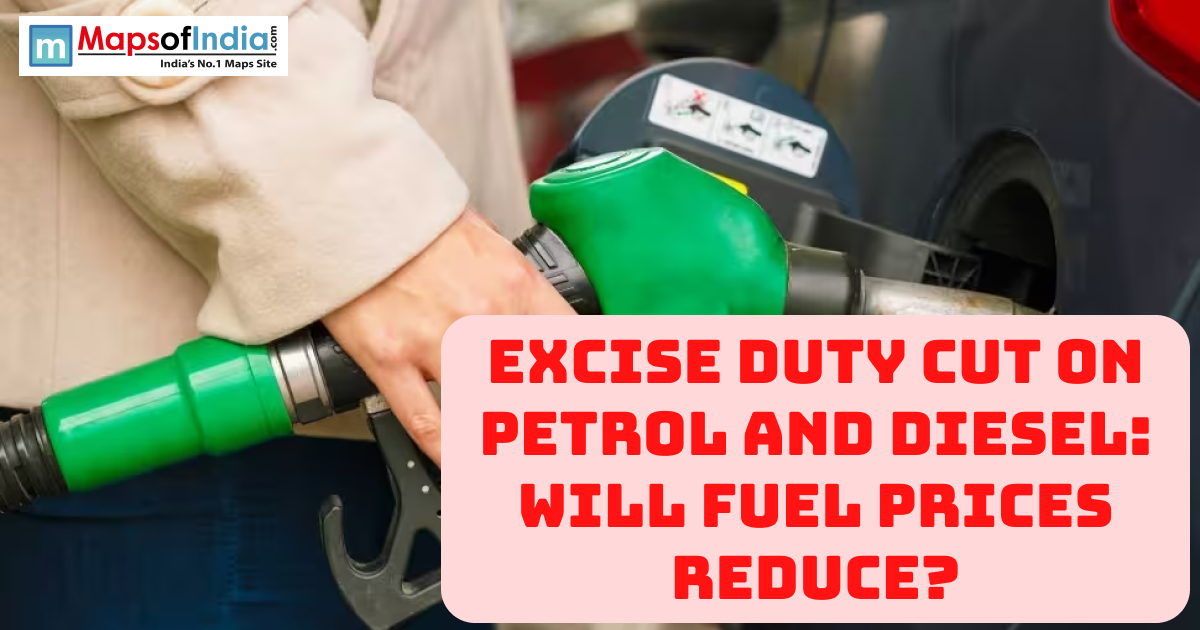
Person refueling a car with a petrol pump nozzle, highlighting excise duty cut on petrol and diesel and its impact on fuel prices.

The government has also proposed an incentive that has gotten both the consumers and industry observers talking, in that it has decided to reduce the excise duty on petrol to ₹3 per litre, with the duty on diesel going down to zero. This is, on the surface, a huge relief measure, particularly given the current state of the fuel prices and the large effect it has on the household budgets, the costs of transportation and the general overall inflation. But the question is the same: will this cutting of duty translate into lower prices of fuel to the consumers?

Understanding Excise Duty and Its Role

Excise is a tax levied by the central government on the production or sale of goods in the country. In petrol and diesel, it constitutes a significant portion of the retail price. The excise duty has been utilized over the years as a tool of revenue generation and also as an instrument to control price volatility.

A lower excise duty should theoretically result in a lower base cost of fuel. This, in its turn, should result in a reduction in the end price to be paid by the consumers at the pump. Nonetheless, the fuel price in India is determined by various factors, and excise duty is not the only piece of the puzzle.

What the Latest Cut Means

The recent move to cut the excise duty on petrol to Rs.3 and completely do away with the same on diesel is notable. Diesel, specifically, is very important in the economy of India, which drives trucks, agricultural machinery, and transport. The zero excise charge on diesel would make the logistics cheaper, and it is even possible to reduce the prices of the basic commodities.

The price cut to Rs.3 per litre also represents a move towards affordability among petrol users, but the effect may not be as substantial as with diesel. The degree of relief is based on whether the benefits are passed to the consumers by the oil marketing companies or not.

Will Fuel Prices Actually Drop?

The duty cut does not necessarily ensure an immediate decrease in the retail fuel prices, although it provides space that can be used to reduce the prices. Various aspects will decide whether a change will be experienced in the pump:

  1. Global Crude Oil Prices
    A significant part of the crude oil is imported into India. In case the international crude prices are on the upswing, the gain from the excise duty reduction can be subsidized. On the other hand, steady or falling world prices enhance the chances of a visible decrease in the fuel rates.
  2. State Taxes (VAT)
    Other than the central excise duty, the state governments impose Value Added Tax (VAT) on fuel. VAT constitutes a big part of the retail price in most of the states. The final effect of the central duty cut may not be as significant, unless states change their tax rates.
  3. Oil Marketing Companies (OMCs)
    In India, their fuel prices are deregulated, that is, the prices of oil marketing companies such as Indian Oil, Bharat Petroleum, and Hindustan Petroleum can be changed according to the market conditions. In other cases, given the duty reduction rather than the retail prices, OMCs can utilize the reduction to settle past losses.
  4. Currency Exchange Rates
    It depends on the value of the Indian rupee compared to the US dollar as well. A depreciated rupee increases the cost of importation of crude oil, and this could counterbalance the tax cuts.


Impact on Consumers and Economy

When the cost of duty is transferred in full, the consumers will be relieved of their daily life costs. A decrease in the cost of transportation can be brought about by lower fuel prices, and this could cause prices of goods and services to decrease over time. This is especially significant when it comes to inflation control since fuel expenses are strongly connected to the price level in the economy overall.

In the case of businesses, particularly those that are reliant on transportation and logistics, low-diesel prices may enhance their profitability and lower operational expenses. These benefits may also be passed on to those farmers who utilize diesel as a means of irrigation and agricultural machinery.

Why Price Cuts May Not Be Immediate

Although the reduction of the excise duty is done with a good intention, the effects of the reduced price at the fuel stations might not occur immediately. Oil companies tend to be slow in their adjustments with regard to the global trends and their financial status. Moreover, in case the global crude prices are volatile, the companies may not want to transfer the whole benefit at a single time; instead, opt to stabilize the prices.

It can also be a possibility that governments can use a cut in duties as a strategy to equalize revenue requirements and the opinion of the people, at least in times of uncertainty in the economy.

The Bigger Picture

The reduction in excise duty is an attempt to offer relief to the consumers and spur economic activity. Nevertheless, it also brings out the fuel pricing complexity in India. There is a combination of taxes, global markets, exchange rates, and corporate decisions that will determine the final price.

To ensure a deeper and longer-lasting drop in fuel prices, the concerted effort of both the central and state governments might be needed. It is possible to gain consumer confidence by rationalizing taxes and providing transparency in the pricing process, which will result in delivering a consistent benefit.

Conclusion

The cut in the duty on petrol and diesel is definitely a positive move and is an indication that millions of consumers will be relieved. Nevertheless, the true question of whether the fuel prices would fall or not is determined by a vast array of factors other than tax cuts.

The effects can either be moderate or delayed in the short run. However, over the long term, with the help of stable oil prices across the globe and willing taxation policies, such a step may help to make fuel cheaper and a more stable economic climate. In the meantime, the consumers will be left to wait and observe how the same will develop at the fuel pumps.