The Sci-Fi Origins of Holography
Holography started appearing in popular culture mostly through made-up stories. Many films and TV programs showed future ways of communicating, entertaining and projecting data through holograms. They usually displayed three-dimensional models that were suspended in the air and could be looked at from every direction or interacted with. This rendition inspired scientists, engineers, and intrepid individuals to attempt making real holograms, despite the fact that it was more theatrical than actual science. At the time, holograms were thought to be much more than screens; they were meant to be immersive, making it difficult for users to distinguish between the real and virtual worlds.What Is a Holographic Display?
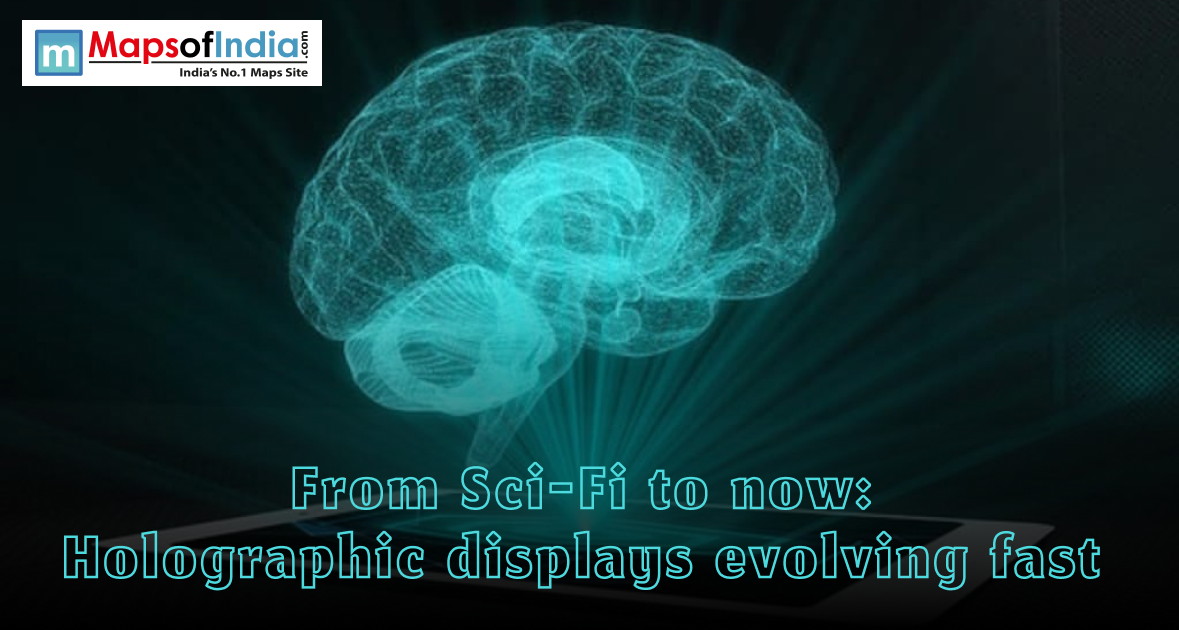
Getting to know what holographic displays are will help us better imagine where they could go. A hologram is a three-dimensional picture made by capturing and reconstructing light beams that gives it height, shifting background and looks real. Unlike 3D displays that first work with images, holographic displays use light fields to make real, 3D objects that can be seen from all around, no glasses needed. This process requires complicated interaction of light waves and detailed control over light pulses. Modern holograms are often produced using lasers, computers or electricity which are known as laser holography, computer-generated holography and electro-holography. There are advantages and disadvantages to every method, mostly concerning the picture, colors, the angle from which they are seen and any additional equipment.Current State of Holographic Display Technology
Although true sci-fi holograms are not yet available, similar technology has taken big strides recently.1. Laser and Optical Holograms
Since the 1960s, laser holography has been used primarily for security badges and artworks that do not move. Nevertheless, better laser and optical technology have allowed holograms to change instantly. Such ideas are useful for advertising campaigns and exhibitions.2. Electro-Holography
In order to control the brightness and phase of light and create lifelike holograms, electro-holography relies on spatial light modulators. Applications such as 3D medical pictures and video chats in holography require such an approach. Despite its current limitations and low resolution, the technology is rapidly advancing.3. Augmented and Mixed Reality Devices
Microsoft’s HoloLens and Magic Leap place 3D digital images in front of us, according to the principles of holography. Since they depend on headsets instead of real floating holograms, these mixed reality systems lead toward fully immersive experiences with holograms.4. Holographic Displays Without Glasses
Thanks to light-field or multi-view projection technology, three-dimensional video may now be seen on tablets and smartphones. You don't need to wear special glasses to utilize consumer devices or play video games because these displays allow for a variety of angles and depth.Emerging Applications of Holographic Displays
Holographic displays are getting more useful which will allow for greater changes in various sectors.Healthcare
Holograms used in medical imaging enable doctors to see the body’s organs in three dimensions, boosting their medical decisions and surgeries. Thus, surgeons have access to 3D organs or tumors in advance and can become more accurate, leading to improved success.Education and Training
Holograms help make education more interesting and involve students directly. School goers might be able to examine 3D models of things like history, science or space. Likewise, specialists are able to practice in virtual environments with holographic examples that look real.Communication
Holographic telepresence might change the way we communicate remotely because it lets people see 3D projections of each other, giving a stronger feeling of being together than flat video calls can.Entertainment
Holographic displays now allow people to experience both concerts and gaming in totally new ways. Envisage being at a concert where a hologram of the artist sings in front of you or playing games where figures and scenes show up around you.Retail and Advertising
Using holograms gives businesses an original way to introduce their products, lure customers and enhance the shopping experience. Stores may start using 3D holograms for customers to interact with products digitally.Challenges to Overcome
Even with all the benefits, it will take some time for widely used holographic displays to be a reality:- High Cost and Complexity: Higher Prices and More Involvement: High-quality holograms need costly parts and careful setup.
- Limited Viewing Angles: Nowadays, displays usually allow one or a limited number of viewing points.
- Computational Demand: Holograms must be produced quickly which calls for advanced hardware and clever software solutions.
- Size and Portability: Being portable and small is difficult for current holographic displays.
- Environmental Constraints: Lighting nearby and things in the background can reduce the way and the quality in which holograms are seen.