The Rann of Kutch in Gujarat is one of India's most extraordinary landscapes, known for its endless white salt flats, dramatic skies and unique seasonal transformations. Stretching across a vast region near the India-Pakistan border, this remarkable terrain looks almost like a snow-covered desert during certain months, while at other times, it resembles a shallow inland sea. Its appearance changes with rainfall, temperature, evaporation and the movement of seasonal waters.
Often called India's White Desert, the Rann of Kutch is not a conventional sandy desert. It is a vast salt marsh where natural processes create a landscape unlike almost anywhere else in the country. From monsoon flooding to winter's brilliant white surface and summer's intense heat, each season brings a different character to this fascinating geographical region.
What Is the Rann of Kutch?
The Rann of Kutch is a large seasonal salt marsh located in the Kutch district of Gujarat. It is broadly divided into the Great Rann of Kutch and the Little Rann of Kutch. The Great Rann is particularly famous for its extensive white salt flats, while the Little Rann is known for its distinctive salt-marsh ecosystem and the Indian wild ass.
The region lies close to the Arabian Sea and has a complex geographical history shaped by tectonic activity, sediment deposition and changes in sea level. Parts of the Rann were historically influenced by marine waters, and the area developed into a low-lying landscape where seasonal flooding and evaporation play important roles.
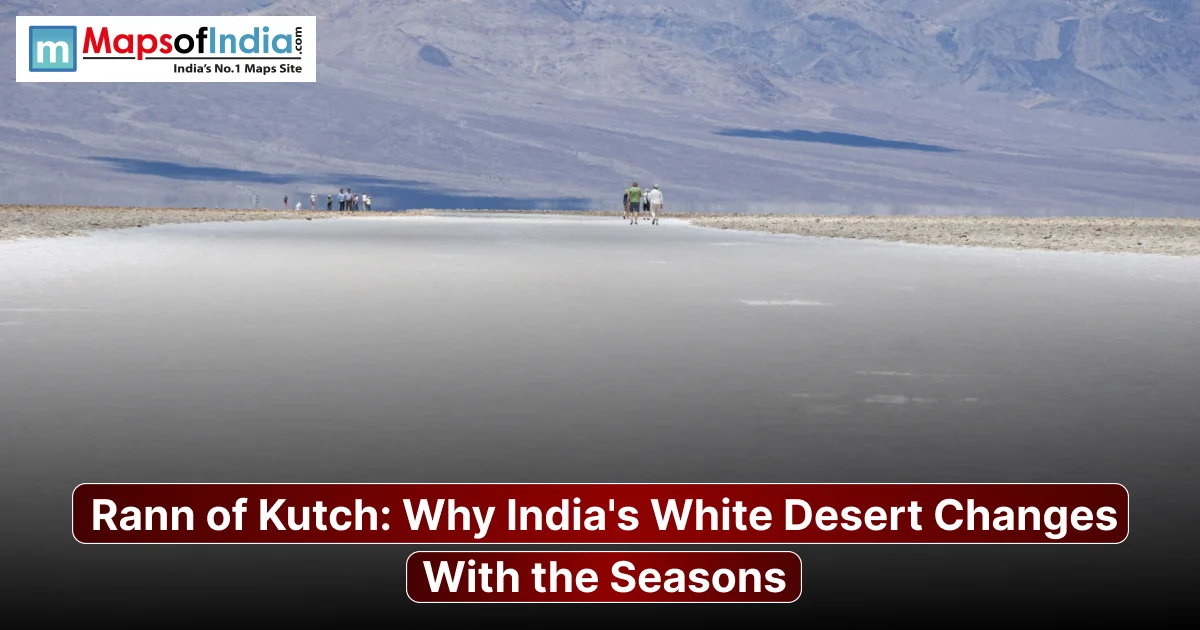
The white appearance of the Rann comes largely from salt deposits left behind when water evaporates. The result is a striking landscape that can appear bright white under the sun, silver beneath the moon and pale gold during sunrise and sunset.
Why Does the White Desert Change With the Seasons?
The changing appearance of the Rann of Kutch is primarily the result of its seasonal water cycle. The region receives much of its rainfall during the southwest monsoon, while the rest of the year is generally dry. Because the terrain is low-lying and relatively flat, monsoon water can spread across large areas instead of draining away quickly.
As the weather becomes drier, the water gradually evaporates. Dissolved salts remain on the ground and form a crust across the exposed surface. This natural cycle transforms the Rann from a flooded salt marsh into a broad white expanse.
Temperature, wind, soil conditions and the amount of rainfall influence how quickly the landscape dries and how thick or continuous the salt crust becomes. These variations mean that the Rann does not look exactly the same every year.
The Monsoon: When the White Desert Becomes a Wetland
During the monsoon, generally from June to September, the Rann undergoes one of its most dramatic transformations. Rainfall, runoff from surrounding areas and seasonal water inflows can inundate extensive sections of this low-lying terrain.
Instead of a continuous white surface, much of the landscape may appear muddy, waterlogged or covered by shallow water. The boundary between land and water becomes difficult to distinguish in some places, creating a vast, open wetland.
The monsoon also supports ecological activity across the region. Seasonal wetlands provide important habitats for birds and other wildlife, while vegetation grows in suitable areas around the marshes. The availability of water influences the distribution of food and shelter for different species.
However, flooding can make access to parts of the Rann difficult. The landscape that attracts visitors during the dry season may be inaccessible or unsuitable for sightseeing during periods of heavy rainfall.
Winter: When the Rann Turns Brilliant White
Winter is the season when the Rann of Kutch becomes most recognisable to visitors. As rainfall decreases and temperatures fall, the water left behind by the monsoon begins to evaporate. Salt deposits gradually become exposed, producing the enormous white flats that have made the region famous.
From around November to February, conditions are often favourable for experiencing this distinctive landscape, although the exact timing depends on local weather and water levels.
Under clear skies, the salt crust reflects sunlight and creates an almost endless white horizon. The absence of tall vegetation across large stretches makes the landscape feel unusually open. During sunrise and sunset, changing light gives the white surface soft shades of pink, orange, grey and gold.
On full-moon nights, the illuminated salt flats can create an especially striking visual effect. Moonlight spreads across the pale ground, making the landscape appear luminous. This combination of open horizons, cool weather and unusual scenery makes winter the most popular period for tourism.
The Rann Utsav, a seasonal cultural festival held in the region, adds another dimension to the winter experience. Visitors can explore Gujarati folk music, traditional dance, handicrafts, regional cuisine and local cultural traditions alongside the natural beauty of the White Desert.
Summer: Heat, Salt and a Harsh Landscape
Summer, generally extending from March to June, brings intense heat to the Rann of Kutch. Temperatures can rise considerably, and exposed salt flats receive strong sunlight with little natural shade.
As evaporation continues, the ground may become dry and hard, with salt deposits forming crusts, patches and irregular patterns. Cracks can develop in the surface, revealing the effects of moisture loss and changes in the underlying soil.
The landscape may look stark and almost lifeless during the hottest part of the year. Yet the Rann is not entirely without ecological activity. Wildlife survives in surrounding grasslands, seasonal wetlands and other habitats, adapting to limited water availability and extreme temperatures.
Summer also demonstrates why the Rann should not be understood simply as a permanently white desert. Its famous appearance depends on the interaction between seasonal flooding and prolonged drying.
The Geography Behind the White Salt Flats
The Rann's unique landscape is closely connected to its low elevation, saline soils and seasonal hydrology. During wet periods, water spreads over the flat terrain and dissolves or carries salts. When the water evaporates, these salts are deposited on the surface.
This process is particularly visible in areas where drainage is limited, and evaporation is high. The concentration of salts, the texture of the soil and the distribution of water determine how the ground appears after drying.
The region's extreme seasonal contrasts also reflect its climate. Rainfall is concentrated within a relatively short part of the year, while dry conditions dominate for much longer periods. This pattern produces a repeating sequence of inundation, drying and salt-crust formation.
Although the seasonal cycle is natural, variations in rainfall, temperature and water flow can alter the extent and timing of the white surface. Environmental changes and human activities can also influence the wider ecosystem.
Wildlife and the Ecological Importance of the Rann
Beyond its striking scenery, the Rann of Kutch is an important ecological region. Its seasonal wetlands, grasslands and surrounding arid habitats support a variety of birds, mammals and other wildlife.
The wider Kutch region attracts flamingos, pelicans, cranes and other migratory or resident birds, depending on the location and season. The Little Rann of Kutch is particularly important for the endangered Indian wild ass, which inhabits the area's distinctive dry grasslands and saline environments.
The changing availability of water creates different ecological opportunities throughout the year. Wet periods support aquatic life and waterbirds, while drier conditions favour species adapted to arid landscapes.
Protecting these habitats is essential because the Rann's beauty is only one part of its value. Its ecological importance depends on the relationship between water, salt, vegetation, wildlife and surrounding communities.
Why the Rann of Kutch Is Worth Experiencing
The Rann of Kutch offers a rare opportunity to witness how dramatically a landscape can change without losing its geographical identity. During the monsoon, it behaves like a vast seasonal wetland. In winter, it becomes a brilliant white salt desert. In summer, it reveals a dry, sun-baked environment shaped by heat and evaporation.
For travellers, winter generally offers the most comfortable conditions for exploring the White Desert. Visitors should check local access rules and weather conditions before travelling, as certain areas require permits and seasonal arrangements.
The region also provides opportunities to discover the culture of Kutch, including traditional textiles, embroidery, pottery, music and distinctive regional food. These cultural experiences complement the natural landscape and demonstrate the close relationship between local communities and their environment.
Conclusion
The Rann of Kutch is a remarkable example of how climate and geography shape the appearance of a place. Its transformation from a flooded salt marsh into a vast white desert is driven by seasonal rainfall, evaporation and the accumulation of salt on the ground.
Each season reveals a different side of this extraordinary landscape, from the water-filled expanses of the monsoon to the brilliant salt flats of winter and the harsh dryness of summer. More than a tourist attraction, the Rann is a dynamic geographical region whose natural processes, wildlife and cultural traditions make it one of Gujarat's most distinctive destinations.
FAQs
1. Why is the Rann of Kutch called the White Desert?
The Rann of Kutch is called the White Desert because its vast salt flats develop a bright white crust when seasonal water evaporates and leaves salt deposits behind. The sunlight reflecting off this surface creates the appearance of an endless white landscape.
2. Why does the Rann of Kutch change with the seasons?
The Rann of Kutch changes with the seasons because of variations in rainfall, water levels, temperature and evaporation. During the monsoon, large areas become flooded, while the dry months expose salt deposits that create the famous white desert.
3. What is the best time to visit the Rann of Kutch?
The best time to visit the Rann of Kutch is generally from November to February. During these winter months, the weather is more comfortable, the salt flats are usually dry and white, and visitors can enjoy the Rann Utsav cultural festival.
4. What happens to the Rann of Kutch during the monsoon?
During the monsoon, usually from June to September, rainfall and seasonal water inflows flood large sections of the Rann of Kutch. The white salt flats become temporarily submerged, transforming the landscape into a vast seasonal wetland that supports various bird species and other wildlife.
5. How does the white salt crust form in the Rann of Kutch?
The white salt crust forms when water containing dissolved salts spreads across the low-lying land and gradually evaporates under the sun. As the water disappears, salt remains on the ground and accumulates into a pale crust, creating the White Desert's distinctive appearance.
6. Where is the Rann of Kutch located in India?
The Rann of Kutch is located in the Kutch district of Gujarat in western India, near the international border with Pakistan. It includes the Great Rann of Kutch and the Little Rann of Kutch, both known for their distinctive salt-marsh landscapes and ecological importance.
7. What is the Rann Utsav, and why is it celebrated?
Rann Utsav is a seasonal cultural festival held in the Kutch region of Gujarat, celebrating the area's traditional arts, music, dance, handicrafts and cuisine. Organised around the winter tourism season, it allows visitors to experience the White Desert alongside the rich cultural heritage of Kutch.