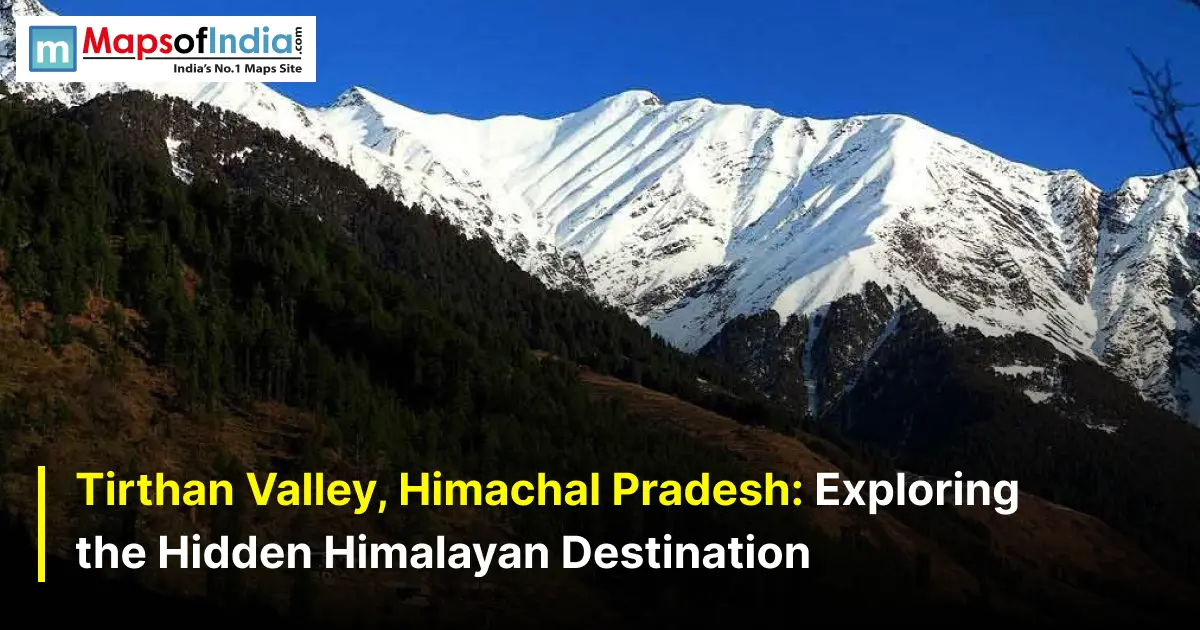
Tirthan Valley in Himachal Pradesh is a beautiful Himalayan destination known for its peaceful surroundings, crystal-clear rivers, dense forests, traditional villages and breathtaking mountain landscapes. Located in the Kullu district, the valley is an ideal getaway for travellers looking to escape crowded hill stations and experience nature at its best. With scenic trekking trails, riverside stays, waterfalls and proximity to the Great Himalayan National Park, Tirthan Valley offers a refreshing combination of adventure, relaxation and cultural exploration.
Where is Tirthan Valley Located?
Tirthan Valley is situated in the Kullu district of Himachal Pradesh, along the banks of the Tirthan River. It lies approximately 60 kilometres from Kullu and around 100 kilometres from Manali. The valley is named after the Tirthan River, which originates in the region of the Great Himalayan National Park.
The destination is primarily accessed through Aut, a town on the Chandigarh-Manali highway. From Aut, travellers take a road towards Banjar and Gushaini to reach different parts of the valley. Its relatively secluded location has helped preserve its natural beauty and peaceful atmosphere.
Natural Beauty and Landscape of Tirthan Valley
Tirthan Valley is surrounded by snow-covered Himalayan peaks, pine forests, deodar trees, green meadows and small mountain settlements. The Tirthan River flows through the valley, creating a picturesque setting with clear water, rocky riverbanks and natural pools.
Unlike more commercialised destinations, the valley retains a traditional mountain atmosphere. Wooden houses, apple orchards, terraced fields and quiet villages add to its charm. The changing landscape across seasons makes it attractive throughout much of the year.
Top Places to Visit in Tirthan Valley
1. Great Himalayan National Park: A UNESCO World Heritage Site, the Great Himalayan National Park is one of the region's biggest attractions. It is known for its rich biodiversity, alpine forests, rare wildlife and scenic trekking routes. Visitors can explore designated trails and experience the natural environment of the western Himalayas.
2. Gushaini: Gushaini is a charming village situated along the Tirthan River. It is popular for riverside cottages, peaceful surroundings, fishing opportunities and access to trekking routes.
3. Jibhi: Located near Tirthan Valley, Jibhi is famous for its wooden houses, forest-covered hills, small waterfalls and traditional Himalayan architecture. It is a popular destination for photography and relaxing holidays.
4. Jalori Pass: Situated at an altitude of approximately 3,120 metres, Jalori Pass offers spectacular views of the surrounding mountains. It also serves as the starting point for treks to Serolsar Lake and nearby viewpoints.
5. Serolsar Lake: Surrounded by dense forests, Serolsar Lake is a beautiful high-altitude lake accessible through a trekking trail from Jalori Pass. Its peaceful atmosphere and scenic surroundings make it a favourite among nature lovers.
Things to Do in Tirthan Valley
Tirthan Valley offers several outdoor activities for adventure enthusiasts and nature lovers.
- Trekking: Explore mountain trails leading to waterfalls, alpine meadows, forest viewpoints and high-altitude lakes.
- Trout Fishing: The Tirthan River is known for trout fishing. Angling is regulated, and visitors should obtain the required permits and follow local conservation rules.
- Nature Walks: Walk through forest trails, traditional villages and riverside paths to enjoy the region's peaceful environment.
- Camping: Experience camping near the river or amidst mountain landscapes at permitted locations.
- Birdwatching: The surrounding forests are home to several Himalayan bird species, making the valley attractive for birdwatchers and wildlife enthusiasts.
Best Time to Visit Tirthan Valley
The best time to visit Tirthan Valley depends on the kind of experience travellers are seeking.
- March to June: Pleasant weather, blooming vegetation and comfortable temperatures make this period suitable for sightseeing, trekking and outdoor activities.
- July to September: The valley becomes exceptionally green during the monsoon. However, heavy rainfall can cause landslides and road disruptions, so travel requires caution.
- October to November: Clear skies, autumn colours and cooler temperatures make this an excellent period for photography and nature exploration.
- December to February: Winter brings cold temperatures and occasional snowfall in higher areas, creating beautiful mountain scenery.
Local Culture, Food and Accommodation
Tirthan Valley provides an opportunity to experience the traditional lifestyle of Himachal Pradesh. The local communities are known for their warm hospitality, wooden architecture, traditional customs and close connection with nature.
Visitors can enjoy Himachali dishes such as Siddu, Madra, Dham-style meals and local seasonal preparations. Trout is also a popular speciality in the region.
Accommodation options include riverside cottages, homestays, guesthouses, eco-resorts and boutique properties. Staying in a traditional homestay is a great way to experience local hospitality and understand the culture of the valley.
How to Reach Tirthan Valley
Tirthan Valley is accessible by road from several major cities in North India.
- By Air: Bhuntar Airport, near Kullu, is the nearest airport, approximately 50–60 kilometres from the valley. Flight availability may be limited.
- By Rail: Joginder Nagar Railway Station is one of the nearest railway stations, although rail connectivity is limited. Chandigarh is a more convenient major railhead for many travellers.
- By Road: Regular buses and taxis connect Aut and Banjar with nearby destinations. Travellers can reach Aut from Chandigarh, Delhi and other major cities before continuing towards the valley.
Why Visit Tirthan Valley?
Tirthan Valley is an excellent destination for travellers seeking tranquillity, natural beauty and outdoor adventures. Its riverside landscapes, forest trails, traditional villages and proximity to the Great Himalayan National Park make it different from crowded tourist destinations such as Shimla and Manali.
Whether it is trekking through mountain forests, enjoying the peaceful sound of the Tirthan River, exploring nearby villages or experiencing local culture, the valley offers something for different kinds of travellers. Tirthan Valley is truly a hidden Himalayan destination where visitors can reconnect with nature and discover the quieter side of Himachal Pradesh.
FAQs
1. Where is Tirthan Valley located in Himachal Pradesh?
Tirthan Valley is located in the Kullu district of Himachal Pradesh, along the banks of the Tirthan River. It is situated near Banjar and Gushaini and serves as a gateway to the Great Himalayan National Park.
2. What is Tirthan Valley famous for?
Tirthan Valley is famous for its scenic Himalayan landscapes, crystal-clear river, dense forests, traditional villages, trout fishing, trekking trails and proximity to the Great Himalayan National Park.
3. What is the best time to visit Tirthan Valley?
March to June and October to November are considered the best times to visit Tirthan Valley. These months offer pleasant weather, clear skies and favourable conditions for sightseeing, trekking and outdoor activities.
4. How many days are enough to explore Tirthan Valley?
A 3–4 day trip is generally sufficient to explore Tirthan Valley. Visitors can explore Gushaini, Jibhi, Jalori Pass, Serolsar Lake and nearby attractions while enjoying nature walks and riverside activities.
5. How can I reach Tirthan Valley from Delhi?
Travellers can reach Tirthan Valley from Delhi by road or bus via Chandigarh, Mandi and Aut. From Aut, the route continues towards Banjar and Gushaini. The journey generally takes around 10–12 hours by road, depending on traffic and road conditions.
6. Which are the best places to visit near Tirthan Valley?
Some popular places near Tirthan Valley include Jibhi, Jalori Pass, Serolsar Lake, Gushaini, Shoja and the Great Himalayan National Park. These destinations offer beautiful mountain views, trekking opportunities and peaceful natural surroundings.
7. Is Tirthan Valley suitable for family trips and adventure activities?
Yes, Tirthan Valley is suitable for families, couples, solo travellers and adventure enthusiasts. Visitors can enjoy nature walks, trekking, birdwatching, camping, village exploration and trout fishing, making it a versatile Himalayan holiday destination.