Kausani, a picturesque hill station in Uttarakhand, is known for its breathtaking Himalayan views, peaceful surroundings and lush tea gardens. Situated in the Bageshwar district at an altitude of approximately 1,890 metres above sea level, this charming destination offers a refreshing escape from crowded cities. Surrounded by pine forests, terraced fields and snow-covered mountain peaks, Kausani is often admired for its natural beauty and tranquil atmosphere.
Overlooking the magnificent Himalayan ranges, including Nanda Devi, Trishul and Panchachuli, Kausani is an ideal destination for nature lovers, photographers and travellers seeking a peaceful mountain retreat.
Himalayan Views and Natural Beauty
One of the biggest attractions of Kausani is its spectacular panoramic view of the Himalayan mountain range. On clear mornings, visitors can witness snow-covered peaks glowing under the rising sun. The changing colours of the mountains throughout the day create beautiful scenery, making sunrise and sunset particularly memorable experiences.
Kausani's peaceful landscape is complemented by dense pine forests, green valleys, mountain streams and terraced agricultural fields. The pleasant mountain environment provides opportunities for nature walks, photography and relaxation.
The region is also suitable for birdwatching, with several Himalayan bird species found in its surrounding forests. Visitors can explore the countryside and enjoy the beauty of Uttarakhand's Kumaon region at a relaxed pace.
Kausani Tea Gardens: A Unique Attraction
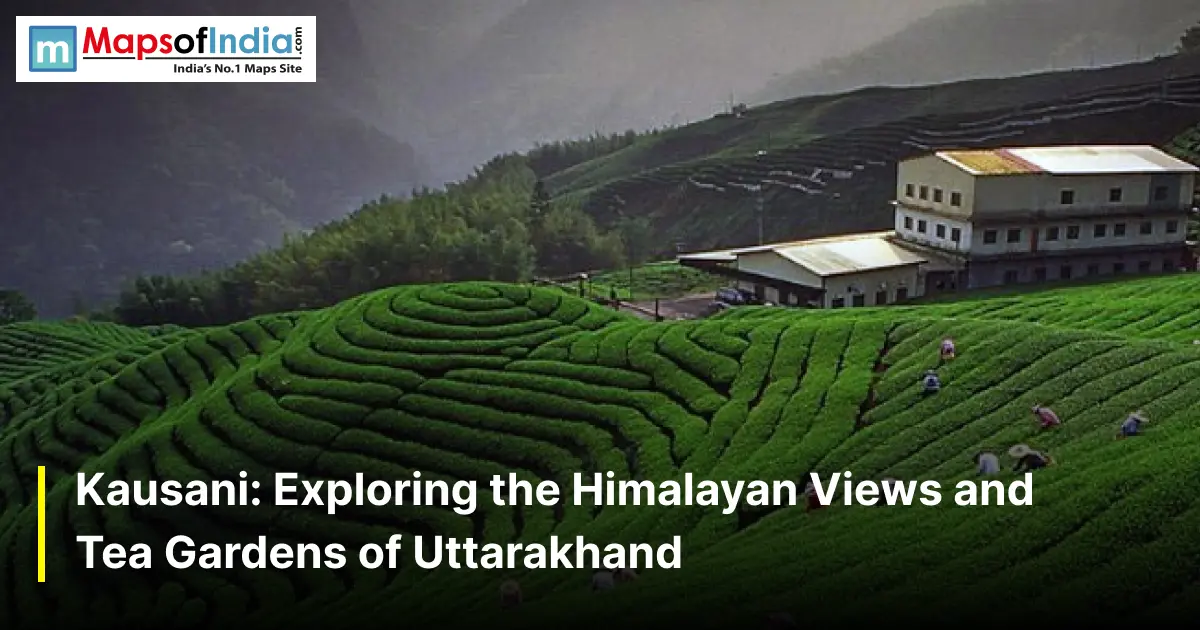
The tea gardens are among the distinctive attractions of Kausani. Spread across the surrounding hills, these plantations produce tea that is appreciated for its flavour and aroma. The Kausani Tea Estate offers visitors an opportunity to explore the tea-growing environment and understand how tea is cultivated and processed.
Walking through the neatly arranged tea bushes against a backdrop of green hills creates a refreshing experience. Visitors can learn about tea production, explore the plantation surroundings and purchase locally produced tea.
The tea gardens also provide excellent photography opportunities, particularly when the surrounding landscape is covered in greenery. They add a different dimension to Kausani's appeal beyond its famous mountain views.
Major Tourist Attractions in Kausani
Kausani has several attractions that introduce visitors to its natural beauty, cultural heritage and spiritual significance.
1. Anasakti Ashram: Also known as Gandhi Ashram, this peaceful place is associated with Mahatma Gandhi, who visited Kausani in 1929. Impressed by its natural surroundings, he stayed here while writing his commentary on the Bhagavad Gita, known as Anasakti Yoga. The ashram offers beautiful Himalayan views and houses a small museum and library.
2. Baijnath Temple: Located near Kausani, Baijnath Temple is an important historical and religious attraction. Situated along the Gomti River, the temple complex is known for its ancient stone architecture and dedication to Lord Shiva. Its historical significance and peaceful surroundings make it a popular excursion.
3. Rudradhari Falls and Caves: Surrounded by dense forests and agricultural fields, Rudradhari Falls is a beautiful natural attraction near Kausani. Visitors can enjoy a scenic trek through the forest to reach the waterfall. The nearby caves are also associated with local religious traditions.
4. Sumitranandan Pant Museum: Dedicated to the renowned Hindi poet Sumitranandan Pant, who was born in Kausani, this museum preserves his personal belongings, manuscripts, photographs and literary works. It offers insights into the life and contribution of one of India's celebrated poets.
Local Culture and Kumaoni Cuisine
Kausani provides visitors with an opportunity to experience the traditional culture of the Kumaon region. Local villages reflect the simplicity of mountain life, with traditional houses, agricultural practices and regional customs.
Kumaoni cuisine is another highlight of a visit. Popular dishes include Bhatt ki Churkani, made using black soybeans, Aloo ke Gutke, a traditional spicy potato preparation, and Mandua Roti, prepared from finger millet flour. Bal Mithai, a famous sweet from the Kumaon region, is also worth trying.
Local markets offer handicrafts, woollen products, regional food items and locally produced tea, allowing visitors to explore the area's traditional products.
Best Time to Visit Kausani
Kausani can be visited throughout much of the year, depending on the travel experience visitors prefer.
- March to June: Pleasant temperatures and clear mountain views make this period suitable for sightseeing and outdoor activities.
- July to September: The monsoon brings greenery to the hills, but heavy rainfall can affect road conditions and visibility.
- October to November: This is an excellent period for enjoying clear Himalayan views and comfortable weather.
- December to February: Winter brings cold temperatures, and occasional snowfall may transform the surrounding landscape.
How to Reach Kausani
Kausani is accessible by road from several major towns in Uttarakhand. The nearest railway station is Kathgodam, approximately 135 kilometres away. From there, visitors can hire taxis or use buses to reach the hill station.
Pantnagar Airport is the nearest airport, located approximately 170 kilometres away. Travellers can also reach Kausani by road from Almora, Nainital and Ranikhet.
Why Visit Kausani?
Kausani offers a combination of Himalayan scenery, peaceful tea gardens, historical attractions and traditional Kumaoni culture. Unlike some of Uttarakhand's more crowded hill stations, it provides a relatively quiet environment where visitors can enjoy nature at their own pace.
Whether watching the sunrise over snow-covered mountains, walking through tea plantations, exploring ancient temples or tasting local delicacies, Kausani offers a memorable mountain experience. Its natural charm and peaceful atmosphere make it a wonderful destination for travellers exploring the beauty of Uttarakhand.
FAQs
1. Where is Kausani located in Uttarakhand?
Kausani is a hill station located in the Bageshwar district of Uttarakhand, India. It lies in the Kumaon region at an altitude of approximately 1,890 metres above sea level.
2. Why is Kausani famous?
Kausani is famous for its panoramic views of the Himalayan mountain ranges, beautiful tea gardens, peaceful surroundings and cultural attractions such as Anasakti Ashram and Baijnath Temple.
3. What is the best time to visit Kausani?
The best time to visit Kausani is from March to June and October to November. These months generally offer pleasant weather, comfortable sightseeing conditions and clear views of the Himalayan peaks.
4. What are the best places to visit in Kausani?
Popular places to visit in Kausani include Anasakti Ashram, Kausani Tea Estate, Rudradhari Falls and Caves, Sumitranandan Pant Museum and the nearby Baijnath Temple.
5. Can tourists visit the tea gardens in Kausani?
Yes, tourists can visit the Kausani Tea Estate to explore its tea plantations, learn about tea cultivation and processing, enjoy the surrounding scenery and purchase locally produced tea.
6. How far is Kausani from Nainital?
Kausani is approximately 115–120 kilometres from Nainital by road. The journey generally takes around four to five hours, depending on traffic and road conditions.
7. How many days are enough to explore Kausani?
Two to three days are generally sufficient to explore Kausani's major attractions, enjoy Himalayan views, visit tea gardens, discover nearby temples and experience the local Kumaoni culture.