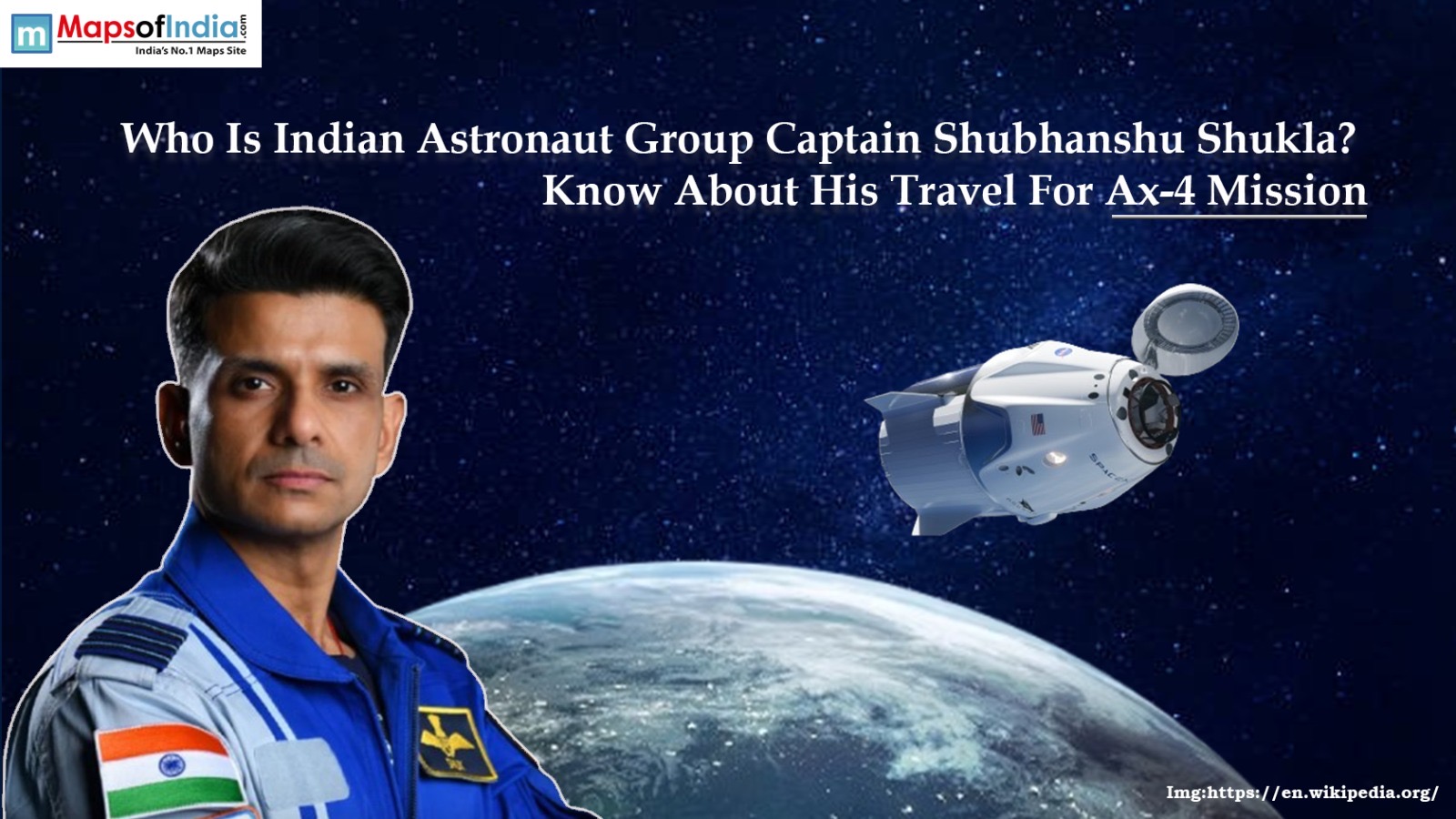
Who is Group Captain Shubhanshu Shukla?
Group Captain Shubhanshu Shukla is an accomplished test flight veteran and pilot of the Indian Air Force who has been chosen by ISRO and Indian defence authorities to represent India in future human spaceflight missions. Having trained long and hard both at the Institute of Aerospace Medicine (IAM) and abroad, Shukla represents the physical endurance and mental discipline essential to modern astronauts, as well as their technical prowess. He is one of the few selected out of hundreds of applicants for the Indian Human Spaceflight Program (HSP) under the overall objectives of Gaganyaan. The Ax-4 mission, and his own effort in particular, will not only be a personal milestone but also a signal of the readiness of Indian astronauts to take their place among the elite ranks of spacefarers worldwide.Ax-4 Mission Overview
The Axiom Space Mission 4 (Ax-4) is a private mission to the International Space Station, a collection of commercial flights led by Axiom Space. NASA expects to launch Ax-4 in late 2025 or early 2026 using a SpaceX Crew Dragon spacecraft launched from NASA’s Kennedy Space Centre in Florida. Unlike the longer-running national missions led by NASA, Roscosmos, or ESA, however, the Ax-series missions are intended to provide seats to commercial astronauts, researchers, astronauts of emerging spacefaring nations, and organisations wanting the strategic or scientific benefits of a presence in space. Including Group Captain Shukla in the Ax-4 mission highlights the growing Indian trust in public-private international space missions. It will be the first time an Indian astronaut has gone to space since Rakesh Sharma’s historic 1984 mission aboard a Soviet Soyuz spacecraft.The Strategic Imperative for India
Bridging the Gap Since 1984
Until then, Rakesh Sharma, who flew aboard Soyuz T-11 in 1984 for ISRO and the Soviet space agency, remained India's only astronaut. Although this mission achieved the ancient and national goal, it did not initiate an Indian human spaceflight programme. Now, Shukla’s imminent spaceflight will bring India’s subcontinent back to manned spaceflight and set it back on a new definition of the cutting edge. Unlike Sharma's, Shukla’s participation in the Ax-4 mission is structurally unrelated to ceremonialism and is strategically important in terms of technical preparedness for the future of Indian space exploration.Precursor to Gaganyaan
India's first crewed space mission, Gaganyaan, is being developed by ISRO and is set to launch in the coming years. Shukla's real-time experience aboard the ISS will be indispensable, considering that he is among the first astronauts on the final shortlist for Gaganyaan. He will learn about launch protocols, in-orbit operations, space research, zero-gravity adaptation, and emergency procedures, all of which are important for the upcoming Indigenous mission.India’s Human Spaceflight Potential- A Global Validation
Shukla’s selection for Ax-4 will be seen in the context of increasing acknowledgment of India’s human spaceflight capabilities and the country’s space diplomacy. His presence on a global platform like the ISS adds to national pride. It sends a powerful signal that India is ready to play an important role in space exploration and international cooperation.Axiom Space and the Commercialisation of Spaceflight
Founded by former NASA executives, Texas-based Axiom Space aims to commercialise human spaceflight and create the world’s first commercial space station. The Ax-series missions are designed to help train astronauts, conduct research and build international partnerships in space. Axiom has flown three missions to the ISS with NASA’s support and partnership with SpaceX. These missions have included astronauts from Spain, Turkey, Saudi Arabia, reflecting an emerging trend of international cooperation through commercial vehicles.Training and Preparation of Shukla
Group Captain Shubhanshu Shukla is already an experienced astronaut in India and Russia. He formed part of a four-member IAF team that had undergone training at the Gagarin Cosmonaut Training Centre, Star City, Russia, under the Indo-Russian collaboration for the Gaganyaan programme.The training included:
- Survival (arctic, desert, sea) training in extreme environments
- Flight simulation
- Weightlessness adaptation in parabolic arcs
- Physiology of humans in microgravity conditions
- Orbital manoeuvre and docking training
- Familiarity with space systems (particularly with ISS and Soyuz modules)
Leading up to the Ax-4 mission, he’ll receive additional training at NASA facilities and Axiom Space’s astronaut training centre in Houston, including:
- SpaceX Crew Dragon familiarisation
- ISS systems training
- Coordination between a multi-national crew
- Emergency drills
- Science experiment protocols