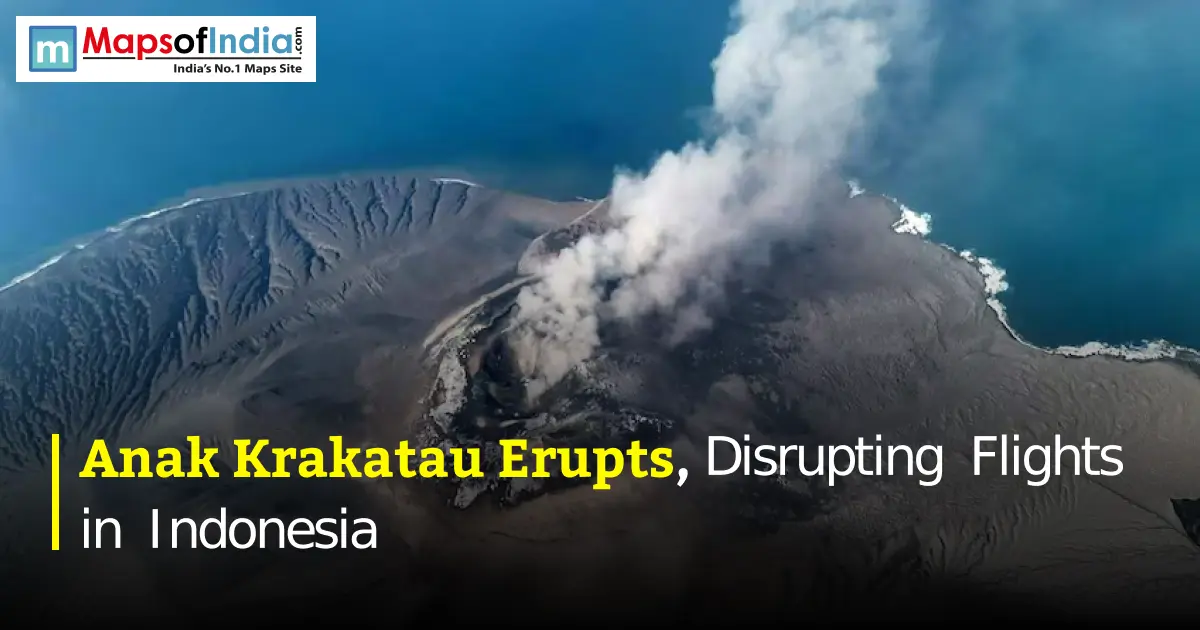
In early September 2026, Anak Krakatau, an Indonesian volcano, erupted, sending large ash plumes up into the atmosphere, causing extensive disruptions to air travel in the western part of Indonesia. The eruption started late on 4 September 2026 and continued through 5 September and increased in intensity during the subsequent days.
The volcanic ash covered portions of Java and Sumatra, forcing the temporary closure of several airports, including major airports in Jakarta, for a short while. Thousands of flights were delayed, cancelled, or diverted, leaving hundreds of thousands of passengers impacted.
By September 8, a few major airports were reopened due to reduced ash levels and changed wind patterns. Anak Krakatau was, however, active and volcanic activity and meteorological conditions were being monitored in the area around the volcano for potential additional hazards.
When Did Anak Krakatau Erupt?
The most recent major eruptive activity started late the 4th September 2026 in the Sunda Strait between Java and Sumatra in Indonesia.
During its peak phase, the eruption lasted for approximately 25 hours and consisted of volcanic ash and loud explosions, along with lava fountains. In some areas, the volcanic ash reached high altitudes, about 50,000 feet (15 kilometres), which is a significant height for aircraft flying through the area.
Other eruptions occurred following the main eruptive phase. Anak Krakatau had three more eruptions on September 8, but they were said to be less intense than the previous one.
The volcano remained under Level III, or Siaga, alert status, Indonesia’s second-highest volcanic alert level.
Flights Disrupted Across Indonesia
The biggest immediate impact of the eruption was on Indonesia’s aviation network.
Volcanic ash entered airspace around several airports in western Indonesia, leading authorities to temporarily suspend operations. Eight airports were affected during the initial disruption, including Soekarno-Hatta International Airport and Halim Perdanakusuma Airport in Jakarta.
Other airports that were affected were in Lampung and West Java.
As of September 6, 1700+ flights were delayed or cancelled, impacting approximately 170,000 passengers. There was a significant increase in the total number of flights affected as the disruption went on.
As of September 8, authorities reported that nearly 3,000 flights had been delayed, cancelled or otherwise disrupted, impacting some 341,000 passengers.
The disruption was both domestic and international, and the eruption was a big challenge for the aviation sector in Indonesia.
Jakarta Airport Reopens
One of the main facilities that were impacted by the eruption was Soekarno-Hatta International Airport in Indonesia, the largest international airport in Jakarta.
The airport has closed because of the volcanic ash in the air. The closure left a significant impact since Jakarta is one of the busiest aviation hubs in the Southeast region of the world.
Operations resumed slowly in the early hours of 8th September after it was determined that weather had improved enough to allow flights to operate again.
Other airports also started reopening as the ash settled. But some sites were temporarily shut down or closed for part of the year while the officials were evaluating air quality, ash fall and conditions on the runways.
The airlines were also required to test the planes involved in the disruption before placing them back in service.
Why Is Volcanic Ash Dangerous for Aircraft?
Volcanic ash is dangerously fine particles of pulverized volcanic rock and volcanic minerals that pose a threat to aviation.
These particles are pulled into an aircraft's engines when an airplane enters a dense ash cloud.
Temperatures inside jet engines are very high, which means that the ash particles will melt and then settle onto the parts of the engine.
This can make an engine lose power and, in extreme cases, can lead to engine failure.
Volcanic ash may also be hazardous to aircraft windshields and other surfaces. Can block visibility and disrupt aviation activities.
These are some of the reasons why aircraft and authorities keep a close eye on the volcanic ash cloud and may reroute or cancel flights if ash is found in flight routes.
Impact Beyond Airports
The eruption did not only impact air transportation.
Volcanic ash has been deposited on populated parts of western Indonesia, including parts of Jakarta and its surroundings. The residents were cautioned to avoid inhalation of ash and to avoid exposure to the eyes and skin, as ash particles may be harmful.
To minimize exposure of children to volcanic ash, some schools affected by the eruption temporarily switched to online learning.
The authorities also kept a watch on the weather conditions in coastal regions and the Sunda Strait. However, the officials noted there was no immediate risk of a tsunami with the latest eruption of Anak Krakatau, despite concern given by its history.
Anak Krakatau and the 2018 Tsunami
Anak Krakatau is famous for its role in the Sunda Strait Tsunami from 2018.
A significant landslide on a volcano flank on Anak Krakatau led to a tsunami in the coastal regions of Java and Sumatra on December 22, 2018. More than 400 people were killed, and thousands were injured.
The 2018 disaster demonstrated that Anak Krakatau can pose hazards beyond volcanic ash and lava. Because of this history, authorities closely monitor changes in the volcano’s activity.
There has been no similar tsunami event as a result of this eruption in September 2026, but officials do maintain a safety zone around the volcano.
Why Is Indonesia So Volcanically Active?
Indonesia is one of the world's most active Volcanic nations. It is part of the seismic zones of the Pacific Ocean Ring of Fire, where several plates meet and interact.
The topography of the country is conducive to earthquakes, volcanic eruptions and other geologic hazards. Indonesia has more than 100 active volcanoes, many of which are closely monitored by scientists and government agencies.
Anak Krakatau is part of this wider volcanic system and sits in the Sunda Strait, an important waterway between Java and Sumatra.
What Happens Next?
Anak Krakatau's situation is being closely monitored.
While large airports are beginning their reopening, air travel is slowly returning to normal operations, but there is still potential for further disruption if the volcano erupts again and sends ash towards the airspace over busy flight paths or if the wind blows volcanic material towards those routes.
People who are flying through the airports of Jakarta or Lampung or other airports that might be affected should therefore check their airline's information before travelling.
The September 2026 eruption demonstrates how quickly volcanic activity can affect transportation far beyond the immediate vicinity of a volcano. Anak Krakatau's ash cloud disrupted thousands of flights, affected hundreds of thousands of passengers and temporarily affected daily life across parts of Indonesia.
As the volcano remains active, Indonesian authorities continue to monitor its activity, ash emissions and surrounding airspace. The coming days will determine whether Anak Krakatau's activity continues to decline or produces further eruptions.
FAQs
1. When did Anak Krakatau erupt in September 2026?
Anak Krakatau began a major eruptive episode late on September 4, 2026, with further eruptions continuing over the following days.
2. Why did the Anak Krakatau eruption disrupt flights in Indonesia?
The eruption produced large volcanic ash clouds that spread into nearby airspace. Volcanic ash can damage aircraft engines and other components, leading airlines to cancel, delay or divert flights for safety reasons.
3. Which airports were affected by the Anak Krakatau eruption?
Several airports in western Indonesia were affected, including Soekarno-Hatta International Airport and Halim Perdanakusuma Airport in Jakarta, along with airports in West Java, Banten and Lampung.
4. How many flights were affected by the Anak Krakatau eruption?
Nearly 3,000 flights were delayed, cancelled or otherwise disrupted, affecting around 341,000 passengers during the peak of the disruption.
5. Is Anak Krakatau still erupting?
Anak Krakatau remained active on September 8, 2026, with additional eruptions reported. Authorities continued monitoring the volcano because further activity could produce more volcanic ash and cause additional flight disruptions.
6. Where is Anak Krakatau located?
Anak Krakatau is located in the Sunda Strait between the Indonesian islands of Java and Sumatra. It is part of Indonesia's highly active volcanic region along the Pacific Ring of Fire.
7. Is it safe to travel to Indonesia after the Anak Krakatau eruption?
Travel conditions depend on the destination and flight route. Major airports have reopened, but travellers should check their airline's latest flight status before travelling because renewed volcanic activity or changing winds could cause further disruptions.