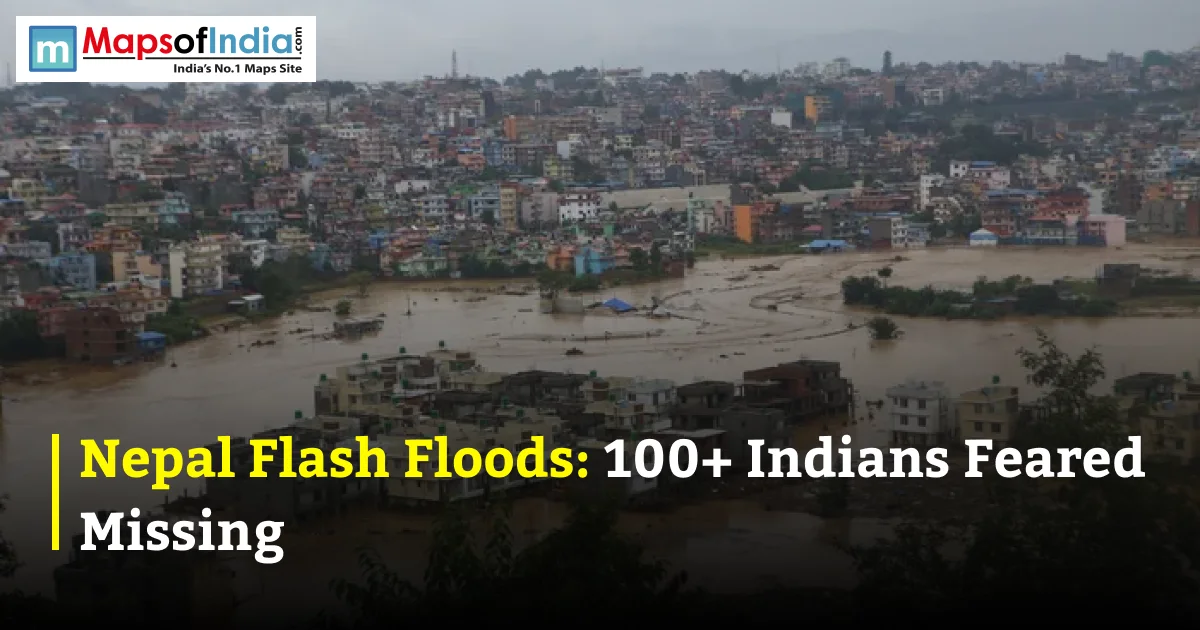
Nepal is facing a major flash-flood emergency after a sudden and destructive surge of water swept through Rasuwa district in northern Nepal near the border with China, opposite Tibet, on August 26, 2026. The flooding had a significant impact on settlements, roads, bridges, and hydropower infrastructure, and impacted the area of Syapru Besi and Timure as well.
The disaster has also led to worrying questions about the safety of travellers. A preliminary report from the Nepal Tourism Board (NTB) shows 384 people are missing, among them 291 foreigners and 93 Nepalese nationals. There were 105 Indian nationals among the foreign nationals, which made Indians the largest among foreign travellers in the preliminary list. There were 37 individuals whose citizenship status was not found out and are reported separately as non-resident Indians (NRIs).
These numbers are preliminary and not final as rescue operations are continuing and authorities are confirming documents.
Flash Floods Hit Nepal's Rasuwa District
A flash flood was observed over the Bhote Koshi River system in Rasuwa district. There are reports of a sudden influx of water into the river from the Tibetan side, resulting in heavy flooding in river catchment areas.
Other areas impacted include Syapru Besi and Timure, where infrastructure has been affected, and transportation and communication services disrupted. The disaster also impacted the critical border region between Nepal and China.
One of the most hazardous aspects of flash floods is that the water can quickly rise to dangerous levels, giving people little time to evacuate. Water in mountainous regions can carry great quantities of mud, rocks, trees and debris, too.
105 Indians Among 384 Travellers Reported Missing
The Nepal Tourism Board has released the preliminary missing person data, which has been a big topic of the disaster.
The NTB declared 384 travellers as missing, 291 foreign nationals and 93 Nepalis. Of the foreign visitors, 105 were from India. The preliminary list also has 37 non-resident Indians listed separately.
It is important to understand that when a person is reported as missing, it does not necessarily mean that they are definitely dead or washed away in the flood. In case of disaster, mobile networks could be shut down, and people may be stranded in remote areas or temporarily disjoined from family members or travel agencies.
Nepal Tourism Board (Nepal Tourist Office) and other relevant officials are thus still working to confirm the identities and location of those on the list. This number may change as travellers come into contact and communication resumes.
Search and Rescue Operations Underway
The Nepalese government has instituted relief and rescue operations in the affected areas. Nepal Army, Nepal Police and other security and emergency forces are deployed to help in the rescue and recovery operations.
But the flood and the damage to infrastructure have rendered the rescue operations difficult. Some areas have also been difficult to access due to high water and hard terrain. Helicopters have reportedly been deployed, but weather conditions and local conditions have impacted aerial rescues.
Rescue efforts have been underway to find missing persons, help stranded residents and tourists and assess the damage to affected communities and infrastructure.
Extensive Damage to Roads, Bridges and Power Projects
In some areas of Rasuwa, the flash floods resulted in damage to numerous homes. Roads and bridges were damaged or washed away, and villages were impacted by strong flows of water and debris.
The hydropower sector in Nepal has also been impacted by the disaster. Disruption of the hydropower facilities had impacted around 430 megawatts of electricity generation capacity, or over 12% of the country's total hydropower capacity, Reuters reported.
Roads and bridges are damaged, making it more difficult to move through the affected area, and complicating rescue operations.
What Caused the Nepal Flash Flood?
How exactly such a huge amount of water was able to accumulate in such a short span of time is still a mystery.
The initial reports state that the surge has been from the Tibet side of the border and has been through the Bhote Koshi river system of Nepal. But authorities and experts have been trying to determine the exact cause and events that led to the rapid and devastating rise in water levels.
The statement that ordinary rainfall of the monsoon triggered the disaster would, therefore, be wrong.
The Himalayan region has a number of hazards such as heavy rainfall, landslides, avalanches and sudden outburst of water from high areas. As investigations continue, the exact cause of this event should be described based on findings from the authorities in Nepal and scientific agencies.
Why Nepal Is Vulnerable to Flash Floods?
The country's topography is mountainous, and many areas in Nepal can be affected by flash floods and landslides. Rapid flows of water and debris in settlements and transport corridors are possible on steep slopes, narrow river valleys and fast-flowing Himalayan rivers.
While floods are possible during the monsoon season in Nepal, they are not always caused by the monsoon. Flooding can be very severe even if high rainfall does not seem to be occurring at a specific spot when the high-elevation water flows suddenly.
This latest disaster is a reminder of how quickly things can change in mountainous areas and the significance of early warnings and emergency preparedness to travellers and residents alike.
Why the Incident Has Raised Concern in India?
The ease of travel, cultural and historical links with India and its geographical location make Nepal a preferred holiday destination for many Indian tourists. The people of India visit Nepal for tourism, pilgrimage, adventure and business.
The names of Indians among the missing have, therefore, raised a lot of concern among the families in India.
When looking for family members, families are advised to trust official information, diplomatic channels, travel agencies and reputable news media outlets and not believe unverifiable social media posts. Initial lists of missing people may be amended as contact with travellers is made.
India-Nepal Coordination
The disaster also shows the need to coordinate the actions of both Nepal and Indian governments if the disaster affects Indian nationals in Nepal.
Diplomatic and consular officials may collaborate with the Nepalese government to facilitate identification of people in India affected by the disaster and deliver accurate information to relatives.
Because the missing-person figures are still being verified, official updates remain particularly important. Families should avoid relying on unconfirmed claims about casualties or the whereabouts of individual travellers.
Safety Advice for Travellers
The Nepal flash floods are a reminder of the risks associated with travelling through mountainous regions during periods of severe weather.
Travellers in or near flood-affected areas should:
- Follow instructions issued by local authorities and emergency responders.
- Move to higher ground if an evacuation order is issued.
- Stay away from swollen rivers, streams and drainage channels.
- Never attempt to cross fast-moving floodwater on foot or by vehicle.
- Avoid damaged roads, bridges and unstable slopes.
- Keep mobile phones charged whenever possible.
- Maintain contact with family members when communication is available.
- Carry identification and essential travel documents.
- Monitor official weather and emergency advisories.
Travellers planning a trip to Nepal should check local weather and safety conditions before travelling to remote or mountainous areas.
Death Toll and Missing-Person Figures Remain Subject to Change
The death toll has also fluctuated due to ongoing rescue and recovery efforts. Reuters reported on Aug. 26 that at least nine people were dead, and authorities cautioned that the death count could increase as many are unaccounted for.
The 384 missing travellers figure is also a preliminary one. It includes both Nepali and foreign nationals and should not be interpreted as a confirmed casualty figure. Authorities continue to verify the list and search for people who may be stranded or unable to communicate.
A Developing Disaster
The Nepal flash floods of August 26, 2026, have caused widespread destruction in Rasuwa and created serious concerns about the safety of travellers and local residents. The tentative list of 105 Indian nationals and 283 others who went missing is a reflection of the magnitude of the uncertainty being experienced by the relevant authorities and families.
The first need is to locate missing persons and rescue the people stuck, help affected communities and restore transport and communication networks.
The disaster is ongoing, and figures could vary with search and rescue efforts. As a result, it is always best to verify casualty and missing person information with the most recent official reports.
The incident also highlights the need for disaster preparedness, robust early-warning systems and excellent coordination of response efforts by disaster management agencies, especially in vulnerable Himalayan areas.
FAQs
1. What happened in Nepal on August 26, 2026?
A major flash flood struck Nepal's Rasuwa district near the China-Tibet border on August 26, 2026. A sudden surge in the Bhote Koshi River caused widespread damage to settlements, roads, bridges and infrastructure.
2. How many Indians are missing in the Nepal flash floods?
According to a preliminary list, 105 Indian nationals were among the foreign travellers reported missing after the flash flood in Nepal's Rasuwa district. The figure may change as authorities continue verification and rescue operations.
3. How many people are missing in the Nepal floods?
The Nepal Tourism Board initially listed 384 travellers as missing, including 291 foreign nationals and 93 Nepali nationals. The list is preliminary, and authorities are working to verify the whereabouts of those reported missing.
4. Where did the Nepal flash floods occur?
The flash floods primarily affected Rasuwa district in northern Nepal, particularly areas around the Bhote Koshi River near the border with China, opposite Tibet. Flood impacts were also reported downstream in other areas.
5. What caused the flash floods in Nepal?
The sudden flood was linked to a rapid surge of water into the Bhote Koshi River from the Tibetan side. Authorities and experts are continuing to assess the exact mechanism behind the event, so the final cause has not yet been conclusively established.
6. Are rescue operations underway in Nepal?
Yes. Nepalese security forces, emergency responders and the Nepal Army are conducting search, rescue and evacuation operations in the affected areas. Difficult mountainous terrain, damaged roads and high water levels have made rescue efforts challenging.
7. Is it safe to travel to Nepal during the floods?
Travellers should exercise extreme caution in flood-affected and mountainous areas of Nepal. People should follow local authorities' instructions, avoid rivers and damaged bridges, monitor official weather alerts and postpone unnecessary travel to affected regions until conditions improve.