Japan is facing a major disaster response after a powerful earthquake struck Kumamoto Prefecture on the southern island of Kyushu, killing at least 13 people and leaving others injured or missing. Japanese Prime Minister Sanae Takaichi confirmed the death toll on Wednesday, July 29, as emergency teams continued search-and-rescue operations across the affected areas.
The earthquake struck at around 4:27 p.m. (local time) on July 28, with its epicentre in the Kumamoto region. Initial reports described the earthquake as magnitude 7.1, while the U.S. Geological Survey later revised its estimate to magnitude 6.8. The Japan Meteorological Agency recorded a maximum seismic intensity of 7, the highest level on Japan's seismic intensity scale.
Japan Earthquake: 13 Deaths Confirmed
13 people were confirmed dead after the devastating quake, said Prime Minister Sanae Takaichi. Several others were injured, and rescuers are still looking for anyone who might be trapped or missing. Officials warned that the situation remained fluid as authorities assessed the full extent of the damage.
The death toll has raised concerns about the impact of the disaster on communities across Kumamoto. Emergency responders have been working through damaged areas, checking collapsed structures and helping residents affected by the strong shaking.
There have also been reports of homes and other structures being damaged, people being rescued and fires. Due to the extent of the damage, search and rescue has been prioritized.
Powerful Earthquake Strikes Kumamoto
The epicentre of the earthquake was in the Kumamoto Prefecture, where the highest intensity of the shaking was recorded on the seismic intensity scale used in Japan. The earthquake-induced vibrations were strong throughout the Kyushu region.
A maximum seismic intensity level of 7 was recorded in the town of Hikawa and the city of Uki, in Kumamoto Prefecture, according to the Prime Minister's Office in Japan. There was also strong shaking in other areas in and around Kumamoto.
The Japan Meteorological Agency indicated that the depth of the quake was about 10 km, meaning it was a shallow earthquake. Shallow quakes may cause strong ground velocity close to the epicentre, leading to damage to buildings and infrastructure.
Buildings Collapse and Fires Reported
Structural damage was observed in several places due to the strong shaking. Shortly after the earthquake, the Kumamoto prefectural authorities reported collapsed houses, people trapped inside houses, and fires, as well as multiple rescue situations.
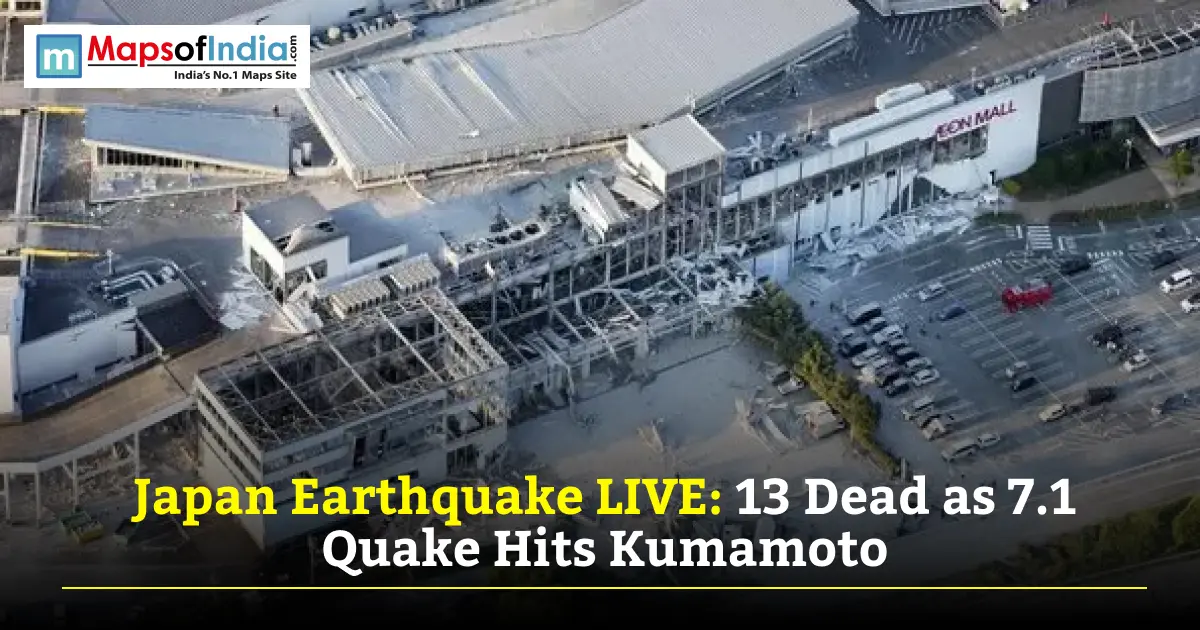
A large shopping centre in the area was also heavily damaged. Some of it collapsed after the earthquake, with emergency personnel scouring the area for anyone who may have been trapped inside, reports said. The incident turned out to be one of the key concerns of the rescue effort.
Photos and video from the affected area included pictures of buildings damaged, buildings collapsed, and debris on the roads. Police efforts have been underway to find out the extent of the devastation, and rescue efforts are ongoing.
Tsunami Advisory Issued After Japan Quake
The initial tsunami advisory issued after the earthquake was for areas on the coasts of the Ariake and Yatsushiro seas. The advisory did not affect people far inland, but it was a warning for people near the coast to avoid staying on beaches or other coastal areas.
The advisory was later lifted. The first warning did note, however, the general threat from a large earthquake in the coastal area.
PM Takaichi advised the population to be cautious and asked the government agencies to put lives first and deliver rescue to the victims of the disaster. Local authorities and Ministries have also been instructed to conduct damage assessment and coordination of emergency response operations.
Rescue Operations Continue in Kumamoto
Search and rescue efforts continued as authorities searched for those who are reported missing or may be trapped. Damaged homes, commercial buildings and other structures are being checked by emergency workers.
The situation has been complicated by the fact that some roads and infrastructure are damaged. The earthquake also caused power outages, impacting thousands of homes in Kumamoto.
Damage assessment will be a continuous process and will be as accurate as possible during rescue and relief efforts. The number of casualties could change as teams gain access to damaged areas and verify reports from local communities.
Why Is Japan So Vulnerable to Earthquakes?
In Japan, earthquake and volcanic activity is frequent, making it one of the earthquake-prone countries in the world.
Seismic hazard exposure has led to the establishment of stringent seismic building codes, an emergency response system and public earthquake preparedness programmes in the country. However, powerful earthquakes can still cause extensive damage, particularly when they occur near populated areas.
Kumamoto itself has experienced devastating earthquakes before. In 2016, a series of strong earthquakes struck the prefecture, causing widespread destruction and hundreds of deaths. The latest earthquake has therefore renewed concerns about earthquake preparedness and the resilience of infrastructure in the region.
Japan Earthquake LIVE Updates: What Happens Next?
Search and rescue is the top priority at this time. Emergency personnel are searching for missing people, evaluating damaged buildings and treating the injured.
The area is also likely to be under surveillance for aftershocks. After a big tremor, further shaking can take place and may affect already weakened structures. People in these areas have been advised to take official guidance and not enter damaged buildings.
The status of the incident will be ongoing, and reported information on casualties, damage, infrastructure, transportation and relief will be updated.
Japan Earthquake Key Facts
- Location: Kumamoto Prefecture, Kyushu, Japan
- Date: July 28, 2026
- Time: Around 4:27 p.m. local time
- Initial reported magnitude: 7.1
- USGS revised magnitude: 6.8
- Maximum Japanese seismic intensity: 7
- Depth: About 10 km
- Confirmed deaths: 13
- Tsunami advisory: Issued initially and later lifted
- Current priority: Search, rescue and emergency relief
Conclusion
The Japan earthquake that struck Kumamoto has left a lot of people dead, and Prime Minister Sanae Takaichi has announced there were at least 13 casualties. Rescue continues, with the search for missing persons and an evaluation of the effects of the strong earthquake.
The original magnitude was reported as 7.1, but the USGS later raised it to 6.8. The earthquake caused very strong shaking, with the highest level of the seismic intensity scale in areas of Kumamoto.
Emergency responders are still on the job, and many people's lives have been saved, as the affected communities are supported and residents are kept safe as officials watch for more earthquakes in the area.
FAQs
1. Where did the Japan earthquake occur in 2026?
The earthquake struck Kumamoto Prefecture on Japan’s southern island of Kyushu, causing strong shaking and significant damage.
2. How many people died in the Japan earthquake?
At least 13 people were confirmed dead after the powerful earthquake that hit Kumamoto, according to the latest reports.
3. What was the magnitude of the Japan earthquake?
The earthquake was initially reported at 7.1 magnitude, while the USGS later revised the magnitude to 6.8.
4. When did the Japan earthquake happen?
The earthquake struck Kumamoto on July 28, 2026, at around 4:27 p.m. local time.
5. Was there a tsunami warning after the Japan earthquake?
Yes. A tsunami advisory was issued for some coastal areas following the earthquake and was later lifted.
6. Why does Japan experience so many earthquakes?
Japan lies along the Pacific Ring of Fire, where several tectonic plates meet, making the country highly prone to earthquakes and volcanic activity.
7. What is the latest update on the Kumamoto earthquake?
Search-and-rescue operations are continuing in affected areas as authorities assess casualties, building damage and infrastructure disruptions.