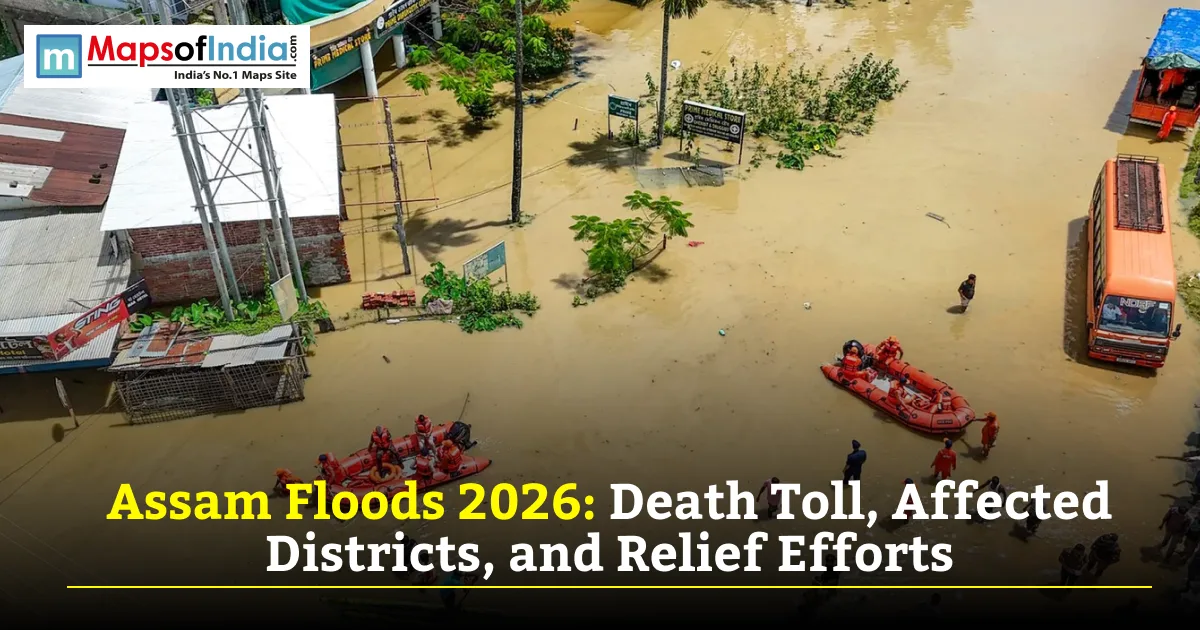
The annual monsoon season brings much-needed rainfall to Northeast India, but it also poses a serious threat to Assam, a state that experiences devastating floods almost every year. In 2026, relentless rainfall across Assam and neighboring states has triggered one of the worst flood situations in recent years. Overflowing rivers, submerged villages, damaged infrastructure, and widespread displacement have left lakhs of people struggling to cope with the disaster.
The Brahmaputra River and its tributaries have crossed danger levels at several locations, inundating large areas of the state. Rescue teams have been deployed to evacuate stranded residents, while relief camps continue to provide shelter and essential supplies to those affected. The floods have disrupted daily life, damaged crops, and raised concerns over public health as authorities race against time to manage the crisis.
Assam Floods 2026: Latest Updates
The official death toll in Assam floods has swelled to 47, and over 7.2 lakh people have been impacted in various districts of the state, according to the latest official reports. The rains are ongoing and have exacerbated the situation with rivers bursting their banks and flood water inundating residential areas, farmland and transport networks.
Multiple roads have been washed out, rail lines are down in some areas, and numerous villages are isolated from the rest of the state. The schools, government offices, and businesses in the worst-hit districts have also been impacted, and the local governments have had to shift their focus to rescue and relief efforts.
Districts Most Affected by the Floods
A number of districts in Upper Assam, Central Assam and other vulnerable areas have been affected by the floodwaters. Sivasagar, Charaideo, Golaghat, Dibrugarh, Dhemaji, Lakhimpur, Majuli, Jorhat, Tinsukia, Darrang and Sonitpur are the worst hit districts.
A number of these districts are situated along the Brahmaputra and its tributaries, and are especially at risk during heavy rains. Thousands of homes have been flooded, and families are forced to seek shelter in Government shelters or move to safer places. Farmers rely on seasonal crops for their livelihood, and agricultural fields continue to be submerged, resulting in substantial losses for them.
Why Does Assam Experience Severe Flooding Every Year?
Assam has been facing flooding almost every year because of its geographical and climatic conditions. Located in the huge floodplain of the Brahmaputra, a major river system in Asia. The monsoon brings a lot of precipitation to this region, such as to the Himalayan regions of Assam, Arunachal Pradesh and Bhutan, which results in high water levels in the river.
The Brahmaputra has vast volumes of water and sediment that frequently cause the river's banks to overflow and erode. Rivers can change course, and embankments become weaker due to riverbank erosion that occurs over a long period. Further, climate change has affected extreme weather events, which has led to increased intensity of rainfall in a short span of time. Urbanization, deforestation and poor drainage have added to the problem of flooding in the State.
Rescue Operations Underway
The flood waters have been pouring in across the impacted districts and the government has stepped in with heightened efforts to save lives. The teams of National Disaster Response Force (NDRF), State Disaster Response Force (SDRF), local police, district administrations and Indian Army have been cooperating for the evacuation of stranded people.
Rescue operations launched by boats involving people trapped in flooded villages and emergency response teams are still active at vulnerable areas. Rescue workers are using inflatable rafts and heavy machinery to evacuate people to safer areas in places where road access has been cut off.
The health and medical requirements of the elderly people, children, pregnant women and special cases are being considered. Elevation and weather predictions are always tracked and offer an excellent means for the government to respond swiftly to changing circumstances.
Relief Efforts Across the State
The Assam Government has set up hundreds of relief camps to shelter families that have been displaced. These camps are offering temporary housing as well as food, drinking water, medical and sanitation services.
Medical staff have also been sent out to ward off outbreaks of water-borne diseases, which can be a serious issue once flooding has continued for an extended period of time. The health workers are observing and giving essential medicines on a regular basis to affected communities.
In addition to relief, the authorities are making sure that clean drinking water is supplied to flood-affected villages to curb the risk of infections. Farmers are also receiving support from the veterinary teams through services they offer to the farmers in providing medical care for animals, which is a key element in rural livelihoods.
Different NGOs, volunteer groups and local communities have been involved in the relief operations, and have brought food, clothing, hygiene kits and other necessities to the families affected.
Impact on Agriculture and Economy
Assam's agriculture, which is one of the main income sources in the state, has been badly affected by the floods. Thousands of hectares of paddy fields, vegetables and tea plantations have been flooded, and farmers await the outcome of their crops.
The losses in livestock operations have increased the financial hardships of rural households, and damages to roads and bridges have hampered the transport of agricultural crops. The daily wage workers, small businesses and local markets have also been hard hit by the economic losses suffered, while commercial operations continue to be suspended in many flood-affected areas.
The overall economic loss is estimated to be significant, and the rebuilding and rehabilitation process will be costly over the next few months.
Wildlife Also Faces the Crisis
The flood has not only caused human settlement to be affected, but it has also impacted wildlife habitats. There are a number of protected areas in Assam, including the Kaziranga National Park, which is flooded almost every monsoon season.
Wild animals migrate towards higher ground as water levels rise to find refuge. The movement leads to a rising potential for road accidents and human-wildlife conflicts along roads around protected forests. To protect the wildlife during the flood season, forest officials have stepped up surveillance and imposed certain restrictions on traffic in sensitive areas.
Challenges Ahead
Rescue efforts are still underway, but it is a difficult situation. The rains may exacerbate the situation of flooding in some of the affected districts, and access to relief materials is being hampered in remote villages due to damaged infrastructure.
Disease outbreaks are still likely to occur because water is polluted and sanitation is not good. Even as the waters start to recede, there will be a need to restore electricity, roads and homes, while families will need assistance in the form of displaced families.
For farmers, recovering from crop losses may take several months, while rebuilding livelihoods will depend on government assistance and rehabilitation programs.
Government Response
The Assam government has been closely monitoring the flood situation through regular review meetings and coordination with disaster management agencies. Relief measures have been expanded as the number of affected people continues to rise.
The Central Government has also extended support by deploying disaster response teams and assuring assistance for rescue, relief, and rehabilitation. Authorities have urged residents in vulnerable areas to follow evacuation advisories and remain alert to weather updates.
Conclusion
The Assam Floods 2026 once again underline the state's recurring struggle with monsoon-related disasters. With 47 lives lost and over 7.2 lakh people affected, the floods have left a profound impact on communities across the state. While rescue teams and relief agencies continue to provide immediate assistance, the focus will eventually shift toward rehabilitation, rebuilding infrastructure, and restoring livelihoods.
The recurring nature of floods in Assam highlights the need for long-term solutions such as stronger embankments, improved drainage systems, advanced flood forecasting, river management projects, and climate-resilient infrastructure. Alongside emergency response, sustainable planning and effective disaster preparedness will be essential to reduce the impact of future floods and safeguard the lives and livelihoods of millions living in the flood-prone regions of Assam.
FAQs
1. What is the latest death toll in the Assam floods 2026?
As of the latest official update, the Assam floods in 2026 have claimed 47 lives, while over 7.2 lakh people have been affected by heavy rainfall and overflowing rivers.
2. Which districts are most affected by the Assam floods in 2026?
The worst-affected districts include Sivasagar, Charaideo, Golaghat, Dibrugarh, Dhemaji, Lakhimpur, Majuli, Jorhat, Tinsukia, Darrang, and Sonitpur, where widespread flooding has displaced thousands of residents.
3. What caused the Assam floods in 2026?
The floods were caused by heavy monsoon rainfall, the overflowing Brahmaputra River and its tributaries, riverbank erosion, and continuous rain in neighboring states, which increased water levels across Assam.
4. How many people have been affected by the Assam floods 2026?
More than 7.2 lakh people have been affected by the floods, with thousands displaced from their homes and accommodated in relief camps across the state.
5. What relief efforts are being carried out in Assam?
The Assam government, along with the NDRF, SDRF, Indian Army, local authorities, and volunteer organizations, is conducting rescue operations, setting up relief camps, distributing food and drinking water, and providing medical assistance to affected families.
6. Why does Assam experience floods every year?
Assam experiences annual floods because it lies in the Brahmaputra River basin, which receives heavy monsoon rainfall. Overflowing rivers, low-lying floodplains, riverbank erosion, and changing climate patterns contribute to recurring floods.
7. How can people stay safe during floods in Assam?
People should follow official evacuation orders, avoid flooded roads, keep emergency supplies ready, drink clean or boiled water, stay updated through weather advisories, and move to designated relief camps when instructed by local authorities.