Saudi Arabia is made up of 13 regions, also called provinces. Each region has an emir who leads it. Each is governed from a main city known as the regional capital. The 13 regions are Riyadh, Makkah, Madinah, Eastern Province, Asir, Tabuk, Al-Qassim, Ha’il, Najran, Jazan, Al-Bahah, Northern Borders, and Al-Jouf.
These regions cover parts of the country. From the central plateau of Najd to the Red Sea coast and the oil-rich areas in the east. The population numbers used here come from the 2022 Saudi Census. This is recent nationwide data, so it allows for accurate comparisons between regions.
All 13 Regions and Capitals
| Region | Capital | Historical region | Population (2022) |
| Riyadh | Riyadh | Najd | 8,591,748 |
| Makkah | Makkah | Hejaz | 8,021,463 |
| Madinah | Madinah | Hejaz | 2,137,983 |
| Eastern Province | Dammam | Eastern Arabia | 5,125,254 |
| Asir | Abha | South Arabia | 2,024,285 |
| Tabuk | Tabuk | Hejaz | 886,036 |
| Al-Qassim | Buraydah | Najd | 1,336,179 |
| Ha'il | Ha'il | Najd | 746,406 |
| Najran | Najran | South Arabia | 592,300 |
| Jazan | Jizan | South Arabia | 1,404,997 |
| Al-Bahah | Al-Bahah | Hejaz | 339,174 |
| Northern Borders | Arar | Northern Arabia | 373,577 |
| Al-Jouf | Sakakah | Northern Arabia | 595,822 |
Population numbers are from the 2022 Saudi Census. The historical-region labels follow geographic classifications. Official sources from Saudi Arabia confirm that there are 13 regions and their capitals.
How Many Regions Does Saudi Arabia Have?
From Historical Regions to 13 Modern Provinces
Saudi Arabia has 13 administrative regions. These modern provinces were officially formed under the Law of Provinces, which was issued in 1992. That law set out how the regions would be organized and what responsibilities they would have. How they would be run.
It’s important to know that these 13 regions should not be confused with historical areas like Najd, Hejaz, or Eastern Arabia. Those names describe geographic and cultural zones, not the current administrative system.
The Law of Provinces Explained
The Law of Provinces lays the foundation for government in Saudi Arabia. Each region has an emir and a deputy emir. Below them, regions are broken into governorates and smaller administrative centres. This structure helps coordinate services, security, and development efforts across the country.
Detailed Overview of Each Region and Its Capital
Riyadh Province; Capital: Riyadh
Riyadh Region sits in the centre of Saudi Arabia. It includes the capital, Riyadh. This region is populated by 8,591,748 people according to the 2022 census. Riyadh is the hub of politics, government, and business in the country.
Makkah Province; Capital: Makkah
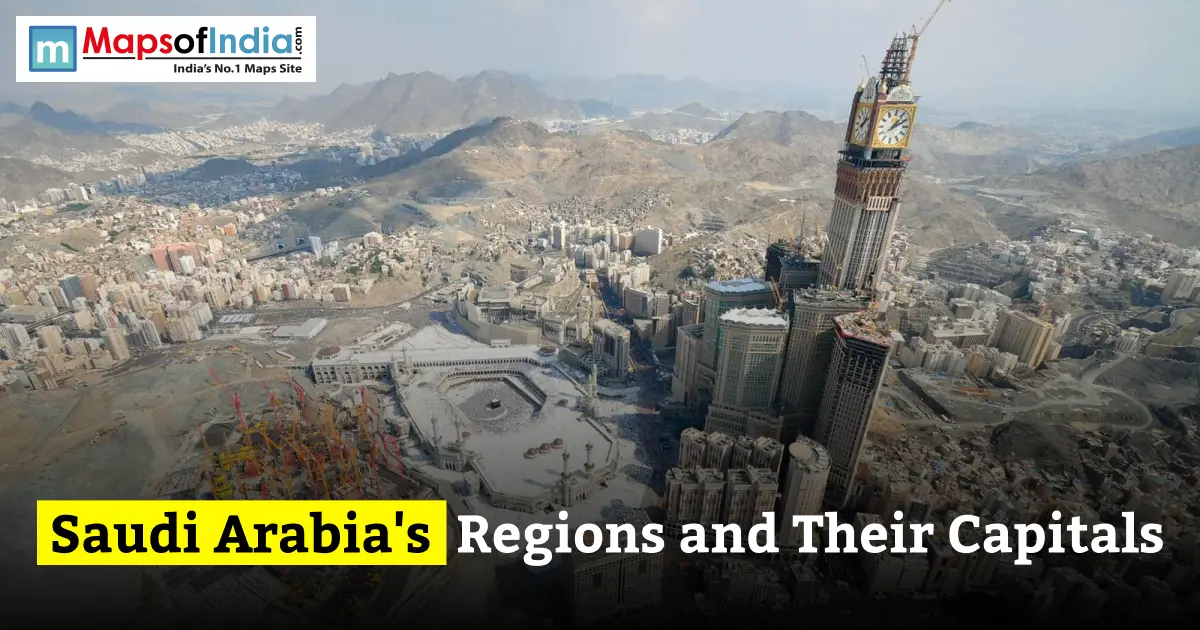
Makkah Region takes up a part of western Saudi Arabia. Its capital, Makkah, is home to the Masjid al-Haram and the Kaaba. It is the sacred site in Islam and the destination for the Hajj pilgrimage every year. The region also includes cities like Jeddah and Taif.
Madinah Province; Capital: Madinah
Madinah Region is in the west of the country near the Red Sea. Madinah is its capital and one of the holiest cities in Islam. It is the city where the Prophet Muhammad lived after his migration. The region had 2,137,983 residents in the 2022 census.
Eastern Province; Capital: Dammam
The Eastern Province stretches along the edge of Saudi Arabia, reaching the Arabian Gulf. Dammam is its capital. This area is vital to the economy because of its huge oil reserves and energy industries. In 2022, the region had 5,125,254 people.
Asir Province; Capital: Abha
Asir lies in Saudi Arabia. It is famous for its mountains, cooler weather, and unique cultural traditions. Abha is the capital. With 2,024,285 people, Asir ranks among the most populous regions in the Kingdom.
Tabuk Province; Capital: Tabuk
Tabuk is in Saudi Arabia. It borders Jordan. Tabuk city serves as the capital. The landscape includes deserts, mountains, and parts of the Red Sea coast. The 2022 census recorded 886,036 people in the region.
Qassim Province; Capital: Buraydah
Al-Qassim is a region in northern Saudi Arabia. It is known for agriculture and date farming. Buraydah is the city and the administrative capital. The region had 1,336,179 people in the 2022 census. Despite being dry, agriculture remains a part of life here.
Ha’il Province; Capital: Ha’il
Ha’il is located in north-central Saudi Arabia close to the Shammar Mountains. Ha’il city is the capital. The region covers about 120,000 square kilometres and had 746,406 residents in the 2022 census.
Najran Province; Capital: Najran
Najran is in western Saudi Arabia. It shares a border with Yemen. Najran city is the capital. The region combines desert plains with areas watered by groundwater and seasonal rainfall. The 2022 population was 592,300.
Jazan Province; Capital: Jizan
Jazan is in the southwest along the Red Sea. Jizan is its capital. The region includes areas and islands such as the Farasan Islands. The 2022 census showed 1,404,997 people living in the region.
Al-Bahah Province; Capital: Al-Bahah
Al-Bahah is a small region in the southwest. It is known for its mountains, forests, and farming. Al-Bahah city is the capital. It had 339,174 residents in the 2022 census, making it the least populated region in Saudi Arabia.
Northern Borders Province; Capital: Arar
The Northern Borders Region is in the northern part of Saudi Arabia. It borders Iraq and Jordan. Arar is the capital. The area is known for livestock farming, mineral resources, and its role as a border trade route. The 2022 population was 373,577.
Al-Jouf Province; Capital: Sakakah
Al-Jouf is in Saudi Arabia near the border with Jordan. Sakakah is its capital. The region supports agriculture. Has ancient archaeological sites. It had 595,822 people in the 2022 census.
Largest and Smallest Regions by Area and Population
Eastern Province — Largest by Area
The Eastern Province is the region in Saudi Arabia with the largest land area. It covers about 540,000 square kilometres. That makes up around 27% of the country’s area. In 2022, it had a population of 5,125,254.
Al-Bahah Province — Smallest by Population
Al-Bahah is the smallest region in Saudi Arabia in terms of population. The 2022 census counted 339,174 people. It is also one of the smallest regions in size.
Why Understanding Saudi Arabia's Regions Matters
Governance Structure
The 13-region system gives a framework for running the country. Each region has an emir. Below them are governorates and smaller centres. This makes it easier to deliver services and manage security and development.
Regional Economic Identity
Each region has its economic focus. Riyadh is the centre for government and business. The Eastern Province drives the energy sector. Al-Qassim is known for farming. Tabuk plays a role in big infrastructure and tourism projects.
Conclusion
Saudi Arabia has 13 regions. Each has its capital and regional leadership. Riyadh is both the capital and the most populous region. The Eastern Province is the largest by area. Al-Bahah has the largest population. Together, these regions make up the government structure of the Kingdom.
FAQs
1. How many regions/provinces does Saudi Arabia have?
Saudi Arabia has 13 regions or provinces. Each one is led by an emir. It is split into governorates and administrative centres.
2. What is the capital of Saudi Arabia?
Riyadh is the capital of Saudi Arabia. It is in the Riyadh region, located in the centre of the country.
3. Which is the largest region in Saudi Arabia?
The Eastern Province is the largest region by area, covering about 540,000 square kilometres.
4. What are the historical regions of Saudi Arabia?
Historical-geographic areas include Najd, Hejaz, Eastern Arabia, and South Arabia; these are not the same as today’s 13 administrative regions.
5. Which province is home to Mecca and Medina?
Mecca is in Makkah Province. Medina is in Madinah Province. They are in two regions.