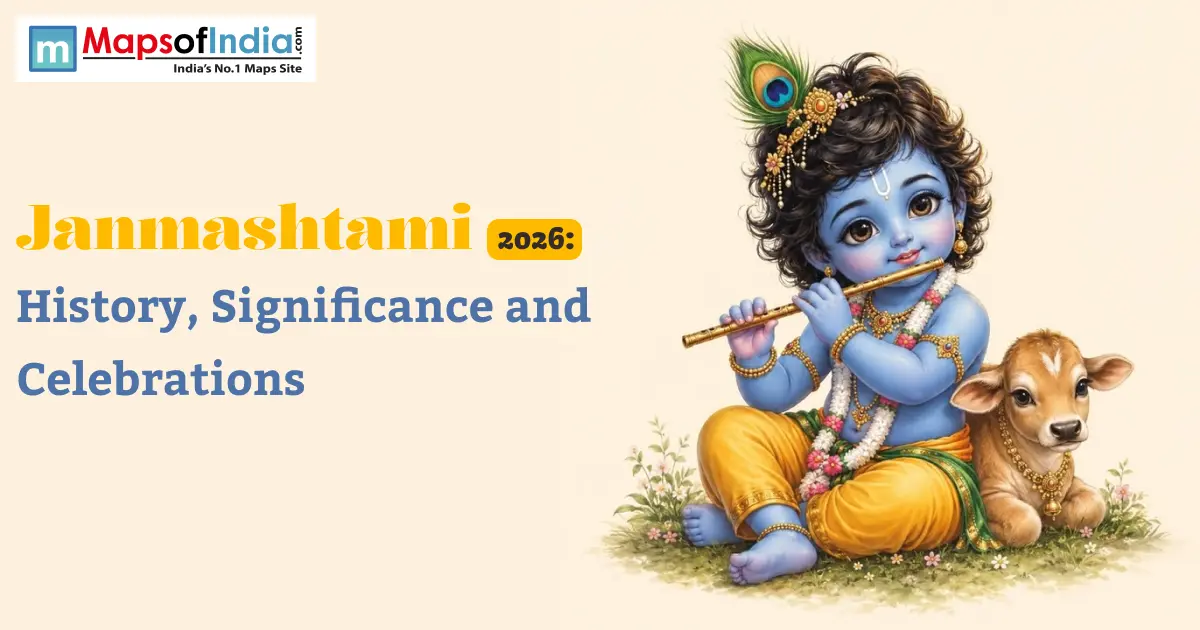
Janmashtami 2026 will be celebrated on Friday, September 4, 2026, marking the birth of Lord Krishna, one of the most revered deities in Hinduism. Also known as Krishna Janmashtami, Gokulashtami and Krishna Jayanti, the festival is observed with fasting, prayers, devotional songs, temple decorations and midnight celebrations.
The festival is of special importance in Mathura, Vrindavan and the Braj area, which are related to the childhood of Lord Krishna. In India, Janmashtami is marked by various activities, and the most popular one is the Dahi Handi celebration.
Janmashtami 2026 Date and Time
Janmashtami 2026 Date: Friday, September 4, 2026
Festival: Krishna Janmashtami
Ashtami Tithi Begins: September 4, 2026, around 2:25 AM
Ashtami Tithi Ends: September 5, 2026, around 12:13 AM
Nishita Puja: Around midnight on September 4–5
Dahi Handi: Saturday, September 5, 2026
As per the regular calculation of Panchang, Janmashtami will be celebrated on September 4. It is an important Worship at midnight between Sept. 4 & Sept. 5, as Lord Krishna is believed to have been born at midnight.
The Puja time for New Delhi is 11:57 PM on 4th September, 12:43 AM on 5th September. Timings can vary by city because they depend on the local Panchang and geographical location.
What Is Janmashtami?
Janmashtami is the Hindu festival commemorating the birth of Lord Krishna, who is traditionally regarded as the eighth avatar of Lord Vishnu.
According to Hindu scriptures and traditional accounts, Krishna was born in Mathura during the night of the eighth day, or Ashtami Tithi, of Krishna Paksha in the month of Bhadrapada. The time his birth is celebrated is the symbolic time of his birth, midnight.
The festival is a symbol of victory of dharma and good over evil.
History and Story of Lord Krishna's Birth
According to Hindu tradition, Lord Krishna was born to Devaki and Vasudeva in Mathura. Devaki's brother, Kansa, was the ruler of Mathura and was known for his cruelty.
There was a prophecy by God to Kansa that Devaki's eighth son would bring his downfall. Kansa was frightened by the prophecy and imprisoned Devaki and Vasudeva.
Kansa killed some of their children. But on the birth of Krishna, however, there is a sequence of divine events which enable Vasudeva to carry the newborn baby out of Mathura.
Vasudeva crossed the Yamuna River and brought Krishna to Gokul, where he was nurtured by Nanda and Yashoda.
Krishna's boyhood became a significant part of the Hindu religious and cultural heritage. His playful exploits, his fondness for butter, his friendship with the cowherd people, and his friendship with Radha are especially popular.
When Krishna was older, he once again went to Mathura and killed Kansa and thus fulfilled the prophecy, bringing an end to Kansa's tyranny.
Significance of Janmashtami
Janmashtami is not just an occasion of Krishna's birth. It is a time to reminisce about the spiritual message and values of Lord Krishna for those who are devotees.
Krishna is also a personification of dharma, wisdom, devotion, compassion and righteousness. His principles of duty and righteous action in the Bhagavad Gītā continue to influence Hindu philosophy.
The festival is also a celebration of the victory of good over bad. The birth of Krishna is a symbol of hope and the restoration of righteousness.
A time for Spiritual reflection, fasting, prayer, and devotion is also a part of Janmashtami for many devotees.
How Is Janmashtami Celebrated?
Janmashtami celebration starts in the daytime and ends at night. Devotees can fast, making all preparations for the birth celebration at midnight.
Fasting
A fast is observed by many devotees on September 4. The foods eaten vary according to individual tradition; at certain times fruit, milk and specially prepared fasting foods are eaten, and some devotees fast more strictly.
The fast is normally ended after the fixed period, after the midnight feast or as per the religious community's tradition.
Midnight Krishna Puja
The most significant aspect of Janmashtami is the puja, which is conducted at midnight.
The idol of baby Krishna is decorated with temples and houses, sometimes in a beautifully decorated cradle. Devotees pray, sing bhajans, chant the name of Krishna and offer flowers, sweets, etc. at midnight.
Another option is to bathe the idol in the Panchamrit, dress it in fresh clothes and place it in a cradle.
Jhankis and Temple Decorations
The temples prepare elaborate jhankis or religious tableaux of the important events of Krishna's life.
Flowers, lights, balloons and Krishna decorations are placed in homes and temples. At times, children dress up as Krishna and Radha for school and community activities.
Janmashtami Celebrations in Mathura and Vrindavan
Mathura is considered the birthplace of Lord Krishna and becomes a major centre of Janmashtami celebrations.
Special religious programmes, prayers, processions and cultural performances are organized all across the city. One of the highlights for devotees at Krishna Janmabhoomi is the midnight celebration.
Vrindavan is also close to Krishna's childhood and his tales with Radha and the Gopis. During Janmashtami, special prayers and devotional programmes are organised in temples all over Vrindavan.
These festivities are carried on till the 5th of September when Nandotsav is celebrated to mark the coming of Krishna to Nanda's house.
Dahi Handi on September 5, 2026
The most favourite of all the traditions is Dahi Handi, which is a ritual performed during Krishna Janmashtami.
Butter and curd are also said to be Krishna's favourites. The children are motivated by these stories and then make human pyramids to reach and smash into the pot, which is filled with curd or some other object, hanging high above the ground.
Dahi Handi is especially popular in Maharashtra, where the locals celebrate in community gatherings and festivals.
In 2026, Dahi Handi celebrations will take place on Saturday, September 5, following Janmashtami on September 4.
Janmashtami Celebrations Across India
Mathura and Vrindavan are two of the most important centres of celebration, but Janmashtami is celebrated throughout India.
Dahi Handi is one of the popular attractions in Maharashtra. Gujarat has a very strong Krishna devotional tradition, and in other states such as Odisha, West Bengal, Rajasthan, Manipur, Karnataka and Tamil Nadu, this festival is celebrated with temple rituals, devotional music and cultural programmes.
Janmashtami is one of the most varied religious festivals in India as people celebrate it in different manners, with different customs and dishes in all the regions.
Janmashtami 2026: Traditional Offerings
In the celebration of Janmashtami, food is an important element. A special offering is prepared for Krishna by the devotees, and milk, curd, butter and sweets are closely allied with the traditional stories of Krishna.
Fasting food items may be offered as makhan mishri, peda, kheer, panjiri, fruits and more. Cooking traditions are also regional, with tastes shaped according to the local food traditions.
Why Is Janmashtami Celebrated at Midnight?
According to Hindu tradition, Lord Krishna was born at midnight. Therefore, devotees wait until the night of September 4–5 to mark his birth.
This is why the festival date is September 4, 2026, even though the actual midnight birth celebration takes place partly after midnight and technically enters September 5. This distinction explains why some calendars or reports may mention both dates.
Conclusion
Janmashtami 2026 will be celebrated on Friday, September 4, 2026, with devotees across India observing fasts, offering prayers and celebrating the midnight birth of Lord Krishna. The festival's major celebrations will continue into September 5, including Dahi Handi and Nandotsav traditions.
From the temples of Mathura and Vrindavan to Dahi Handi celebrations in Maharashtra, Janmashtami reflects India's rich religious and cultural diversity. At its heart, the festival celebrates Lord Krishna's birth and the enduring message of dharma, devotion and the triumph of good over evil.
FAQs
1. When is Janmashtami 2026?
Janmashtami 2026 will be celebrated on Friday, September 4, 2026. The festival marks the birth of Lord Krishna and is observed with fasting, prayers and midnight celebrations.
2. Why is Janmashtami celebrated?
Janmashtami is celebrated to commemorate the birth of Lord Krishna, who is revered as the eighth avatar of Lord Vishnu. The festival symbolizes the victory of good over evil and the restoration of dharma.
3. What is the Janmashtami 2026 puja timing?
The main Janmashtami puja is performed around midnight on September 4–5, 2026, during Nishita Kaal. Exact puja timings may vary depending on the location.
4. Why is Janmashtami celebrated at midnight?
According to Hindu tradition, Lord Krishna was born at midnight in Mathura. Therefore, devotees perform the main birth celebration and Krishna puja around midnight during Nishita Kaal.
5. How is Janmashtami celebrated in India?
Janmashtami is celebrated with fasting, midnight puja, bhajans, devotional songs, temple visits, jhankis, decorations and Krishna-themed cultural programmes. Mathura and Vrindavan are particularly famous for their celebrations.
6. When is Dahi Handi 2026?
Dahi Handi 2026 will be celebrated on Saturday, September 5, 2026. The event recreates stories of Krishna's childhood and involves teams forming human pyramids to break a suspended pot filled with curd or other offerings.
7. Where is Janmashtami celebrated most famously in India?
Mathura and Vrindavan in Uttar Pradesh are among the most famous destinations for Janmashtami celebrations because of their close association with Lord Krishna's birth and childhood. Maharashtra, Gujarat, Rajasthan, Odisha and West Bengal also celebrate the festival on a large scale.