India-US Trade Talks Reach Final Stage: What’s At Stake?
Abhishree Sharma June 11, 2026
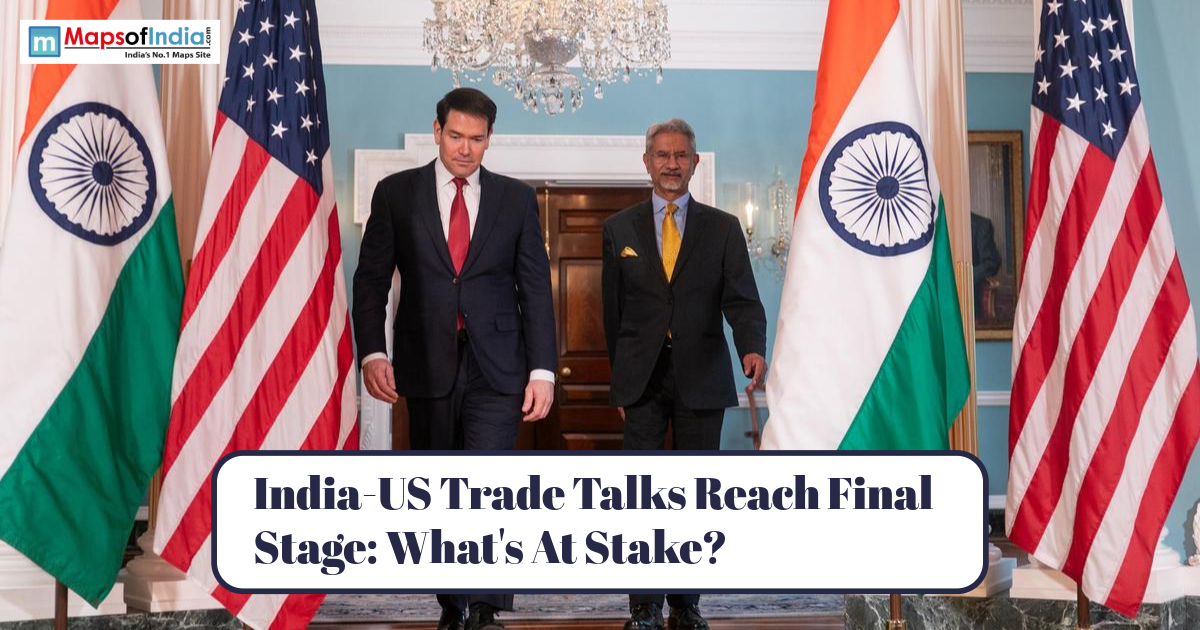
At the moment, India and the US are in the midst of negotiating a key trade deal that could change the way these two massive democracies conduct trade. After years of rounds of discussion, talks are now in their final stages, with discussions right on focus on resolving deadlocked differences and paving the way for potentially huge trade benefits. As the world production chains are starting to realign, it is more advantageous for both sides to bolster their relationship. Specific sectors like tech, agriculture, pharmaceuticals, military equipment, and service businesses may be affected. The export value could further increase for India, which will further draw in capital inflows. What's most important to the United States? Opening up to new markets and closing the trade deficit. Now, the negotiations between India and America are nearing an end. Here's what’s really on the line.
India-US Trade Relations In The Past Years
India and the US have long had strong economic relations: bilateral trade has exceeded 190 billion dollars recently. On the one hand, America trades more with India than with any other country; at the same time, the Indian people are the foundation of America's products and skills. Nevertheless, the challenges of digitalization, patents, border fees and access have held things back. These talks are now trying to sort some of this out through a short-term deal. The convergence between these countries has been most obvious during less predictable times in the world, and that trend is only accelerating. After long negotiations, they all seem to be on the same page now when it comes to targets for their trade.
Key Sectors On The Table
Now the talks extend to various important sectors. Washington demands additional space for Indian farming, milk products, and devices in hospitals. New Delhi desires unhindered movement of software work, medicine exports, and fabric goods on the U.S. border. On defence issues and tech relations, discussions continue on these fronts. The subject of reducing import duties is a frequent one, and the same goes for butting up against the occasional trade barrier. A good deal could raise trade by trillions of dollars per annum. Imagine a complex puzzle crops in one corner, digital tools in the other, each piece fitting perfectly for everyone to benefit.
India's Potential Benefits
India's export figures could get the boost they need from a more robust trade pact with the U.S., which would also generate more employment opportunities and attract more investment from the United States. American consumers will be reached more easily, and tech service providers, drug manufacturers and artisans with handmade products will be able to benefit. Not to mention that collaboration could become more extensive in the area of gadgets, chip manufacturing, and clean power systems. The Chinese are not the only ones lacking in factory production. It is like a pivot to bringing money closer together and influence around the world faster.
US Goals and Intentions
There is optimism in Washington at the possibility of closing the trade deficit with India and making the market more accessible for America's farm products, milk products, cheese producers, and even hospital equipment. The tougher protection for the invention, patents and creative work is also there, along with the level playing field for companies wishing to do business across Indian markets. If negotiations make headway, U.S. firms could expand their presence in a nation whose economy is shifting into high gear more quickly than most other nations. The ties between these two great democracies can be closer, not only economically, but in how they view change in the world. Imagine it, A manoeuvre that sneaks up on the economic flow without making a big splash, but also contributes to America's heft in the vicinity of vital Pacific and Indian Ocean routes.
Impact on Technology and Digital Trade
The main area of discussion in the talks is tech and online commerce. While in India, there is more emphasis on protecting its growing internet-based industries, rules governing where data is stored are significant in the United States. Rather than competing, they're looking for collaboration in chips, smart systems and network security. Improvements here could potentially be beneficial for new companies to grow alongside the giants in both countries. Consider it a "common road" that charts a way through the changing digital terrain, between the most populous democracy on earth and the oldest.
Agriculture and Market Access Challenges
These discussions remain fragile and charged with farming's central role. On one side, American producers push for entry into Indian markets, dairy, almonds, and fruit like apples and cherries top their list. For now, India clings to its agricultural population, fearing any disruption in food supply. The consensus feels cumbersome, challenging, and necessary for some progress to be made. If they are able to, the ripple could end up influencing the way later deals are formed. Like treading a fine line, one slip and farmers lose out, or opportunities are lost.
Strategic and Geopolitical Importance
The convergence of India and the US is more evident than ever in the world's dynamics. Tariffed ties can be broadened to become more extensive, more profound. Commerce is more than just numbers on a ledger; it forms alliances as well. Trusted Borders are open for business. Slowly, but surely, one leads to the other. Power moves silently across supply chains and joint labs aside from treaties. Sharing markets can lead to shared interests across oceans over time.
Difficulties and Obstacles In The Way
Despite the progress made, there are still challenges to overcome. But new ideas are still being disputed, the price of medicine is still being debated, and what is considered green policy is once again being debated. It is more difficult as well because of the pressure from the leaders at home in each country. When negotiating a deal with which both parties can agree, you are treading on thin ice. Much like when you have to do some “tough talk” with money goals sneaking in the back of your head, while power games and national pride are playing in the foreground.
What a Good Deal Would Look Like
A large trade agreement could ramp up business relations dramatically, create jobs, and then increase the complexity of supply chains. This move signals to global investors that the bond between India and the U.S. is becoming closer. Indian businesses might discover new avenues to enter America, and American firms may accelerate their move to Indian cities. Consider it a milestone moment, perhaps, even a new way of linking economies between the two largest democracies for much longer than the present.