Nepal has faced two major incidents in 2026: a catastrophic flood on August 26 and a fresh flash flood in Gorkha district on October 11. The August disaster killed 1,455 people, with 5, 285 still missing as of October 5. The latest flood left five people missing while rescue and damage assessments continued as of October 12, 2026.
Key Facts About the Nepal Floods
- Latest incident: October 11, 2026, in Gorkha district.
- Latest incident impact: Five people reported missing; no deaths have been confirmed in reports.
- August disaster: 455 deaths and 5,285 people still missing as of October 5.
- Affected rivers: Bhote Koshi, Trishuli and Budhi Gandaki, among others in the river systems.
- Damaged infrastructure: Homes, bridges, roads, hydropower facilities and power and communication infrastructure.
- Response: Nepalese security forces, helicopters and humanitarian agencies have supported evacuations and relief operations.
- India: Authorities issued alerts along the Gandak River in Bihar and Uttar Pradesh during the August disaster.
What Happened in Nepal? Latest Flood Updates
Nepal has experienced two flood emergencies in less than two months. The first began near the Nepal–China border in August. Caused catastrophic damage along the Bhote Koshi–Trishuli river corridor. The second occurred on October 11 when a landslide blocked the Budhi Gandaki River in Gorkha district, triggering downstream flooding. The two incidents have casualty figures and causes.
Timeline of the Floods
August 26, 2026: A catastrophic flood struck near Nepal's border with China's Tibet region. The disaster was associated with a collapse and sent floodwaters and debris through river valleys, damaging settlements and critical infrastructure.
August and September: Rescue teams searched for missing people, evacuated residents and recovered survivors. Flood damage affected districts, hydropower facilities, roads and bridges.
October 5: Nepal announced the end of the main search-and-rescue operation for people still missing from the August disaster. The government shifted its focus towards rehabilitation and reconstruction.
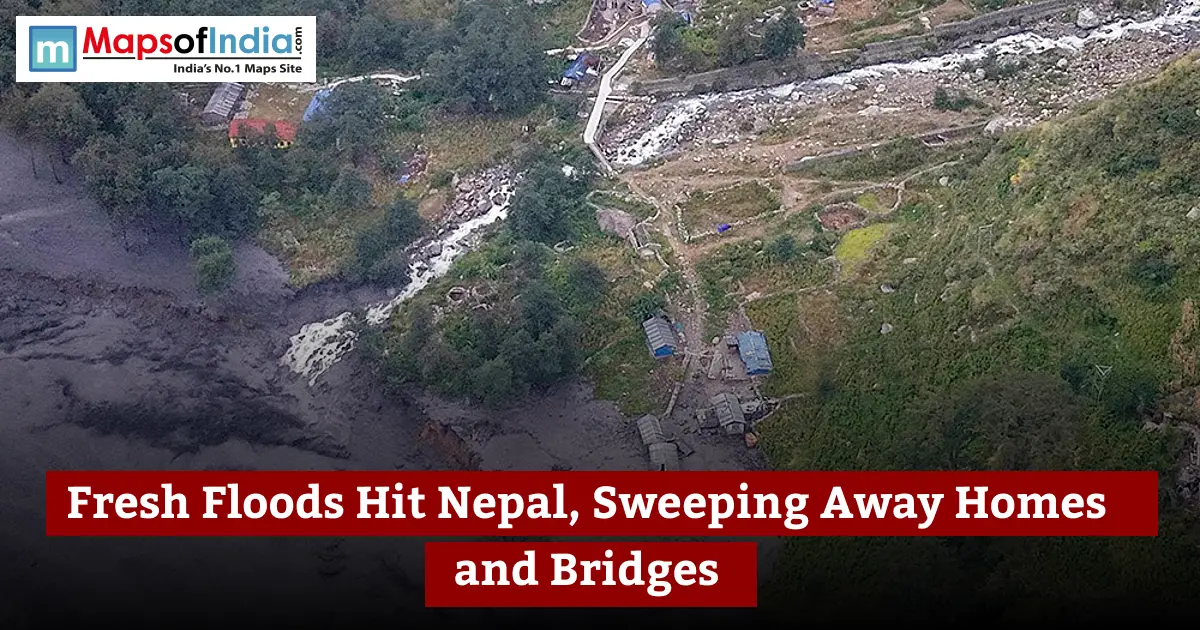
October 11: A landslide in Gorkha district blocked the Budhi Gandaki River. The resulting flood swept away houses and bridges. Damaged a hydropower project camp. Five people were reported missing, and 49 people, including a national, were rescued.
October 12: Authorities continued monitoring the incident and assessing the damage. Initial reports differed on the number of homes and bridges lost, so the final figures may change as assessments continue.
Latest Death Toll and Missing Persons
| Incident | Reported deaths | Reported missing Latest status | Latest status |
| August 26 flood | At least 1,455 | 5,285 as of October 5 | Main search-and-rescue operation ended; rehabilitation underway |
| October 11 flood | No deaths confirmed in initial reports | 5 | Rescue operations and damage assessments ongoing |
Which Areas of Nepal Are Affected?
The August disaster affected areas along the Bhote Koshi and Trishuli river systems, Rasuwa, Nuwakot and Dhading, as well as other locations along the river corridor. The October 11 flood centred on Chumnubri and nearby settlements in Gorkha district. Authorities also issued warnings for communities.
Rasuwa
Rasuwa, near the border, was among the areas hit by the August disaster. The flood affected the area. Infrastructure along the Bhote Koshi River corridor was disrupted, affecting transport and access to essential services.
Dhading
Flooding along the Trishuli River system damaged roads, bridges, farms and settlements. The loss of road links made it harder for rescue teams to reach communities and for residents to obtain essential supplies. Dhading was also affected by bridge damage during the October flooding in the Budhi Gandaki River system.
Gorkha and the Budhi Gandaki River
The October 11 disaster struck Gorkha district after a landslide blocked the Budhi Gandaki River. When the temporary blockage gave way, floodwaters moved downstream, damaging homes, bridges and infrastructure.
Authorities warned people living along the riverbanks and in areas to move to safer locations. The districts placed on alert included Gorkha, Tanahun, Chitwan, East Nawalparasi and West Nawalparasi.
How Many Homes and Bridges Were Destroyed?
The floods damaged homes, transport links and infrastructure needed by communities and emergency services. The precise totals differ between the two incidents, and figures for the October flood remain preliminary.
Bridges and Roads
Floodwaters washed away suspension bridges and a motorable bridge linking Gorkha with Dhading during the October incident. The loss of bridges can isolate villages and interrupt trade. Delay the delivery of food, medicines and rescue equipment.
The August disaster also damaged roads and bridges across the districts. Reopening these routes and restoring access are essential parts of the recovery process.
Homes and Villages
Homes close to riverbanks are particularly vulnerable when floodwaters carry mud, rocks and debris through valleys. During the October incident, initial reports described about a dozen houses being swept away, although other local reports gave estimates. A complete damage assessment is needed before a final figure can be confirmed.
Hydropower and Electricity Supply
Both disasters damaged infrastructure linked to electricity generation. It was reported that the August flood destroyed 12 projects. During the October incident, floodwaters damaged a hydropower project camp. Swept away some construction equipment. Damage to power and communication facilities can disrupt services. Complicates relief operations.
What Caused the Nepal Floods?
The August disaster was associated with a collapse near the Nepal–China border, while the October flood followed a landslide that blocked the Budhi Gandaki River. Both events released volumes of water into steep river valleys, but their immediate causes were different.
Glacier Collapse and Sudden Flooding
On August 26, a glacier-related collapse near the border triggered a flood. Water and debris travelled through river valleys, damaging settlements and infrastructure. The disaster highlighted the risks associated with changes in high-altitude environments.
The precise physical processes behind glacier-related disasters can vary. Scientists need observations and technical investigations to establish how an individual event developed.
Landslides and River Blockages
The October flood followed a landslide near Chumnubri in Gorkha district. The landslide blocked the Budhi Gandaki River, temporarily holding back water. When the blockage gave way, a sudden surge travelled downstream.
This type of event can happen even when rainfall is not the immediate trigger. Communities below a landslide-dammed river may have time to respond if the blockage fails suddenly.
Monsoon Conditions and Climate Change
Nepal's steep Himalayan terrain, unstable slopes and seasonal rainfall make many areas vulnerable to floods and landslides. Heavy monsoon rain can saturate slopes, increase river levels and worsen the consequences of existing blockages.
Climate change is a concern because rising temperatures affect glaciers and high-altitude environments. However, it would be inaccurate to attribute every flood directly to climate change without event-specific scientific evidence. The role of climate conditions in each disaster must be assessed carefully.
Rescue and Relief Efforts
Nepal's emergency response has involved security forces, government agencies, local authorities and humanitarian organisations. The immediate priorities include locating missing people, evacuating residents from areas delivering essential supplies and restoring access to cut-off communities.
Government and Army Response
During the October flood, the Nepalese Army and other responders carried out rescues, including helicopter-supported operations. Authorities issued warnings to communities downstream. Authorities urged residents in vulnerable areas to move to safer locations.
For the August disaster, the government eventually ended the search-and-rescue operation and shifted its focus to rehabilitation. Officials said emergency rescues would still be conducted if needed.
Aid Agencies and International Support
The United Nations in Nepal said on October 11 that it was working with government authorities and supporting assessments through the National Disaster Risk Reduction and Management Authority. The response included coordination for satellite imagery transport support and food assistance for households.
Humanitarian needs can include shelter, clean drinking water, food, healthcare, sanitation and assistance for families who have lost their homes or livelihoods. Remote settlements may require logistical support because damaged roads and bridges can delay deliveries.
Reconstruction Needs
The August disaster caused damage to settlements, transport infrastructure and hydropower facilities. On October 5, it was reported that Nepal expected to need US$5 billion for early recovery and rehabilitation. Rebuilding will require more than replacing structures: planners will also need to consider safer locations, resilient infrastructure and effective early-warning systems.
How Can You Help Nepal Flood Victims?
People who wish to contribute can use verified government relief channels rather than sending money to unverified social-media accounts.
The Government of Nepal provides a donation portal for the Prime Minister's Relief Fund. It lists supported payment methods and banking options for international donors.
Official donation channel: Government of Nepal — Prime Minister Disaster Relief Fund.
Before donating, check that the website address is correct, confirm the name of the receiving fund and review the payment details. Be cautious of messages copying government logos, requests to transfer money to personal accounts and pressure to donate immediately. Never share passwords or one-time verification codes with someone claiming to arrange a donation.
Could the Nepal Floods Affect India?
Yes. Flooding in Nepal can affect areas of India because several rivers flow south from the Himalayas into Indian states.
During the August 26 disaster, India's National Disaster Response Force said a flood wave was likely to travel through the Gandak River. Authorities in Bihar and Uttar Pradesh were advised to remain alert. NDRF teams were placed on standby or deployed as a precaution.
The level of risk in India depends on the volume of water entering the river system, rainfall, river levels and local conditions. A flood in Nepal does not automatically mean that every downstream district in India will experience flooding.
Residents in areas that could be affected should pay attention to alerts from officials, state disaster management organizations and India's Central Water Commission. People should not go into rivers that are swollen or try to cross roads and bridges that are flooded.
Why Does Nepal Flood So Often? A Look at Past Floods
Nepal is at risk of floods and landslides because of its landscape, monsoon rains and homes built near rivers and unstable hills. Sudden events related to glaciers and rivers blocked by landslides can create dangers in the mountainous regions.
The September 2024 floods and landslides are an example of the country's wider exposure. Heavy rain led to flooding, blocked roads and damaged houses and buildings throughout Nepal. The government later said there were losses in housing, farming, bridges and power stations.
The 2026 events show the importance of early-warning systems, clear plans for leaving dangerous areas, strong bridges and roads and better checking of dangers in high places. Because a sudden flood can move fast through a valley, quick warnings and preparation in communities can save lives.
Conclusion
The Nepal floods of August and October 2026 have led to major loss of life, damaged homes and bridges and made it hard to use important infrastructure. As efforts to rescue people and rebuild continue, accurate reports of deaths, good warnings and support for those affected are still very important.
FAQs
What caused the floods?
The August 26 disaster was connected to a glacier breaking near the Nepal–China border. The October 11 flood came after a landslide blocked the Budhi Gandaki River in Gorkha district. When the blockage broke, water rushed downstream. The causes were different, and checking details is important to understand each event.
How many people have died in the floods?
Sources said on October 5 that at least 1,455 people had died in the August 26 disaster, with 5,285 still missing. The flood on October 11 in Gorkha had no confirmed deaths at first, although five people were reported missing. These numbers could change as officials update their reports.
Which parts of Nepal are hit the hardest?
The August disaster hit areas along the Bhote Koshi–Trishuli river route, including Rasuwa, Nuwakot and Dhading. The flood on October 11 hit Gorkha district along the Budhi Gandaki River. Officials also warned about districts such as Tanahun, Chitwan and both East and West Nawalparasi.
Is it safe to visit Nepal?
Safety while travelling depends on where you go, road conditions and weather alerts. Floods and landslides can make some paths unsafe. They can be closed even if other parts of Nepal are open. Before travelling, check government advice, local weather warnings and transport updates and follow any instructions to leave dangerous areas.
How can I help with Nepal flood relief?
You can use the official Prime Minister Disaster Relief Fund of the Government of Nepal at https://donate.gov.np/. Make sure to check the details before giving money. Stay away from fundraising groups' personal bank accounts shared through unexpected messages and websites that look like official relief sites.
Will the floods affect India?
Flooding in Nepal can affect the river systems in India. During the August disaster, India's NDRF warned that a flood wave could move through the Gandak River and told authorities in Bihar and Uttar Pradesh. The real effect depends on river levels, rainfall and local conditions, so people should listen to the flood warnings from official sources.