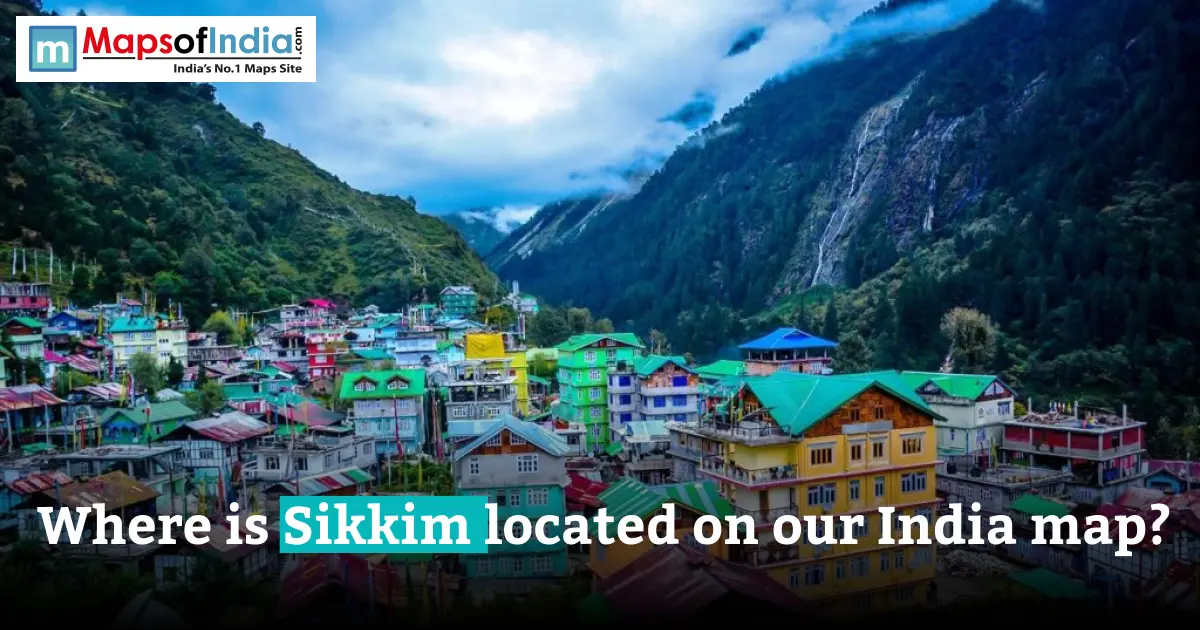
Sikkim is a small, picturesque state in the north-eastern part of India in the eastern Himalayas. Sikkim is located north of West Bengal on the India map, bounded by the mountains of the high Himalayas. To the south, it borders West Bengal, and to the north and north-east it borders the Tibet Autonomous Region of China; to the west it borders Nepal, and to the east it borders Bhutan. This strategic location makes Sikkim an important part of India's Himalayan region.
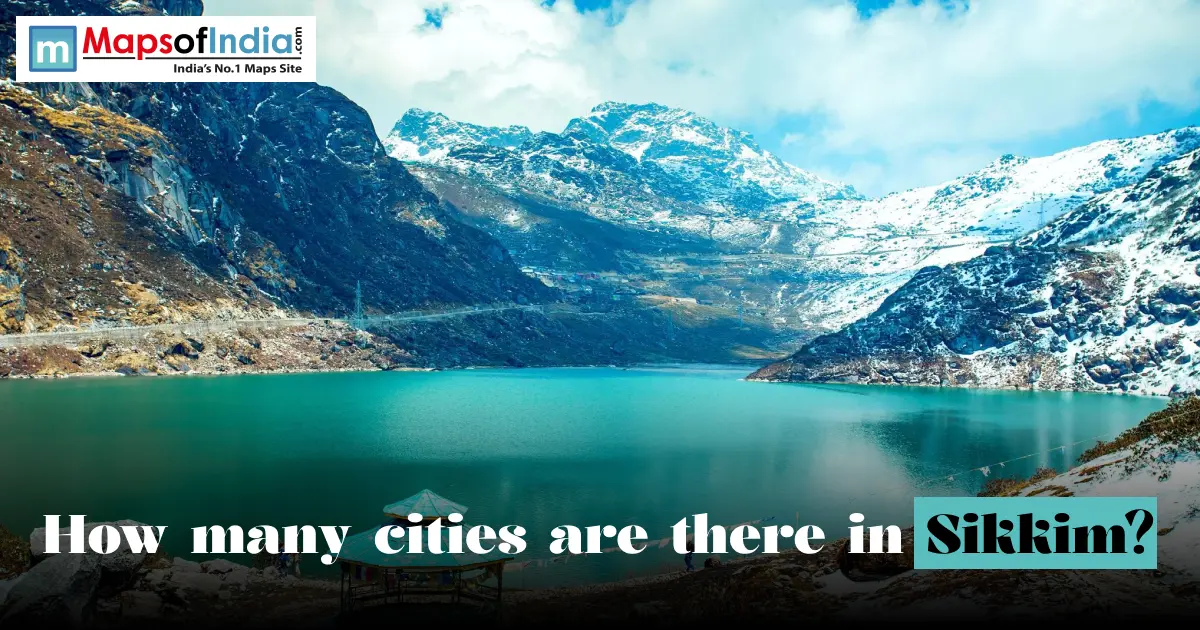
The Sikkim location map clearly shows its position between Nepal, Bhutan, China, and West Bengal. The state is linked to mainland India mainly by the Siliguri Corridor and West Bengal. Sikkim is mostly mountainous with steep valleys, forests, glaciers, high-altitude lakes and snow-covered peaks. Kangchenjunga is one of the world's tallest mountains, and a notable landmark of the region. The river system of Teesta and its tributaries is a significant element of Sikkim's drainage system.
Sikkim's geographical location has also contributed to its rich cultural and natural diversity. The state is known for its Buddhist monasteries, scenic landscapes, wildlife, and mountain tourism. Its location near Nepal, Bhutan, and Tibet has influenced its traditions, festivals, cuisine, and architecture. Overall, Sikkim holds a distinctive position on the map of India and is significant for its geography, biodiversity, culture, tourism, and strategic location.