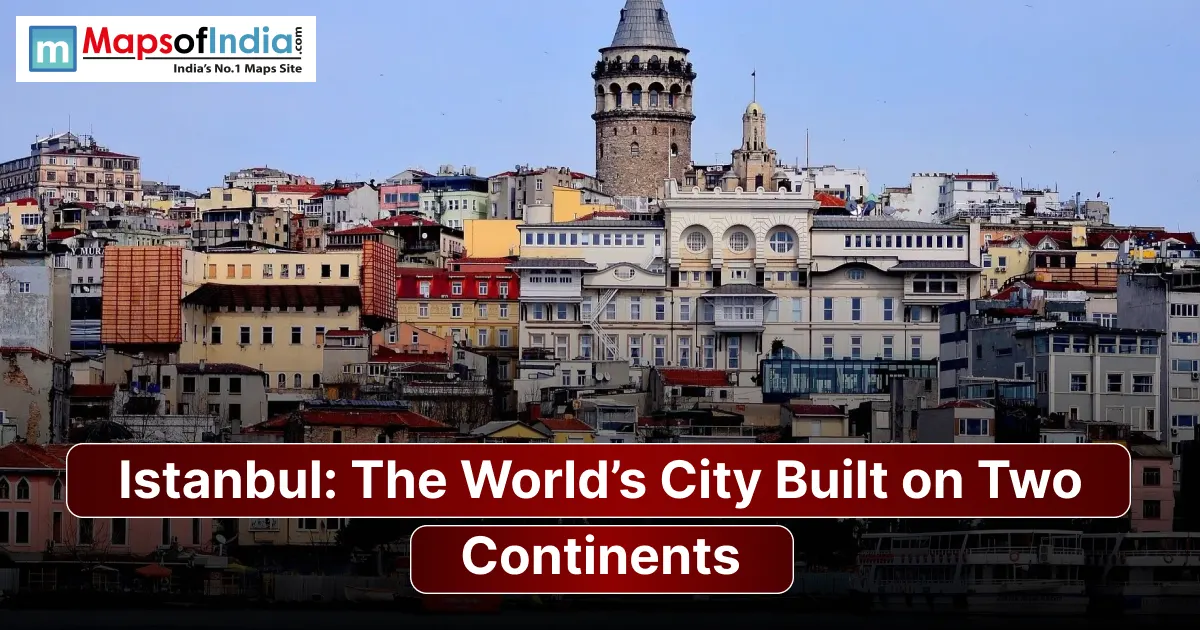
Istanbul is where Europe and Asia meet across the Bosphorus Strait, shaped by land, trade, and two thousand years of history. A guide to the city naturally starts at the Historic Peninsula, where Hagia Sophia, the Blue Mosque, Topkapı Palace and the Grand Bazaar tell the stories of the Byzantine and Ottoman past. Beyond the walls, ferries, bridges and trains link European neighbourhoods with Asian districts such as Kadıköy and Üsküdar. UNESCO recognises the Historic Areas of Istanbul for their Byzantine and Ottoman buildings and city life.
Istanbul's Unique Geography
The Bosphorus Strait Explained
The Bosphorus Strait separates Istanbul's European and Asian sides and connects the Black Sea with the Sea of Marmara. It is central to the city's identity, transport, and past. A Bosphorus ferry can take visitors from one continent to the other while showing palaces, mosques, waterfront mansions, and bridges.
European Side vs. Asian Side. What's the Difference?
The European side of Istanbul holds the Historic Peninsula, Sultanahmet, Beyoğlu, Galata, and many of Istanbul's famous monuments. The Asian side of Istanbul is more linked to neighbourhoods like Kadıköy and Üsküdar, waterfront walks, and everyday local life. The two sides of Istanbul are closely linked by ferries, bridges, the Metro and Marmaray, so visitors can easily travel between them.
Istanbul's History
Byzantium and the Byzantine Empire
Istanbul began as Byzantium, a settlement whose strategic position on the Bosphorus helped it grow into a regional centre. Under the later Byzantine empires, Istanbul became known as Constantinople and grew into a major political, religious, and cultural capital.
Constantinople and Roman/Byzantine Legacy
Constantinople became the capital of the Eastern Roman Empire. Added monumental churches, defensive walls, public spaces, and infrastructure. Hagia Sophia, built in the century, is one of the most important surviving examples of Byzantine architecture.
The Ottoman Empire Era
Ottoman forces captured Constantinople in 1453, after which Istanbul became the centre of the Ottoman Empire. Ottoman rulers added mosques, palaces, bazaars, and other landmarks, creating the architectural mix that still defines much of historic Istanbul. UNESCO describes Istanbul as a place where Byzantine and Ottoman building styles are blended in the city.
Iconic Landmarks
Hagia Sophia
Hagia Sophia is one of the defining landmarks of Istanbul. Hagia Sophia was first finished as a church in the sixth century. Later, Istanbul turned Hagia Sophia into an Ottoman mosque, then into a museum, and now it is again a mosque. The huge dome and the surviving architectural and decorative details show Istanbul’s changing political past. A separate Hagia Sophia History and Experience Museum now shows the history of Hagia Sophia through displays and multimedia.
Blue Mosque (Sultan Ahmed Mosque)
The Blue Mosque, officially called Sultan Ahmed Mosque, is a place of worship known for its six minarets, large domes, and İznik‑style interior tiles. The Blue Mosque is located across from Hagia Sophia in Sultanahmet, so the two landmarks can be visited together easily.
Topkapı Palace
Topkapı Palace was the imperial palace of the Ottoman sultans for many centuries. Its courtyards, collections, and view of the Bosphorus make it one of the stops in the Historic Peninsula. UNESCO lists Topkapı Palace among the monuments of Istanbul’s Historic Areas.
Grand Bazaar and Spice Bazaar
The Grand Bazaar is a historic covered market known for shops that sell carpets, jewellery, ceramics, textiles and other goods. The Spice Bazaar offers a food‑focused market with spices, sweets, dried foods and traditional products.
Crossing Continents
Ferry Rides Across the Bosphorus
Ferries are one of the ways to experience the two‑continent geography of Istanbul. A short crossing can take a visitor from the waterfront to neighbourhoods such as Kadıköy or Üsküdar while showing views of the skyline and Bosphorus shore.
Bosphorus Bridges and Metro Connections
Road bridges link the two sides of Istanbul while rail systems such as Marmaray give another cross‑Bosphorus link. The public transport network of Istanbul also has the metro, tram, buses and ferries, so the major districts can be reached without relying on cars.
What to See on the Asian Side (Kadıköy, Üsküdar)
Kadıköy is known for its markets, restaurants, cafés and the lively Moda area. Üsküdar offers Bosphorus waterfront views, historic mosques and traditional neighbourhoods. The district is especially attractive around sunset, when the skyline of the side of Istanbul can be seen across the water.
Culture, Food and Daily Life in Istanbul
Turkish Cuisine Must-Tries
A first trip should include classics like simit, döner, kebabs, meze, pide, baklava, and Turkish coffee. Seafood and fish sandwiches are also popular along the waterfront, while neighbourhood restaurants give an everyday dining experience.
Local Markets and Neighbourhoods
Beyond monuments, explore Beyoğlu, Galata, Karaköy, Kadıköy, Üsküdar, Fener-Balat and Eminönü. Istanbul's official tourism portal lists these areas, with the Historic Peninsula, Grand Bazaar, Spice Bazaar and Bosphorus as main parts of the city's visitor experience.
Best Time to Visit Istanbul
Spring and autumn are usually comfortable for sightseeing, walking and exploring attractions. Summer brings long days but can be hot and busy. Winter is cooler and wetter. Can have fewer crowds. For a visit focused on landmarks and neighbourhood walks, spring or autumn offers a practical balance of weather and sightseeing conditions.
How to Reach Istanbul
By Air / Airport Options
Istanbul has two passenger airports: Istanbul Airport (IST) on the European side and Sabiha Gökçen Airport (SAW) on the Asian side. Istanbul Airport manages domestic and international connections, while Sabiha Gökçen serves as another major international gateway.
Getting Around the City
Use the metro, tram, buses, ferries, and Marmaray to travel around the city. Trams are especially useful around the Historic Peninsula while ferries are convenient for Bosphorus crossings. Istanbul's transport authority offers connections to airports, bus terminals, piers, railway stations, and metrobus services.
Conclusion
Istanbul works best when seen as more than a set of monuments. Istanbul's defining experience comes from mixing Byzantine and Ottoman history, European and Asian neighbourhoods, Bosphorus travel, Turkish food and everyday city life. A three‑day trip can cover the landmarks; extra days let you explore neighbourhoods, museums, palaces and the Asian Side.
FAQs
- Why is Istanbul considered part of two continents?
Istanbul is considered a city because its urban area spreads across both Europe and Asia, separated by the Bosphorus Strait. The European side holds the Historic Peninsula and many major landmarks. The Asian side holds districts such as Kadıköy and Üsküdar. Ferries, bridges and rail connections link the two sides.
2. Is Istanbul the capital of Turkey?
No. Ankara is the capital of Türkiye, while Istanbul is the country's largest city and a principal cultural, economic and tourism centre. Istanbul was the capital of empires including the Byzantine and Ottoman empires, which explains its very rich historical heritage.
3. Can you walk between the Asian sides?
You cannot simply walk across the Bosphorus on a city street, but there are pedestrian‑accessible bridges and public transport links between the two sides. For tourists, a Bosphorus ferry is one of the most scenic ways to move between European and Asian Istanbul.
4. What is the best neighbourhood to stay in Istanbul?
For first‑time visitors who want attractions, Sultanahmet gives easy access to Hagia Sophia, the Blue Mosque, Topkapı Palace and the Basilica Cistern. Beyoğlu and Karaköy offer nightlife, restaurants and contemporary city life while Kadıköy gives an Asian‑side experience with markets, cafés and neighbourhood culture.
5. How many days are enough for Istanbul?
Three days are enough to see the landmarks of the Historic Peninsula, the Bosphorus and one part of the Asian Side. Four to five days allow a slower pace and more time for museums, palaces, neighbourhoods, markets and extra Bosphorus experiences.
6. What is Istanbul famous for?
Istanbul is famous for its location between Europe and Asia, the Bosphorus Strait, Byzantine and Ottoman heritage, Hagia Sophia, the Blue Mosque, Topkapı Palace, the Grand Bazaar and its distinctive food culture. Its Historic Areas are also recognised by UNESCO as a World Heritage property for their historical significance.
7. What should you not miss in Istanbul?
For a visit, you should see Hagia Sophia, Blue Mosque, Topkapı Palace, Grand Bazaar, Spice Bazaar and the Bosphorus. It is also worth visiting an Asian‑side district, such as Kadıköy or Üsküdar, because seeing both sides is essential to understanding Istanbul's geography and Istanbul's character.