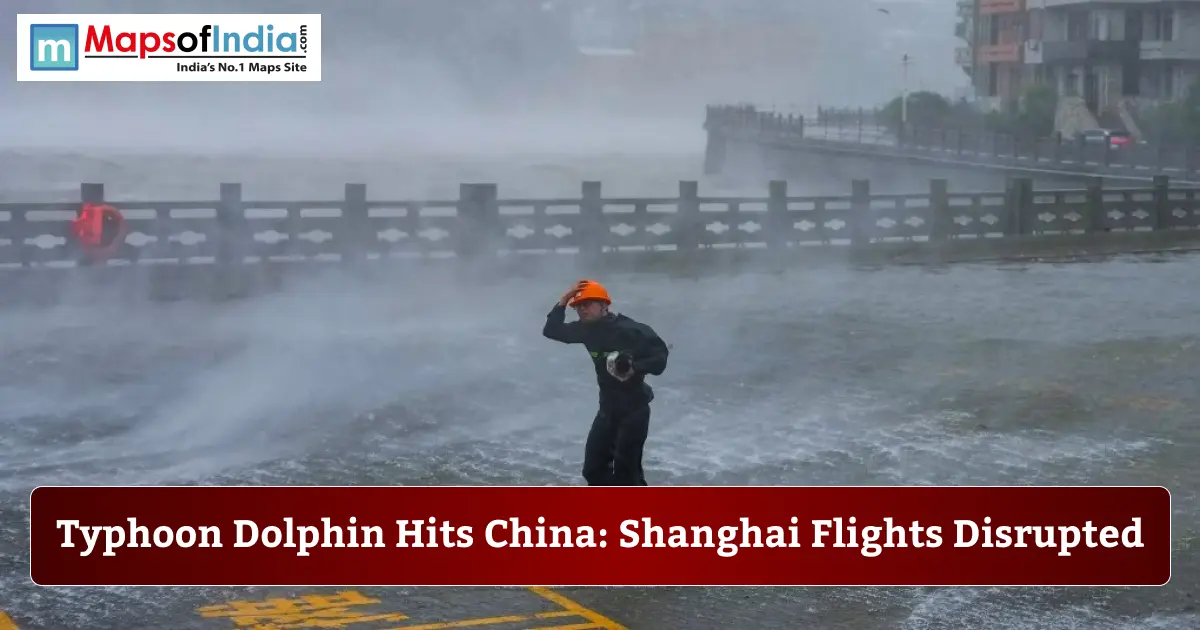
Typhoon Dolphin has struck China's eastern coast, dumping heavy rain and wreaking havoc on travel. The storm, which was the strongest tropical cyclone to strike China so far this year, caused the authorities to evacuate over a million people from affected areas and cancel major transport services. More than 1,300 flights were cancelled at the two major airports in the Chinese city of Shanghai, one of the busiest travel hubs in China.
After crossing the western Pacific and impacting parts of Japan's Okinawa area, the typhoon hit China's eastern coastline Sunday, Aug 9. Emergency measures were put in place in coastal provinces upon its arrival, such as Zhejiang and Fujian, and in Shanghai, where they took measures to ensure residents' safety against flooding and strong winds, as well as heavy rain.
Typhoon Dolphin Makes Landfall in Eastern China
Typhoon Dolphin hit land near Yuhuan City, Zhejiang Province on Sunday evening. The storm weakened into a hurricane in eastern China with heavy rain and high winds.
Zhejiang was one of the most heavily hit regions. Tens of thousands of people were reportedly evacuated to safer zones in Wenzhou, and almost 99,000 in nearby Fujian Province.
Evacuations of large scale were conducted as authorities were preparing for floods, landslides and other calamities that could impact the storm.
It was also reported that warnings were issued for continued heavy rainfall despite the fact that Dolphin had weakened. The remnants of the storm were forecast to impact areas such as Shanghai, Jiangsu and Henan, keeping the risk of flooding and landslides high.
Shanghai Flights Disrupted by Typhoon Dolphin
The most obvious impact of Typhoon Dolphin has been the disturbance of air travel in Shanghai.
There are two main airports in Shanghai, Pudong International Airport and Hongqiao International Airport. Pudong International Airport and Hongqiao International Airport are the primary airports in Shanghai, serving large numbers of domestic and international passengers.
At the two airports, over 1,300 flights were cancelled because of the unsafe weather conditions. Other reports estimated the number of cancellations higher, due to the continuing restrictions on activity caused by the weather.
Cancelled flights included those to, from and within Shanghai. Strong winds and heavy rain caused by low operational conditions forced adjustments in schedules at the airlines.
The passengers were instructed to contact their corresponding airlines and airports for further information regarding their flights, as changes in schedules might occur quickly due to weather conditions.
The chaos was not limited to the skies. In certain parts of eastern China, rail services, subway operations and road transportation were disrupted, demonstrating the wider spread of the storm's effects on regional transportation.
Record Rainfall Reported in Shanghai
Typhoon Dolphin brought an unusually large amount of rain to Shanghai. The unusual intensity of the weather system is evident from the city's highest 24-hour rainfall in over 150 years, reports said.
High rainfall levels led to concerns of waterlogging and flooding in low-lying areas. Emergency Services were called into action with plans to coordinate transport and safeguard people at risk.
Areas in eastern Shanghai were reportedly evacuated for precautionary measures, with over 215,000 people reportedly evacuated. The evacuations were part of a major evacuation effort in the East, which saw over one million residents in the area relocated to safer areas due to the typhoon.
Impact on Transportation and Daily Life
Typhoon Dolphin brought an unusually large amount of rain to Shanghai. The unusual intensity of the weather system is evident from the city's highest 24-hour rainfall in over 150 years, reports said.
Rail services and subway operations were halted in affected areas, while flooding and heavy rain made road travel difficult. Some transportation services began returning to normal as the storm weakened, although delays and disruptions remained possible.
Areas in eastern Shanghai were reportedly evacuated for precautionary measures, with over 215,000 people reportedly evacuated. The evacuations were part of a major evacuation effort in the East, which saw over one million residents in the area relocated to safer areas due to the typhoon.
Typhoon Dolphin Weakens, but Heavy Rain Remains a Concern
After turning inland, Dolphin weakened to a tropical storm, but the threat was not instantly removed. Tropical systems may persist in producing heavy rainfall well after the strongest winds have passed, thus posing a threat to flash flooding, river flooding and landslides.
The forecasters kept on watching rainfall around Shanghai, Jiangsu and Henan as well as other areas impacted by the storm. The weather system continued to move inland, and authorities continued to focus on emergency response and preventing any further damage.
This storm also affected areas outside of mainland China. Flight and ferry services were cancelled in Taiwan, and that area of Japan suffered injuries and power outages due to earlier exposure to Dolphin.
What Travelers Should Know
Those intending to fly in/out of Shanghai should verify their flights before departing to the airport. Weather-related flight delays or cancellations may be issued even if airports are open.
Passengers who are impacted by the cancellations should reach out to their airlines to confirm a rebooking, refund or an alternative trip. As well, travellers should plan for extra time for ground travel as rain can impact road and public transit conditions.
If already in Shanghai, please follow the instructions of local authorities, avoid going out on flooded roads, and stay inside during severe weather, when necessary.
Conclusion
Typhoon Dolphin has caused significant disruption to eastern China since it moved onshore along the country's coast. Over 1 million people were evacuated in the affected areas, and Shanghai received record rainfall, with extensive transportation disruptions. Over 1,300 flights were cancelled at the major airports in Shanghai, as well as disruptions to rail and subway service.
Dolphin has weakened since crossing the coast, but heavy rain and flooding risks are present. The affected areas are still under observation, and people and tourists are encouraged to keep abreast of the situation and stay safe as the weather system passes away from the coast.
FAQs
1. What happened to Shanghai due to Typhoon Dolphin?
Typhoon Dolphin caused heavy rainfall, strong winds and major travel disruptions in Shanghai, including widespread flight cancellations.
2. How many Shanghai flights were cancelled due to Typhoon Dolphin?
More than 1,300 flights at Shanghai’s Pudong and Hongqiao airports were cancelled because of Typhoon Dolphin and severe weather conditions.
3. Where did Typhoon Dolphin make landfall in China?
Typhoon Dolphin made landfall near Yuhuan City in Zhejiang Province on China’s eastern coast before moving inland and weakening.
4. Did Typhoon Dolphin affect flights from Shanghai?
Yes. Typhoon Dolphin significantly disrupted flights from and to Shanghai, with more than 1,300 cancellations reported at the city’s two major airports.
5. Which Shanghai airports were affected by Typhoon Dolphin?
Both Shanghai Pudong International Airport and Shanghai Hongqiao International Airport experienced major flight disruptions due to the typhoon.
6. Is Typhoon Dolphin still affecting China?
Although Typhoon Dolphin weakened after moving inland, its remnants continued to bring heavy rainfall and potential flooding risks to parts of eastern China.
7. Should travelers check their Shanghai flights after Typhoon Dolphin?
Yes. Travelers should check their flight status directly with their airline and the airport before travelling, as weather-related delays and cancellations can change quickly.