Kerala, known as "God's Own Country," is renowned for its backwaters, lush tropical greenery, rich cultural heritage, and some of the strongest human development indicators in India. This guide takes you through all of it: the nature, the heritage, and the modern development that together make Discover Kerala such a fitting phrase for a state that genuinely rewards a closer look, whether you are planning a trip or simply curious about what makes it stand apart.
Where Is Kerala? A Quick Overview
Kerala is located on a thin strip of land between the Western Ghats and the Arabian Sea in the south-western part of India. It is bordered by Tamil Nadu to the south and east and Karnataka to the north. Thiruvananthapuram is the state capital, and Kochi, the largest city, is a commercial and cultural centre. The other major urban centres in the state are Kozhikode and Thrissur.
Key Facts About Kerala
Kerala has an estimated population of 35 million across 14 districts with a geographical area of around 38,863 sq.km. Malayalam is the main language, and it is the language of the vast majority of the residents; English is also understood and is widely spoken in tourism and business professions. The climate remains tropical all year long, with two distinct monsoon seasons.
Nature and Natural Beauty of Kerala
Kerala Backwaters (Alleppey, Kumarakom)
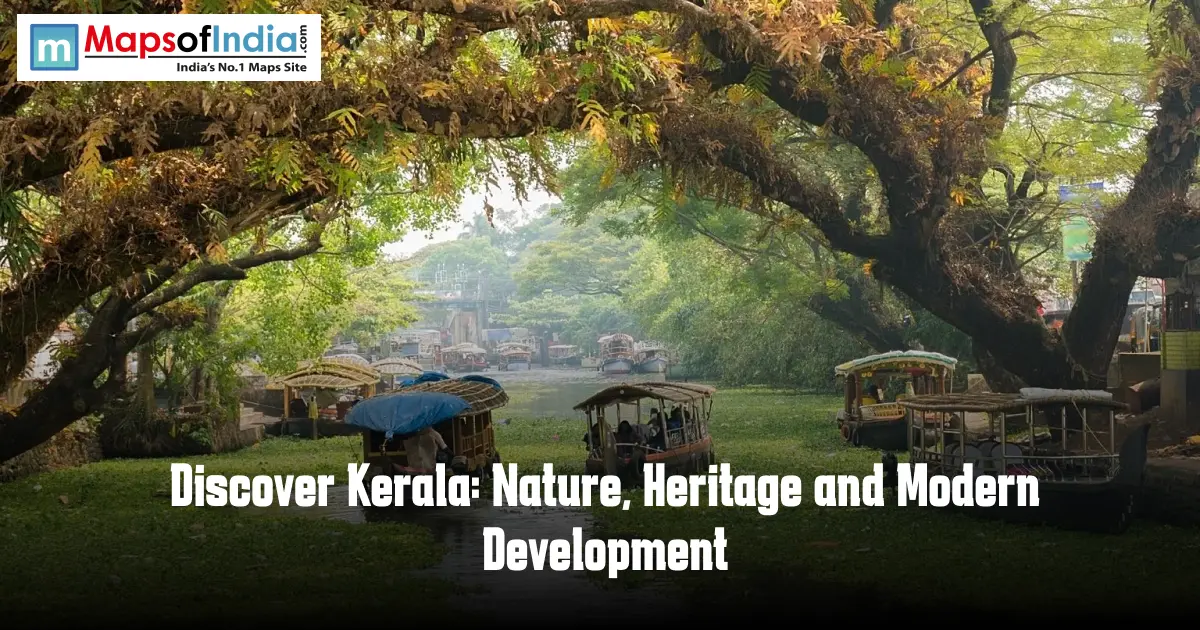
The backwaters are one of the most picturesque natural places in Kerala, the state's extensive network of interconnected canals, lagoons and lakes that follow the coastline. Both Alleppey, described as the "Venice of the East", and the slower village of Kumarakom have houseboat cruises which take you out into the paddy fields and coconut groves at a leisurely speed.
Hill Stations of Kerala (Munnar, Wayanad, Thekkady)
In Munnar, the endless tea plantations climb the cool and misty hills, while Wayanad advances further into the thick woods and wild animals. Thekkady is nearest to Periyar Tiger Reserve, and is a good starting point for safaris and spotting elephants and other animals in the dense evergreen forests.
Beaches of Kerala (Kovalam, Varkala)
Kovalam is known for its crescent-shaped beaches and lighthouse views, whereas Varkala has a more interesting backdrop with cliffs that stand vertically above the beach, dotted with cafes and yoga retreats.
Wildlife Sanctuaries and National Parks (Periyar, Silent Valley)
Periyar Tiger Reserve remains Kerala's best-known wildlife destination, home to elephants, tigers, and a large boating lake at its centre. Silent Valley National Park, tucked deeper into the Western Ghats, protects one of the last untouched patches of tropical rainforest left in India, largely spared from large-scale logging thanks to a strong conservation movement in the 1970s and 80s.
Western Ghats and Biodiversity
The Western Ghats run along Kerala's eastern edge, recognised by UNESCO as a biodiversity hotspot of genuinely global significance. Thousands of plant and animal species found here exist nowhere else on Earth, making this range one of the most ecologically important stretches of forest in all of Asia.
Heritage and Culture of Kerala
Historical Roots (Spice Trade, Colonial Influence, Temples)
Kerala's coastline drew traders for over two thousand years, chasing pepper, cardamom, and cinnamon long before European powers arrived. Arab, Chinese, Portuguese, Dutch, and British influences all left visible marks, particularly around the Fort Kochi district, where colonial-era architecture still stands beside centuries-old temples and mosques.
Art Forms (Kathakali, Mohiniyattam, Theyyam)
The first thing that immediately strikes one is Kathakali, a unique art form in which elaborate make-up and costumes are used to portray the stories of the Hindu epics in highly stylised movement and expression. Mohiniyattam is a softer style of classical dance done by women, more fluid than other classical dances. Meanwhile, theyyam is a blend of ritual with performance that is truly unlike any other in Indian classical art, and is sometimes performed in the courtyards of temples throughout northern Kerala.
Festivals of Kerala (Onam, Thrissur Pooram, Vishu)
Onam is the greatest cultural festival celebrated in Kerala, featuring intricate and vibrant flower carpets, boat races and the grand feasts all over the state. Thrissur Pooram is one of the most significant and spectacular temple festivals in India, featuring dozens of decorated elephants and thunderous percussion. The Malayalam New Year (Vishu) is based on an event known as the first day of the new year, or first morning, which is designed to establish a blessed start for the new year.
Cuisine of Kerala (Sadya, Seafood, Ayurveda-Based Food)
A traditional Sadya, served on a banana leaf during festivals, can stretch to over twenty separate dishes, all vegetarian, in one sitting. Along the coast, seafood dominates instead, often cooked with coconut, curry leaves, and a distinctive blend of local spices. Many households also lean on Ayurveda-influenced cooking, treating food as something closely tied to overall well-being rather than separate from it.
Ayurveda and Wellness Tourism
Kerala has built a genuine international reputation around Ayurveda, and wellness tourism now draws visitors from across the world specifically for traditional treatments, massage therapy, and longer rejuvenation programmes rooted in centuries-old practice.
Modern Development in Kerala
Kerala's Human Development Index (Literacy, Healthcare, Life Expectancy)
Kerala consistently ranks first among Indian states on the Human Development Index, and its literacy rate, around 94% as per the most recent census, remains the highest in the country by a clear margin. Life expectancy sits close to 75 years, again among the best in India, largely thanks to decades of sustained investment in public healthcare and education, an approach often referred to as the "Kerala model" of development.
Economy and Key Industries (Tourism, Spices, IT, Remittances)
Tourism and the spice trade remain deeply woven into Kerala's economic identity, but the state has diversified considerably, too. Kochi has grown into a genuine IT hub, anchored by its own dedicated tech park. Remittances from the large Keralite diaspora working across the Gulf region also play an outsized role in the state's economy, shaping everything from local real estate to household spending patterns.
Infrastructure Growth (Kochi Metro, Highways, Ports, Airports)
Kochi Metro, operational since 2017, stands as one of the state's clearest modern development success stories, and it made headlines early on for actively employing transgender staff as part of its workforce. Kerala also runs four international airports, an unusually high number for a single Indian state, alongside an expanding highway network and Kochi's deep-water Vallarpadam port, which handles significant container traffic.
Education System in Kerala
The education system has been developed in Kerala, with a near-universal school enrolment and one of the highest literacy rates in the country, which has been achieved over decades of regular public funding, long before independence. This has continued to influence the state's disproportionate influence in areas such as skilled foreign jobs, teaching and healthcare.
Sustainable Development Initiatives
From organic farming projects in high altitudes to initiatives aimed at reducing plastic waste in tourist hotspots like the backwaters, Kerala has been putting more emphasis on sustainable practices. The state has also seen a steady growth in renewable energy projects, such as solar, in recent years.
Best Time to Visit Kerala
Winter, running roughly from November through February, offers the most comfortable weather for sightseeing, with cooler temperatures and minimal rainfall. Summer, from March through May, turns hot and humid, though it remains a popular window for Ayurvedic treatments, which some practitioners consider more effective during warmer months. Monsoon season, June through September, brings heavy rain, but it also transforms the landscape into a lush, vivid green, and increasingly draws its own dedicated monsoon tourism crowd for exactly that reason.
How to Reach Kerala
By Air, Rail, and Road
Kerala's four international airports, at Kochi, Thiruvananthapuram, Kozhikode, and Kannur, connect the state to major domestic and international routes. The rail network runs along the coast, linking Kerala efficiently to neighbouring states and major Indian cities. National highways also connect Kerala by road to Tamil Nadu and Karnataka, making a road trip a genuinely practical option for travellers already in South India.
Kerala at a Glance — Quick Facts Table
Category | Highlight |
| Capital | Thiruvananthapuram |
| Largest City | Kochi |
| Language | Malayalam |
| Area | 38,863 km² |
| Population | ~35 million |
| Literacy Rate | ~94% (highest in India) |
| Best Season | November to February |
| Famous For | Backwaters, hill stations, Ayurveda, spices |
| HDI Rank | 1st among Indian states |
Conclusion
Kerala genuinely earns its "God's Own Country" tagline, not just through its backwaters and hill stations, but through a rare combination of natural beauty, deep cultural roots, and consistently strong development outcomes. Whether you are drawn by a houseboat cruise through Alleppey, a Kathakali performance, or simply the state's remarkable literacy story, there is a lot more to Kerala than a single visit can really cover. Planning a trip? Explore our detailed Kerala travel guides for city-by-city recommendations.
FAQs
What are the reasons that Kerala is known as God's Own Country?
The nickname came from Kerala's natural beauty, its backwaters, hill stations, beaches, and forests, which were once a part of a campaign in the 1980s to promote tourism in the state.
What is the speciality of Kerala?
The backwaters, Ayurveda and wellness tourism, the spice trade history, the classical art forms (Kathakali), and the high level of literacy and development are all for which Kerala is best known.
When is the best time to visit Kerala?
The best time for general sightseeing is November to February, but the monsoon (June to September) season is gaining popularity for a different type of visit as well.
Is Kerala the most developed state in India?
Yes, by human development measures. In terms of development indicators, Kerala has the highest human development index among the states in India, the highest literacy rate and has some of the best healthcare results in the country.
What is unique about Kerala's culture?
The state's cultural heritage is a mix of centuries of trade that fostered a diversity of traditions, Arab, Chinese and European influences, and classical arts, such as Kathakali and Theyyam, that have taken root here and make it feel different from the rest of India.
What is the special feature of Kerala backwaters?
They are famous for houseboat cruises along a network of canals, lagoons and lakes that lie behind the coast, providing a leisurely and picturesque tour of rural Kerala.
Is it safe and convenient for tourists to travel around in Kerala?
Yes, generally. The tourism infrastructure in Kerala is well developed, the English language is widely spoken in tourist areas, and the state always comes up in the top tourist-friendly list of India.
How is Ayurveda involved in the tourism field of Kerala?
It has a significant impact. Kerala is renowned for its profound Ayurvedic medical heritage and has established a world-famous reputation for its authentic Ayurvedic treatment centres, attracting wellness tourists specifically interested in traditional therapies from the region.