PIN Code is regarded as one of the "smartest and most effective postal addressing systems in the world. It was launched by India Post, and it's one of the vital components used for sending millions of letters, parcels, and packages across the country every day. A numeric code of six digits is part of all addresses, but many people don't know how it is used. This small code is capable of a huge postal service delivery speed. From far-flung villages in the Himalayas to the hectic streets of Mumbai, the PIN Code system is like an invisible backbone that connects all of India. Here's a complete guide to how the PIN Code System Works in India.
PIN Code Meaning
PIN is a code used to locate each post office in India. This identifier is comprised of 6 numbers that will be assigned to one location at a time. It started service on August 15, 1972, for the purpose of speeding up the post. Handling mail used to take longer without these digits, as there was confusion. As of now, over 1.5 million postal addresses use it. Your PIN Code appears on envelopes, pops out in official papers, and sometimes you find it in online shipping details. They are each a distinctive identifier, unique to every location all over the country where packages can be shipped.
The Anatomy of a PIN Code
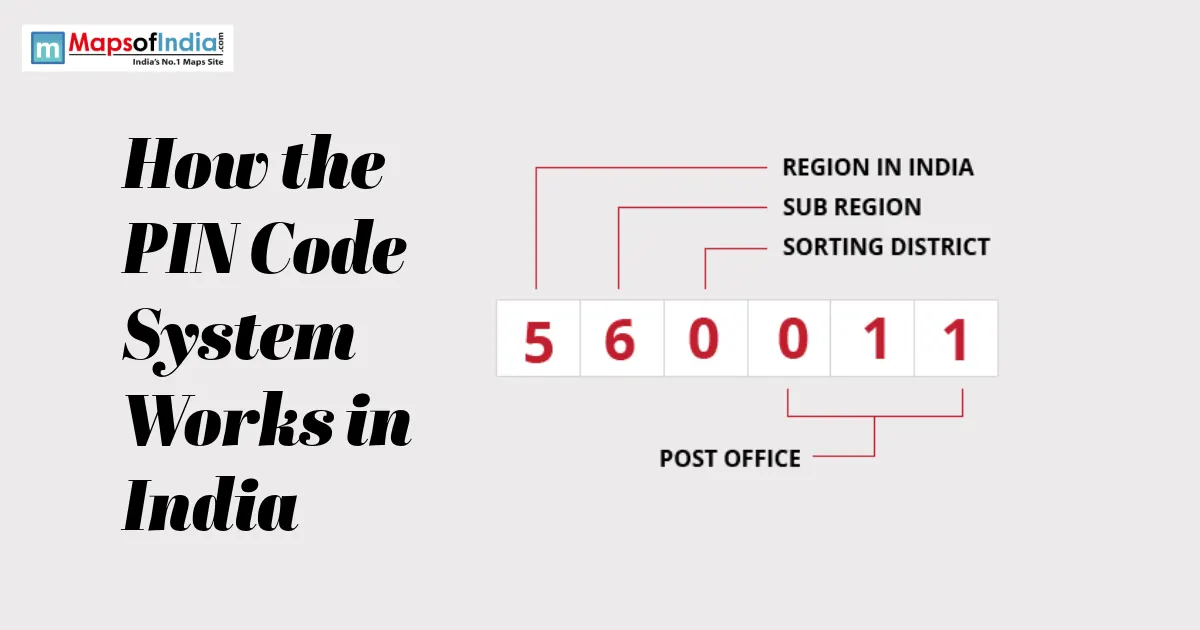
All PIN codes are made from numbers, and there are six numbers in them, which are divided into pieces that have meaning. The first number in front is a large area on the map. The next one then does the work of narrowing it down, calling out an even smaller area in the vicinity. Then there's the third one, which details exactly which sorting hub processes mail there. The last three are a designation for the exact delivery location. This sort of organization is perfect for automation; speed follows. Reading all 6 digits will provide almost all the locations in India. It is like a gentle helper, gently pushing the mail to where it belongs.
The First Number Indicates the Area
A number at the beginning of the PIN Code is connected to most regions. Northern India codes start with 1 or 2. Western zones begin with 3, possibly 4. Down south, the first place 5 or 6 appears here. If you look east, you can see 7 to 8 ahead of you. There is only one such number, 9, for military mail routes. Centres will have greater ease in sorting large quantities when they understand what that opening digit signifies. The first number will save you some trouble and immediately tell you which region you're in. Imagine it is a suggestion that is straight to where the mail is supposed to go in India.
Second and Third Digits (Sub-Region and Sorting District)
Now, imagine the second number further draws in the location within a larger area. Then the third one is used to identify the specific delivery segment. Mail arrives at the right regional hub because those first three numbers are the instructions to direct it there. Delhi is tagged 110, as is it. Meanwhile, 400 maps are being sent to Mumbai. Visualize a map in which each dot gets from point A to point B without having to "guess". Just as precise addresses transport mail on India's vast postal network.
The Last Three Digits of the Post Office Code
The three numbers at the end give the greatest information. They're only available at a single location, where they are pointing directly to a single delivery point. These numbers are there to help while sorting the mail according to the address. It also shows where the mail will be delivered. They have a different outfit on each branch, like a tag. These are the elements that impart accuracy. The codes at the close spot are typically similar. Like a label at the end of the parcel directs it to the correct entrance.
PIN Code Zones Across India
There are 9 Parts of India that are divided by PIN Codes. Up North is in 1 or 2, and the west is in 3 or 4. The east enjoys 7 plus 8, and down south 5 and 6. There are special blocks for big cities and Delhi. Once these numbers are known, it is easy to determine where the mail goes. How things are planned out is easier to manage for the big online stores. Like a well-organized system that rapidly transfers letters from one corner of India to the other, without any wastage or delay.
India Post and PIN Codes
India Post uses PIN Codes from start to end. At large hubs, the opening trio of numbers guides sorting done either by hand or machine. From there, it all goes to the local district's spots, which are then handled by the next three numbers. This way, they can deliver letters much faster. Whether it's going next door or all the way across the state, mail goes faster. Imagine a train that runs without a stop, without any rails for the packages to follow. Now, imagine a train that runs without a stop, but without any rails for the packages to follow.
Better Mail Sorting with PIN Codes
The PIN Code system has a lot of benefits. Work is more accurate, errors are reduced, and delivery times are shortened. Also, opening up new post offices and postal routes is planned more effectively. In the logistics and service mapping sector, e-commerce companies can't do without PIN Codes. Even the delivery and targeting of government schemes and banking services are done through the use of PIN Codes. It's just an ingenious addressing syntax that forms the essence of communication and business in current India.
PIN Codes in the Digital Age
Today, the PIN Code is of utmost importance on most days. Not only do mail shopping sites know where you live. That number can help to get things right to your door, even when ordering a meal or booking a ride. Go to the India Post website at any time to see yours. In recent years, digital maps have started to collaborate with those codes. It relates the movement of letters prior to 2000 to what is expected today.
Why Pin Codes Matter?
One number. Six digits. This is how letters traverse villages and cities, highways. No flash, just function: sorting mail when roads bend, and names are repeated. Those numbers do the work behind the scenes when packages journey from seller to doorstep. Growth will continue; change within the code will not. Behind the scenes, yet united, India's outreach, one by one.
FAQs
1. What is a PIN Code in India?
A PIN Code is a six-digit Postal Index Number used by India Post to identify post offices and ensure accurate mail delivery.
2. What does PIN stand for?
PIN stands for Postal Index Number.
3. How many digits are there in an Indian PIN Code?
An Indian PIN Code consists of six digits.
4. What do the six digits of a PIN Code represent?
The first three digits identify the postal region and sorting district, while the last three identify the specific post office.
5. When was the PIN Code system introduced in India?
The PIN Code system was introduced by India Post on 15 August 1972.
6. How many PIN Code zones are there in India?
India is divided into 9 PIN Code zones, including one dedicated to the Indian Army.
7. Why are PIN Codes important?
PIN Codes help ensure faster, accurate, and efficient delivery of letters, parcels, and online orders.