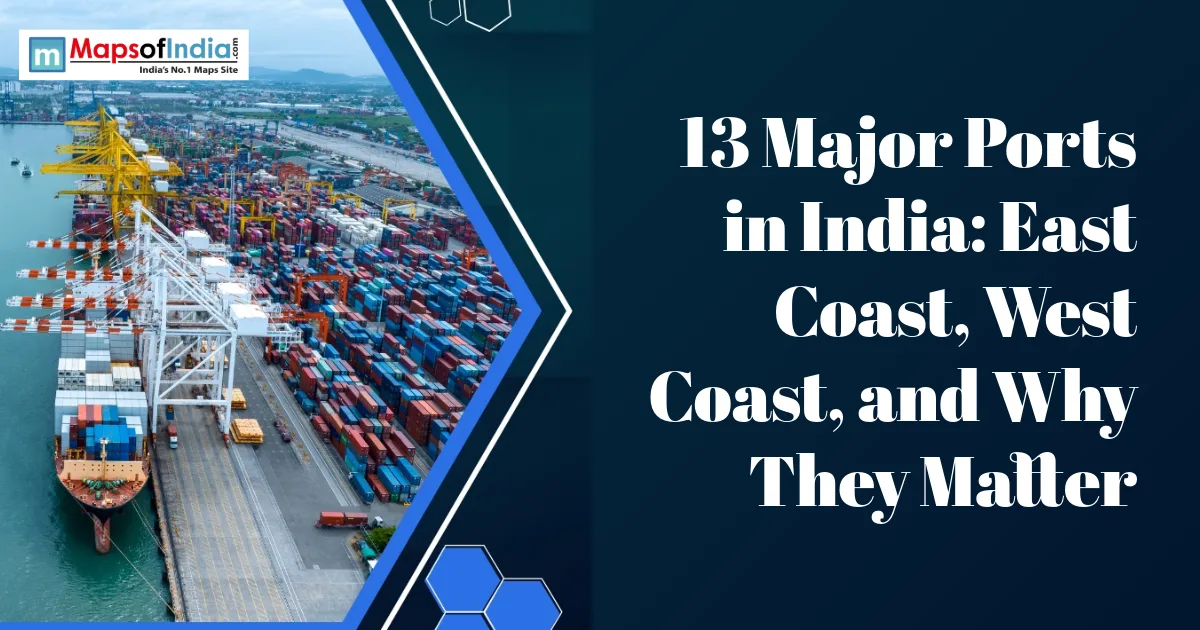
India's coastline is approximately 7,516.6 km long and has 13 big ports serving as the lifelines of the Indian economy. In fact, more than 95% of the trade in volume goes through these essential infrastructures in India. India's ports are used for crude oil, coal, containers, iron ore and other commodities, which are important for economic development and employment. Furthermore, in this essay, you will be introduced to key ports on the eastern and western coasts of India and the importance they play, as well as the developmental projects that are currently in progress.
Overview of Major Ports in India
There are 13 major ports in India, the majority of which are owned by the government. Besides, the major ports in India are located all over the country, with 7 ports in the west and 6 on the east coast. The Union Ministry of Ports, Shipping and Waterways manages major ports and minor ports are managed by the government of the respective states.
India's key ports are highly involved in trade with the outside world, and minor ports cater to coastal trade. In addition, more than 1,400 million tonnes of all cargo traffic takes place in the major ports. India's ports, like arteries in the human body, are vital components of the nation's transportation system, handling both domestic and international trade, and playing a key role in the country's economy.
List of Major Ports in India (State-wise)
Ports on the West Coast
Port Name | State | Key Feature |
| Kandla Port | Gujarat | Largest by cargo volume |
| Mumbai Port | Maharashtra | Natural Harbour, the oldest major port |
| Jawaharlal Nehru Port | Maharashtra | Largest container port |
| Marmagao Port | Goa | Iron ore exports |
| New Mangalore Port | Karnataka | Major fertilizer and petroleum hub |
| Cochin Port | Kerala | Natural Harbour, cruise terminal |
Ports on the East Coast
Port Name | State | Key Feature |
| Paradip Port | Odisha | Major iron ore and coal exporter |
| Visakhapatnam Port | Andhra Pradesh | Deep natural harbour |
| Chennai Port | Tamil Nadu | Oldest artificial harbour |
| Ennore Port | Tamil Nadu | First corporate major port |
| Tuticorin Port | Tamil Nadu | A major container port in the South |
| Syama Prasad Mookerjee Port, Kolkata (including Kolkata Dock System and Haldia Dock Complex) | West Bengal | Riverine port, the oldest operating port |
Importance of Major Ports in India
Role in International Trade
India's maritime sector handles around 95% of the country's merchandise trade by volume and around 70% by value. Major and non-major ports together handle this traffic. They are the primary gateway for imports into India, including crude oil, coal, and machinery, and the primary gateway for exports, including iron ore, petroleum products, and agricultural products.
Economic Significance
The major ports of India play an important role in the economy as their freight activity is high and freight transport is done by ship, inland waterways and road. Major ports are the ones with the bulk of cargo like crude oil, coal, Iron ore and containerized cargo. They create millions of direct and indirect jobs, industrialization, and promote economic development in the states they operate.
Strategic & Defence Importance
Major ports are of immense strategic importance to the region that they serve. They play a significant role in coastal defence and are essential to support the Indian Navy. Besides, in times of war and emergency, the major ports are also highly effective.
Connectivity & Logistics
In recent years, several initiatives have been launched, including Sagarmala and Dedicated Freight Corridors, which have improved hinterland connectivity to the major ports. This has lowered the freight cost from inland to the ports to a great extent, which makes Indian ports more competitive.
Key Facts and Superlatives About Indian Ports
- The largest port (Cargo) in India is the Kandla Port (Deendayal Port Authority), Gujarat.
- The biggest container port is Jawaharlal Nehru Port, located in Maharashtra.
- Youngest operating port: Kamarajar (Ennore) Port (founded in 2001).
- The deepest natural harbour is: Visakhapatnam Port
- Kolkata Port is the only major port in the riverine area.
- The most significant cargo gains: East Coast Ports
These superlatives are an indication of the diversity and importance of the Indian port system. They are all unique in their contribution to the nation's shipping strength, ranging from being able to deal with bulk cargo in large quantities to being modern ports handling containers.
Challenges Facing India's Major Ports
Among all the problems of the east coast ports of India, the shallow depth of the harbours is the major problem because large modern ships are not able to dock at the harbours. Hence, the ports on the east coast are less efficient, and cargo is shifted to foreign transhipment ports like Colombo, Singapore and Port Klang. Similarly, the critical ports of India are plagued by the inefficiency of operations in the ports due to a lack of infrastructure, inadequate port handling capacity and environmental regulations, impacting economic growth and regional development. Fortunately, these problems are being addressed in India with the initiation of the Sagarmala Program and other development programs to create new deep-water ports and upgrade old ones to national and international standards.
Upcoming and New Major Ports
India's future and new major ports like Vadhavan Port and Galathea Bay Port (proposed) are expected to be major transportation and logistics hubs. Vadhavan Port, Maharashtra, is a deep-water port that will provide cutting-edge facilities for international trade. Similarly, the Galathea Bay in the Andaman & Nicobar Islands will become an important international container transhipment centre. Moreover, India has ambitious plans in the document “Maritime India Vision 2030” to promote long-term economic development and regional connectivity through maritime development. As for the new ports, yes, when built, they will be the primary economic infrastructure that India will possess.
Conclusion
The 13 major ports of India play a crucial role in the nation's economy and connectivity. This essay introduces you to the major ports of India in terms of their location, features, importance and developmental projects. In fact, the key ports of India are an important part of trade and commerce and are vital in sustaining the growth of the Indian economy and the development of the nation. Moreover, with the ongoing development and modernization of transportation infrastructure in India, the major ports will play a more prominent role, particularly with the Sagarmala developmental projects. Therefore, I request you to gain awareness of the important ports of India and deepen your knowledge about the coastal economy of India.
FAQs
1. How many major ports are there in India?
India has 13 major ports, which are administered by the Ministry of Ports, Shipping and Waterways. These ports play a vital role in India's maritime trade and logistics.
2. Which is the largest major port in India?
Deendayal Port (formerly Kandla Port) in Gujarat is the largest major port in India by cargo handling capacity and volume.
3. Which is the largest container port in India?
Jawaharlal Nehru Port (JNPA) in Maharashtra is India's largest container port and handles a significant share of the country's container traffic.
4. How many major ports are located on the east and west coasts of India?
India has 7 major ports on the west coast and 6 major ports on the east coast.
5. What is the difference between a major port and a minor port?
Major ports are administered by the Central Government through the Ministry of Ports, Shipping and Waterways, while non-major (minor) ports are managed by the respective state governments.
6. Which is the oldest operating major port in India?
Syama Prasad Mookerjee Port, Kolkata (formerly Kolkata Port), is India's oldest operating major port.
7. Which major port has the deepest natural harbour in India?
Visakhapatnam Port in Andhra Pradesh is known for having one of the deepest natural harbours in India.
8. Why are major ports important for India's economy?
Major ports facilitate international trade, support exports and imports, generate employment, attract investments, and improve connectivity between India and global markets.