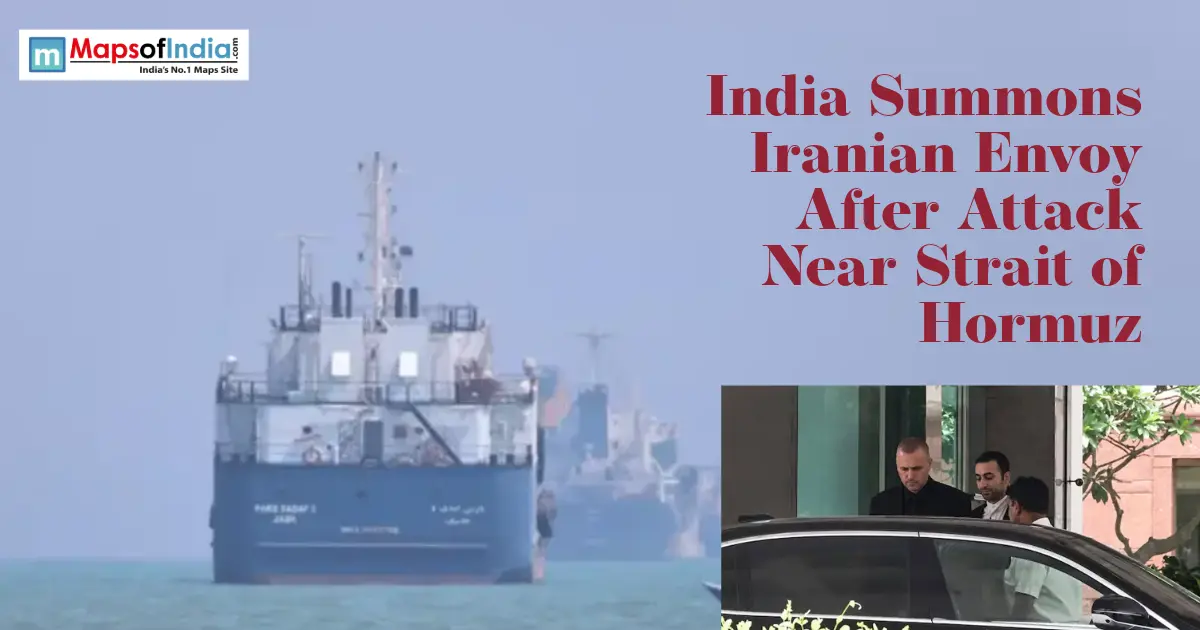
India has strongly protested a deadly attack on merchant vessels near the Strait of Hormuz that resulted in the death of an Indian seafarer and injuries to several others. In response, the Ministry of External Affairs (MEA) summoned Iran's Deputy Chief of Mission in New Delhi to convey India's concerns and seek an explanation over the incident. The move underscores India's commitment to protecting its citizens abroad and ensuring the safety of international shipping routes.
The incident had captured the attention of the world as it happened in one of the world's most strategically important maritime routes. The attack has led to fears of a possible strain on regional security, stability, and the safety of sea crossings and the transportation of commodities around the globe.
India Lodges Diplomatic Protest
The Indian government then summoned the Iranian Ambassador to officially register its protest. The meeting strongly condemned the incident and expressed deep concern about the loss of life of an Indian and injuries to other crew members.
Though it is important to note that no civilian merchant vessel or innocent seafarer shall be a target of a regional conflict,” said the government. It also requested more steps to be taken to make sure that commercial shipping transits through the Strait of Hormuz safely.
India has reiterated its resolve to help save the lives of its citizens in a foreign country and has said it will keep the situation under its radar.
What Happened Near the Strait of Hormuz?
The attack reportedly targeted merchant vessels transiting the Strait of Hormuz, one of the most important sea passages in the world, linking the Persian Gulf and the Gulf of Oman and the Arabian Sea. In the strike, one Indian crew member died, and some were injured.
The incident came at a time when Middle East tensions are growing, and military conflicts have begun to impact commercial shipping routes. However, merchant vessels are civilian vessels, but when geopolitical conflicts escalate, there is increased risk.
The Indian government has been reaching out to the shipping companies and diplomatic missions to determine the situation and offer assistance to the impacted crew members and their families.
Why Is the Strait of Hormuz Important?
Strait of Hormuz is one of the busiest and most important waterways in the world. Daily, huge amounts of crude oil and LNG are being exported from this small maritime route around the world.
It is not limited to the Middle East and has impacts across the entire world, in the fields of international trade, energy security and global supply chains.
The Strait is particularly important to India because:
- This is one of the most important import channels for crude oil into India.
- There are thousands of Indian seafarers on board the commercial ships operating in the Gulf region.
- Sea transport plays a vital role in India, Gulf countries' trade relations.
- Any disruption could raise shipping costs and fuel prices.
Disruptions in the Strait, whether long or short-term, can have ripple effects around the globe.
Impact on Indian Seafarers
India has one of the biggest exporters of skilled personnel in the merchant navy sector in the world. Indian sailors are serving on oil tankers, cargo vessels, LNG and container ships in international waters, in numbers of thousands.
They're essential to global commerce, but frequently in areas susceptible to geopolitical conflict. The recent incident underscores the dangers facing civilian seafarers who are in a situation where they have no control.
This incident has prompted a renewed discussion on the need for tougher international action to protect merchant ships and their crew members in the event of unrest in the region.
Rising Regional Tensions
The attack coincides with heightened tensions in the Middle East. The Gulf has grown in uncertainty as a result of military exchanges and politics, and concerns are raised over the safety of international shipping.
Areas are now more challenging for commercial vessels, such as:
- Increased security risks
- Higher insurance costs
- Route diversions
- Shipping delays
- Rising freight charges
The developments have implications for shipping companies as well as for and within global trade and commodity prices.
India's Balanced Diplomatic Approach
India has had an amicable relationship with Iran, and it has been working to enhance its relations with the Gulf nations, the United States and Israel. This is a "neutral" foreign policy that allows New Delhi to interact with all the key players in the region positively.
But, in the case of Indian citizens being subjected to violence in other countries, India has always taken a strong diplomatic stand. The Iranian official's appeal is an indication that the regime would like to hold him responsible, but not to give up on negotiating with him.
The strategy is a reflection of India's balancing act between strategic alliances and the responsibility to safeguard its citizens.
Economic Implications
Strait of Hormuz is of vital importance to India's energy security. Any disruption of this waterway that lasts for a lengthy period of time would have a tremendous economic impact.
Potential impacts include:
- Increased crude oil prices
- Increased fuel costs
- Rising inflation
- More expensive imports
- Higher transportation expenses
- Supply chain disruptions
Over the years, India has shifted its energy import dependence from the Gulf region to diversify it, but still, the Gulf is one of the major sources of imports.
This is why companies, investors, and policymakers are keenly interested in what is happening in the area.
Maritime Security Takes Centre Stage
The recent incident has once again brought the importance of maritime security in the Indian Ocean and Arabian Sea to the fore.
India has been upgrading its naval equipment for the safeguard of its commercial shipping and international projects to keep sailing lanes open. Improved surveillance, cooperation with friendly countries, and the monitoring of key sea lanes continue to be a key part of India's maritime security measures.
Shippers also will likely be looking at their safety procedures and contingency plans for vessels travelling in conflict zones.
International Concern Over Shipping Safety
The attack has raised the international community. Numerous countries have reaffirmed the need to safeguard civilian shipping and continue maritime trade.
Global organizations still say freedom of navigation is key to economic stability and international trade. If the escalation gets into the range of commercial shipping, its effects can be far-reaching for the nations of the world.
There will be efforts to cool down the situation and stop more incidents through diplomatic moves.
Conclusion
India's call for the Iranian official marked its resolve to safeguard the safety of its citizens and uphold the security of the sea. Merchant sailors operating in conflict-affected areas face dangers of which one such tragic incident has brought the issue of Indian seafarers back to the fore.
As geopolitical tensions continue to shape developments in the Middle East, ensuring the safety of commercial shipping routes will remain a global priority. Protection of the Indian maritime manpower, ensuring secure energy supplies and promotion of positive diplomacy will remain core priorities for India.
The incident brings to mind how regional wars can have global repercussions that go beyond diplomacy and security to all aspects of global commerce, the oil market and the lives of thousands of civilian seafarers who ensure the smooth flow of international trade.
FAQs
1. Why did India summon the Iranian envoy?
India summoned the envoy to protest the attack near the Strait of Hormuz that killed an Indian seafarer.
2. What is the Strait of Hormuz?
It is a key shipping route connecting the Persian Gulf with the Arabian Sea.
3. Why is the Strait of Hormuz important for India?
It is a major route for India's oil imports and international trade.
4. How does the attack affect global trade?
It can disrupt shipping, raise oil prices, and increase transportation costs.
5. Are Indian seafarers at risk in the region?
Yes, they face increased risks during periods of regional conflict.
6. What was India's response to the attack?
India condemned the incident and sought an explanation through diplomatic channels.
7. Why is maritime security important in the Gulf region?
It ensures the safe movement of ships, energy supplies, and global trade.