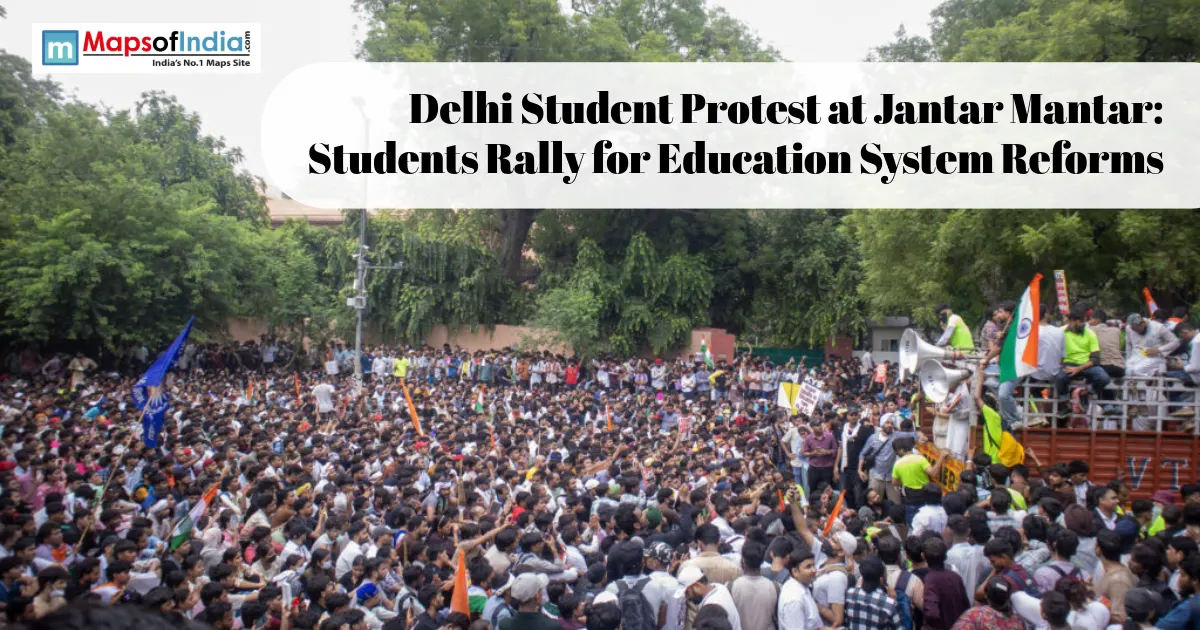
Jantar Mantar in New Delhi has once again turned into a hub of public interest, attracting thousands of students and youth to raise concerns about the Indian education system. The topics of recent demonstrations have mainly been the transparency of examinations, allegations of paper leakage, accountability for competitive examinations, and other education reforms. Educator reformer and innovator Sonam Wangchuk also undertook a hunger strike to highlight the demand to introduce transparency and institutional changes in the education system, drawing national attention to the cause.
The events have received a great deal of attention in the media, but have also brought a focus to the value, in a democratic system, of peaceful civic engagement. Students, teachers, parents and concerned citizens have come together in the demonstrations to improve the education system in India. Rather than debate politics, the movement has sparked discussion about equality, honesty and the future of education.
Why Students Gathered at Jantar Mantar
The recent protest at the Jantar Mantar was led by student groups and youth organizations who were demanding reforms to the education system in India. The protests followed concerns over alleged irregularities in competitive examinations, including paper leak allegations, which many students said had affected confidence in the fairness of the examination process.
During the protest, participants raised several demands aimed at improving transparency and accountability in the education system. These included:
- A thorough and transparent investigation into alleged examination irregularities.
- Stronger safeguards to prevent future paper leaks.
- Reforms to improve the security and credibility of competitive examinations.
- Better grievance redressal mechanisms for students.
- Greater accountability from educational authorities.
- The resignation of Union Education Minister Dharmendra Pradhan, which organizers described as a demand for political accountability over the handling of examination-related concerns. This was presented by the protesters as one of several key demands of the movement.
The demonstrations remained focused on issues affecting students and the education system, with participants emphasizing the importance of restoring trust in examinations that influence the academic and professional futures of millions of young people. Although opinions differed among stakeholders, the protests sparked a nationwide conversation on examination integrity, educational governance, and the need for continued reforms.
The Importance of Examination Integrity
Competitive examinations play a vital role in India's education system. Every year, millions of students appear for entrance examinations seeking admission to universities, engineering institutions, medical colleges, and other professional courses.
Because these examinations influence academic and career opportunities, maintaining their integrity is essential.
Students generally expect examination systems to be:
- Secure
- Transparent
- Fair
- Merit-based
- Efficient
- Reliable
Confidence in examination processes helps maintain public trust in educational institutions and ensures equal opportunities for deserving candidates.
Calls for Education System Reforms
Although specific concerns may differ among participants, many discussions surrounding the protest have focused on strengthening India's education system over the long term.
Common areas of discussion include:
Improving Examination Security
Advancements in technology can help make examination processes more secure through better monitoring, stronger cybersecurity measures, improved logistics, and enhanced data protection.
Greater Transparency
When there is clarity regarding examination procedures, evaluation methods, and grievance redressal mechanisms, there will be an increase in confidence in the public.
Faster Response Mechanisms
Timely investigations in examination-related issues and transparent communication can reduce uncertainty for students.
Student Support
Competitive examinations often involve significant academic pressure. Many educators recommend increasing counselling, career information and mental health services for students taking on the major exams.
Sonam Wangchuk's Support for Education Reform
Education reformer and engineer Sonam Wangchuk joined the broader conversation by undertaking a hunger strike in support of demands related to education reforms and examination accountability. Wangchuk's presence added to the national debate on the issues that students were raising, given his reputation in the innovative education and sustainable development movement. His health was reportedly a concern during the fast, and legal matters were also raised regarding his medical care after the fast.
His involvement also reignited the public discussion about the quality of education, students' welfare and the need to keep trust in academic institutions.
Public Dialogue Around Education
The recent protests have ignited a discussion much greater than what is happening on the street. There have been discussions on how India's education system can continue to evolve with the participation of experts, teachers, parents, policymakers, and students.
Several recurring themes include:
- Strengthening examination systems
- Expanding digital security measures
- Improving administrative efficiency
- Supporting student well-being
- Building greater institutional transparency
- The resignation of Union Education Minister Dharmendra Pradhan
These conversations can help in the process of refining practical changes that can have a positive impact for students nationwide.
Government Response
In response to growing public concern, the Union Education Ministry has said it is working on improving accountability and enhancing examination systems. Promises are made in public to reform the competitive examinations in a more transparent and confidence-building manner.
Feedback from students, educators, examination authorities and institutions can play a role in the process of education policy development, particularly when it comes to improving the processes in the future.
Looking Ahead
India's education system continues to evolve to meet the needs of a growing and dynamic population. Advances in technology, digital learning, artificial intelligence, and skill-based education are creating new opportunities while also introducing new challenges.
Enhancing examination systems, institutional transparency and assisting students on their educational path continue to be important goals for the future.
The role that is important to the effective implementation of reforms in being practical, effective and driving student success will continue to be a significant one that students, educators, policymakers, academic institutions and examination authorities share.
Conclusion
The students' movement in Jantar Mantar has once again brought the issue of trust into the education system of India to the fore. The protests were initially in response to matters arising with the exams but have also sparked other discussions on greater transparency, accountability and continuous improvement.
Students' involvement and the backing of one of the most vocal proponents of education reform, Sonam Wangchuk, have brought the importance of constructive dialogue on education policies to the forefront of the national agenda.
The common goal is to develop a fair, reliable, and equal opportunity education system as discussions continue. Through peaceful engagement, thoughtful reforms, and collaboration among all stakeholders, India's education system can continue to grow in ways that inspire confidence and support the aspirations of future generations.
FAQs
1. Why are students protesting at Jantar Mantar in Delhi?
Students are protesting at Jantar Mantar over concerns related to examination transparency, alleged paper leaks, and education system reforms.
2. What are the main demands of the Delhi student protest?
The key demands include fair examinations, stronger security measures, transparent investigations, better grievance systems, greater accountability and the resignation of the Union Education Minister, “Dharmendra Pradhan”.
3. Who is Sonam Wangchuk and why did he join the protest?
Sonam Wangchuk joined the movement to support discussions on education reforms, transparency, and improving trust in academic institutions.
4. What education reforms are students demanding?
Students are demanding secure examination systems, faster action on irregularities, transparent processes, and improved student support mechanisms.
5. Where is the student protest taking place in Delhi?
The student protest is being held at Jantar Mantar, a designated demonstration site in central New Delhi.
6. Why is examination integrity important in India?
Examination integrity ensures fair opportunities for students by maintaining transparency, security, and merit-based selection.
7. What issues have been raised during the Jantar Mantar protest?
The protest has highlighted concerns about paper leaks, exam security, accountability, and the need for reforms in India's education system.