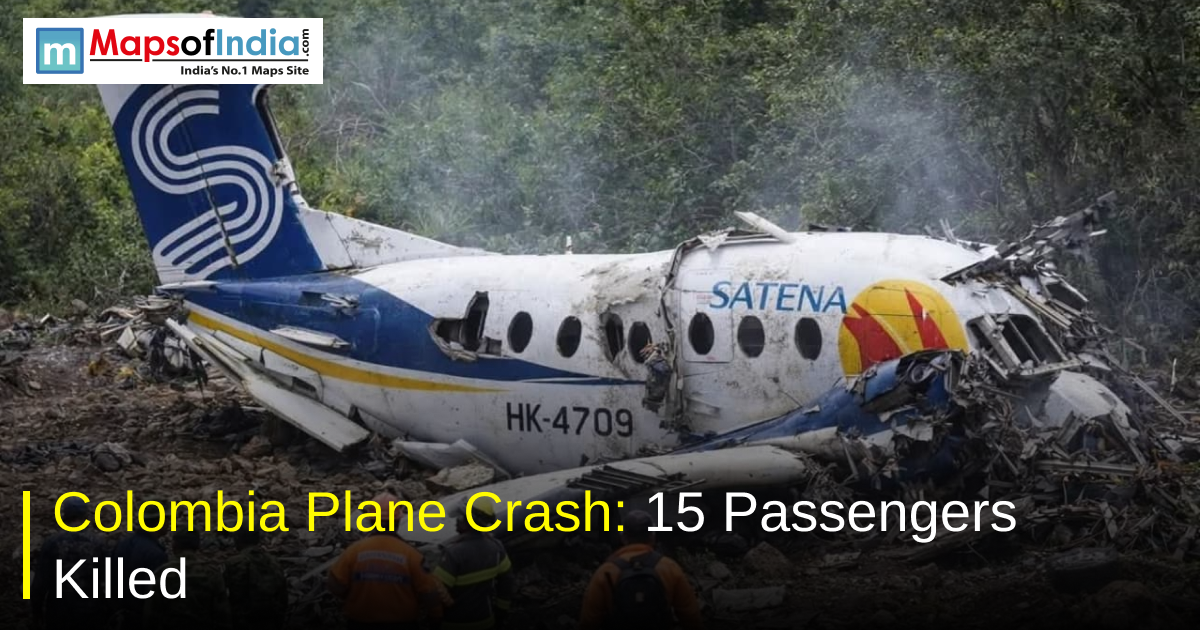
Colombia suffered a terrible aviation crash when a small passenger aircraft crashed in one of the remote parts of the country, killing all 15 people on board. The event has raised a veil over societies and re-initiated discussions of air safety, emergency management and the hardships of flying in regions that are characterized by rugged landscapes and erratic weather conditions.
The Incident
First reports by the officials reveal that the plane was on a domestic flight when it went off course with the air traffic control. It was thought that the plane was flying between two regional flights, with customers who frequently use air transport because road accessibility is low. Within a short time, after the communication had been lost, search and rescue efforts were initiated.Rescue teams such as the air force, police, and the local emergency responders were sent to find the plane. The place where the crash had happened was later discovered in a remote location, making the rescue mission difficult. The 15 passengers and crew members were all reported dead, one of the most tragic occurrences of the recent past in the region concerning the aviation industry.
Challenges of the Terrain
The geology of Colombia also creates special problems in aviation. There are thick rainforests, hilly areas and remote villages that are scattered throughout the country, which rely heavily on small aircraft as a mode of transport. These flights are important in terms of connection, but they are also flown in circumstances that may be risky, especially during adverse weather.The topography of Colombia usually poses a challenge to air travel in isolated mountainous areas. Nevertheless, authorities are yet to validate the fact on whether terrain, weather or technical aspects contributed to this accident. Investigators are still searching for all possible causes.
Search and Recovery Efforts
After the wreckage was identified, recovery teams had a hard time since they had to find the location. The authorities are yet to publish information concerning the circumstances experienced during the operation.The government collaborated closely with the local populations to offer them assistance and also made sure that the families of the victims were given relevant information on time. They said that they were working with local authorities to assist the families of the victims as more information was made known. This emotional impact of the tragedy was experienced much further than the crash zone itself, as messages of sympathy continued to flood in, even around the rest of the country.
Investigation Underway
A formal investigation is underway to find out the reason behind the crash. Government officials and aviation professionals are investigating the flight information, service logs, and weather during the accident. The black box, which was recovered from the aircraft, is likely to give important details on the last moments of the flight.The investigators will also determine whether the technical breakdown, human error, or environmental condition contributed to it. The results of the investigation would have an impact on the safety protocols in the future, especially when it pertains to regional and charter flights that will be taking place in such circumstances.
Impact on Local Communities
Small aircraft have become a lifeline to many of the rural communities in Colombia, who are unable to access major cities to receive healthcare, education and conduct business. The accident has brought the issue to town, where the locals rely on such services, and the question of safety measures and the effectiveness of air transport in remote locations is raised.It has been demanded by the community leaders that more funds should be invested in infrastructure, such as improved airstrips, improved communication systems, and the development of better training of flight crews. They claim that these measures are necessary to avoid this type of tragedy and to gain the trust of people in the regional air transport.
National Response
The Colombian government has shown profound regret for the loss of life and has promised to support the investigation into the latter. In other parts, flags were lowered to express sorrow, and governments emphasized that the experience must be used so as to improve the issue of aviation safety.The authorities indicated that the results of the inquiry will inform future aviation safety measures and procedures. It seeks to provide aircraft that operate under difficult conditions to be of the highest safety standards.
Remembering the Victims
The country is contemplating the tragedy, but the focus has shifted towards the commemoration of the fallen lives. Family members and friends have conducted vigils and memorials and recounted stories and memories of those who died. To most people, the crash is not only a news story, but a personal tragedy that has brought in permanent scars.The victims were a cross-section of Colombian society, those who were either professionals or students and members of the crew who spent their lives serving others. Their death has highlighted the human nature of aviation accidents and the reason why efforts to ensure safety improvements should be continued.
A Call for Safer Skies
The event is tragic because it reminds people of the nature of risks involved in air travel, particularly in the areas where geography and weather are major challenges. Although aviation is currently as safe as possible among all the means of transportation in the world, accidents such as this one are a reminder that there is always a need to remain on the lookout, technological progress, and a robust regulatory system.In the future, stakeholders in the aviation sector are likely to work together on projects that would make the aviation sector safer, such as by modernizing aircraft systems, training pilots and conducting drills on emergency response. These measures are essential in making sure that air travel does not hamper lives in the process of linking communities.
Looking Ahead
Since investigators strive to find out the causes of the crash, it is all about helping families that were affected and avoiding a new tragedy in the future. It is highly likely that lessons that have been learnt during this incident will influence either the policies and safety practices of aviation in Colombia over the years to come.There is also a unanimous determination to commemorate the victims in the face of grief by pursuing safer skies. The tragedy is an eye-opener as it reminds all governments, as well as aviation and operators, of their role in ensuring that they safeguard every life that flies.