The Middle East was a dramatic and dangerous escalation when it was confirmed that the United States and Israel coordinated attacks on Iran, which caused explosions in Tehran and some other regions in the country. The attacks have triggered shockwaves in the region, and there is a future concern that it could lead to a larger confrontation that may upset global security, energy markets, and international relations.Since information is still leaking out, the situation is tense, fluid and extremely unpredictable.
Explosions in Tehran
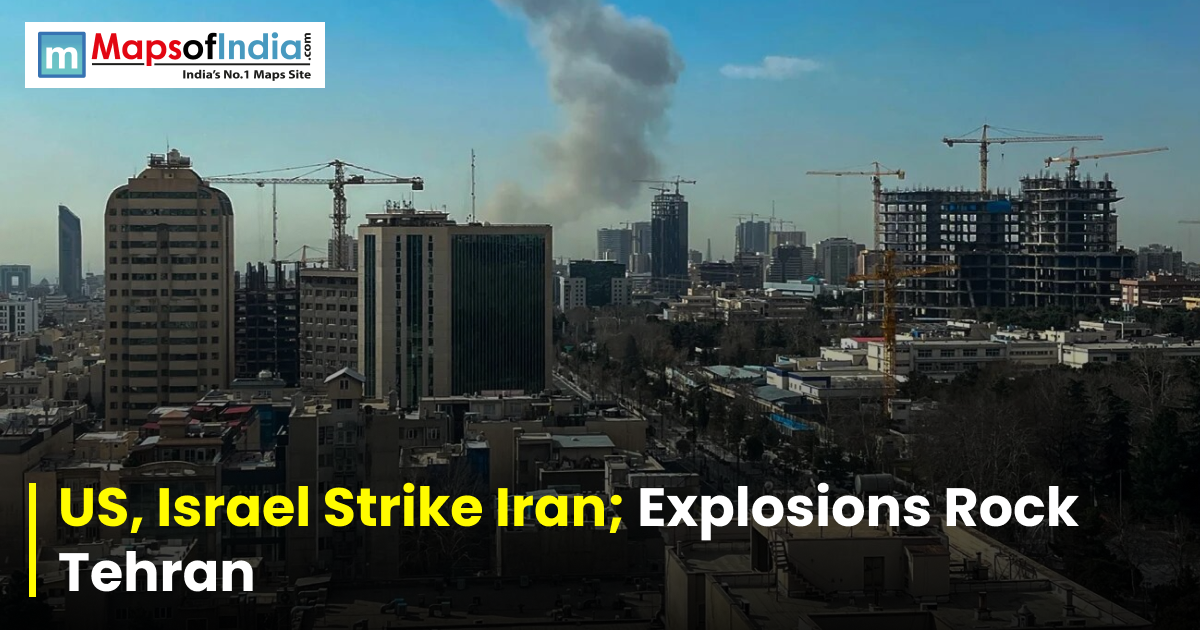
People living in Tehran said they heard numerous loud blasts in various areas of the capital. Online videos captured glimpses of flashes in the night sky, then non-believable amounts of smoke in the sky on what seemed to be targeted spots. There were reports of air defense systems being put into operation, and emergency sirens were blown in a number of districts.Iranian officials acted fast to control strategic points, airspace, and tightened security. Although official reports have established that a number of sites have been targeted, the magnitude of the damage is not clear. There have been no official releases of the number of casualties, and also no independent verifications due to the disruption of communications.The attacks did not just target Tehran. It has been reported that military and infrastructure-related targets in the other parts of Iran were also possible.
Why the Strikes Happened
The animosity between the two states (Iran and Israel) has been building up over the years, especially in the realm of the Iranian nuclear program and its military strength in the region. The nuclear programmes of Iran have long been felt by Israel as a source of existential threat, and it has repeatedly declared that it would do whatever it can to ensure that Tehran does not develop nuclear weapons capabilities.The United States has also raised its concerns with regard to the nuclear programs, the development of ballistic missiles and the financing of armed factions in the region by the Iranians. Nuclear pacts have been revived through numerous diplomatic initiatives that have been punctuated by deadlocks between talks being stalled due to the level of accusations and distrust between nations.The strikes, according to initial reports, were said to have been of a preemptive nature. Authorities who led the attacking side said that the operation was directed at the elimination of threats that were going to happen. The attacks have, however, been heavily criticized by Iran, which has described them as aggression and acts of violating international law.
Immediate Regional Impact
The attacks have increased the tensions in the Middle East. Israel is reported to have declared a state of emergency and put its defense systems on high alert after it had been reported that there would be a possible retaliation. In some locations, public shelters became available, and civilian preparedness was strengthened.The situation is closely monitored by the neighbouring countries in fear of spillover effects. The governments of various countries in the Gulf region have urged restraint, where all parties have been urged not to engage in acts that would lead to a full-fledged war.Air transport in some areas of the region has been disrupted, with some airlines diverting their flights to avoid the affected airspace. The oil markets of the world responded very quickly, and there was volatility in prices as there is fear of disruptions in supply. The Middle East is a sensitive energy producer and any protracted conflict may have serious economic implication on the world.
Iran’s Possible Response
One of the major questions that are on the agenda of the world is the way Iran will react. In the past, Iran has shown direct and indirect forms of retaliation. These involve missile attacks, cyber attacks, and allied armed groups in the region.The leadership of Iran has already indicated that in case of any attack on its territory, it would respond decisively. According to military analysts, retaliation may be in the form of attacks on Israeli soil, U.S. military installations in the area, or its infrastructure.But what is still unclear is how big the Iranian reaction will be and when it will be. Tehran has to balance the need to show power with the chances of being involved in a larger war in the region that will engage several countries.
Global Diplomatic Reactions
The world leaders have responded with a lot of speed to the developments. Europe, Asia, and international organizations have called for de-escalation. Diplomats note how much restraint is needed, that the situation may grow out of hand and destabilize not only the Middle East, but also the entire world economy.Emergency talks are likely to be held by the United Nations when world powers strive to ensure that the conflict does not get out of hand. There has been some mediation provided by some countries, though there is no trust among the parties.The situation puts such big powers in a precarious situation. Whilst there are other countries that are strategically allied with Israel or the United States, there are also countries that have economic and diplomatic connections with Iran. The diplomatic role of balancing these relations in the framework of the increasing tensions is going to be a big challenge.
Risk of a Wider War
The possibility of a broader regional conflict is one of the most important issues that arises in relation to the strikes. The Middle East is already facing various existing crises, and any face-to-face conflict between Iran and Israel, particularly with the involvement of the U.S., would attract other agents.The armed groups in the region that support Iran might intervene, making the war field to be on a broader scope than it was in Iran. In the meantime, the security of the seas in strategic waterways may be endangered, affecting international trade.Starting with wrong calculations is a grave danger, according to military analysts. Quick reactions to situations, especially in situations that are highly charged, can easily degenerate out of expected motives. Even restricted strikes may develop into long antagonisms unless diplomatic back channels are timely created.
Impact on Civilians
Civilians are the weakest despite the calculations of strategies and military actions. Inhabitants in Tehran and other affected districts live under uncertainty, fear and may be displaced. Emergency services are also said to be evaluating the damage as well as providing relief to the victims of the blasts.The citizens are also making plans to retaliate in case of an attack in Israel, where the government is urging people to be keen and to be ready. The emotional effect of the buildup of tensions is being experienced on both ends.Humanitarian organizations are pressuring all to ensure the security of civilians and to respect international humanitarian law. The issue of protection of non-combatants is still a very hot topic as the events unfold.
What Comes Next?
The crisis is in its initial and volatile stages at this stage. A lot is left to be seen on what the next step of Iran will be, and with the possibility of reopening the diplomatic channels to curb further aggression. The use of backchannel negotiations, third-party mediation, and international pressure might determine the course of events.The developments will still be followed by financial markets, world governments, and defense analysts. The existence of any indication of increased military involvement may change geopolitical balances and the world order greatly.In the meantime, it is a long-time brewing rivalry that enters a perilous new phase. The Iran attacks are a turning point in the geopolitics of the Middle East, a turning point that can lead to the development of more serious confrontation or force the leaders to seek new forms of diplomacy.The next few days will decide whether this crisis turns into a long-term regional conflict or a good wake-up call that will lead to immediate negotiations and intervention.