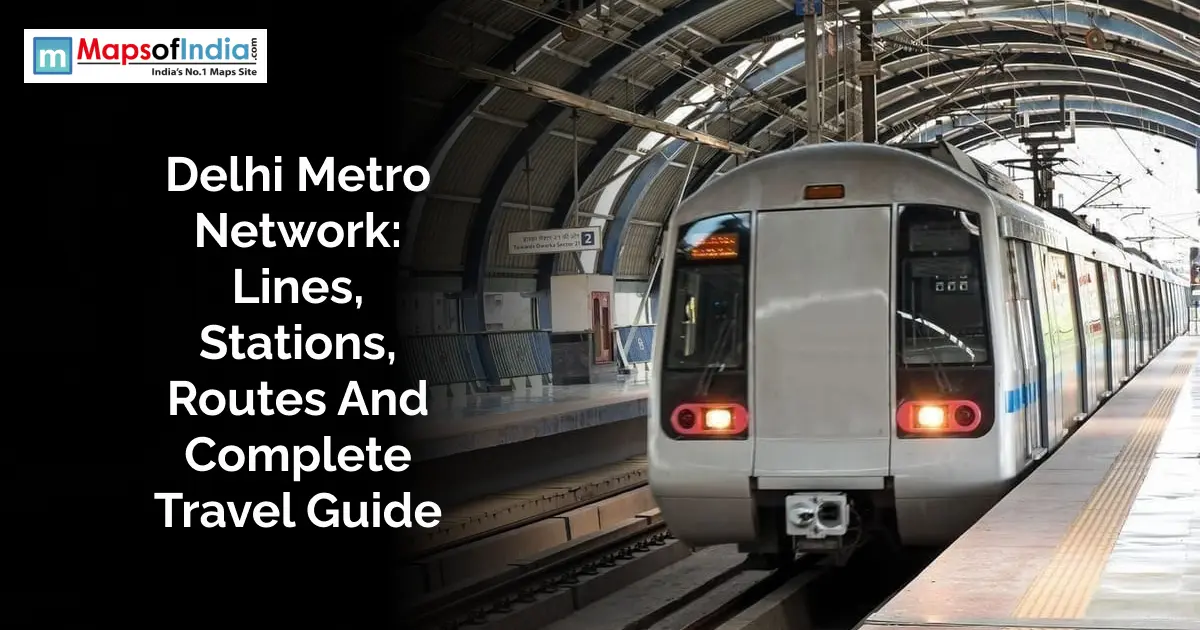
Delhi, the capital of India, is moving on rails that cross the concrete sky, starting fast. The Delhi Metro system was opened in 2002 and had little impact on the crossing of a busy area. Tracks extend for over 350 kilometres, and connect distant corners that were previously clogged. The map is crisscrossed by over two hundred fifty stops that seem like the points on a wire. Trains are cool, clean and on time with daily crowds. Due to such rides, the number of cars that use fuel under the hot and polluted sun is decreased. Normal safety: It is built into all platforms and signs here. This is all about Delhi Metro: its lines, where the stations are, what routes they run on, and minor details that make it easier to navigate the city.
Overview of the Delhi Metro System
At this moment, the Delhi Metro has 10 lines, one of which connects to the airport and serves cities such as Noida, Ghaziabad, Gurugram, Faridabad and Bahadurgarh. It's run by DMRC and is unique because of its smooth functioning and high-calibre facilities. Trains run under streets and above streets on raised platforms and in tunnels. Easy payments via reloading cards from DMRC or a scannable paper code. It begins early in the morning, after 6 o'clock. They came in running strong until close to 11 o'clock at night. Festivals extend those limitations and keep things going even longer. This network is active and moves people fast now, each and every day. No one felt it until the old ways felt strange.
Red Line: The Pioneer Line
Starting back in 2002, the Red Line kicked off Delhi's metro journey. This measures approximately a distance of 34Km with 25 stops between Dilshad Garden and Rithala. Along the way: Kashmere Gate, followed by Chandni Chowk, and then Shahdara. As it travels from east to northwest, it connects communities and commercial areas. Up above ground, it runs without touching ground. Yet in the same manner as the initial track which started Delhi's metro era, crammed, transporting crowds each and every day.
Yellow Line: The North-South Connector
The Yellow Line begins from Samaypur Badli in the north and extends all the way to HUDA City Centre in Gurugram, a distance of about 45 kilometres. Travellers consider it essential as it passes through the central areas of Delhi, including busy intersections like Chandni Chowk, Rajiv Chowk near Connaught Place and Hauz Khas. Transfer points are available along the route, making it easier to reach the airport. It's used by people as much as visitors do during their daily commute from home to work. Visualise the long veins that link the northern regions to the southern regions and towns that span the NCR border.
Blue Line: The Longest Line
The Blue Line is a 56+ km long city line that passes through Vaishali and near Dwarka. After crossing the Yamuna bank, the branches spread towards Noida. Among the important landmarks, the first one is Anand Vihar, followed by Laxmi Nagar and then further west, it is Rajiv Chowk. This is a key path that is used extensively every day in the morning and evening in the busy neighbourhood. Makes more ridership than any other metro line here, day by day.
Magenta Line: The Modern Connector
Under the city, the Magenta Line quietly goes between the Janakpuri West and the Botanical Garden in Noida. It goes without saying once through Hauz Khas, Saket and Lajpat Nagar. Easy transfer from one station to another, smooth design of stations and faster trains in South Delhi, which makes the travel easier from South Delhi to Noida and Gurugram. Students and office-dwelling people frequent the route for its dependable service. Clean design makes it a quiet favourite; it's well-suited for people who want to move rapidly through growing areas of the capital.
Airport Express Line: Fastest Connection
The Orange Line is a high-speed train that runs between New Delhi Railway Station and the airport. The entire 22.7 km route takes just 15-20 minutes. The route is removed from the hustle and bustle of the city and remains at high levels. There's plenty of room, and the rides are smooth - people are coming back because of this. Here, comfort and speed go hand-in-hand, unobtrusively. Professionals who are busy fall asleep or simply look at tablets as they rush around above them. The transit of people is smooth and seamless through the urban air.
Pink Line: The Ring Connector
The Pink Line runs a loop below the city streets, connecting various places such as Majlis Park, Lajpat Nagar, etc., ending at Shiv Vihar. It is long in length and is one of the longest routes in the network. Now, hassle-free downtown travel is available via this movement. When you don't have to pass through central areas of transit, travel gets easier. It's a tunnel version of a wide outer highway just underneath the ground.
Travel Tips for First-Time Users
- Purchase a DMRC smart card for hassle-free smart ticket fares.
- Use the Delhi Metro Rail app to get real-time train information and plan your trip.
- Observe platform signals and wait in line for the train.
- Lock all property and take care of peak hours (8-11 AM, 5-8 PM).
- Female travellers should use the reserved coaches for safety.
- Just as using a smart way to travel makes your Delhi Metro ride smooth and enjoyable.
Future Expansion Plans
Every month, a web of steel rails extends further into the Delhi sprawl. In addition to the existing stations, crews built tracks to distant towns. Some paths are now extending towards Greater Noida and a few towards Manesar to the west. A new corridor (Silver Line) is being built where there was not one before. After a kilometre, the length added up, soon enough it was inching towards half a thousand. The construction of each station brings neighbourhoods together.
Why Delhi Metro Matters?
By the many-traffic-laden roads, metal trains soar, transporting students and workers back and forth every morning. They not only save time but also help in relieving the congestion of the city. They are trusted by people when roads are clogged, buses get stuck, and the weather gets bad. Through the years, tracks have expanded outwards to neighbouring areas that are just beginning to grow. They're more than just wheels on rails; they're the movement of quiet energy through concrete veins. Even today, cranes lift up somewhere, laying new lines for tomorrow.