The Fascinating World Of Traditional Clothing Across Cultures
Vidyut Vardhan June 13, 2026
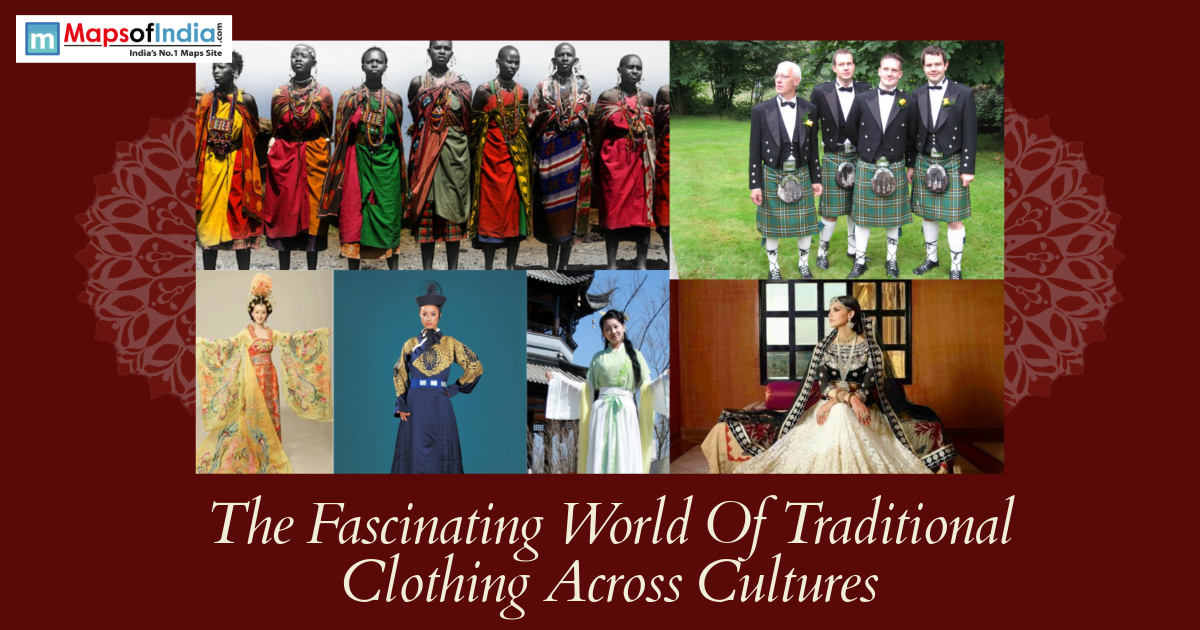
Old-style dress is more than just an ethnical wear. Being strong, they also have many more uses. These clothes are not about weather or faith. These outfits are sewn into the flesh of time. People from different cultures form cloth to reflect themselves in the village and city alike. Such garments reappear, again and again, during big moments, such as celebrations or rites of passage. The dresses all have a soft drape on their back, and elaborate details on their sleeves go up for a purpose. Gracefulness is seen and felt in weight; not only useful but loaded with undetected roots.
Kyoto, Japan – The Kimono
Long robes are seen streamlining through narrow streets in old Kyoto, Japan, where silk is flowing. Loose arms stretched wide at the shoulders, tied thick fabric belts at the waist. The seasons make their appearance in designs, cherry for spring, bright red for cold snaps. They bring them out to festivals, and in quiet moments when tea steams in hushed rooms. The old women in the long clothes talk quietly, walking through the streets of Gion. A subtle balance is evident in the folds, as though an appreciation of it has been captured. Cloth isn't the only thing that emerges from careful, slow hands. Every line has a more ancient rhythm, that of the slow. Beauty is in the unspoken; it's at the edges.
Varanasi, India – The Banarasi Saree
Varanasi is located on the bank of the Ganga River in Uttar Pradesh and is known throughout the world for its light Banarasi Sari Fabric. Silver filigreed with leafy vines and mythical motifs is woven into silk, which runs through each one. Gold traces flowers, and silver outlines gods, which are handcrafted slowly by fingers that have been trained over the years. Women use these textiles as soft tales of the past when they're celebrating or when they're having a large family gathering. In each fold are breaths of history, sewn without a hurry. They are made with eternity in mind, and flow like rivers, soft and glowing, and loaded with unseen weight.
Edinburgh, Scotland – The Kilt
Edinburgh, Scotland, is alive when kilts are seen on the cobbled streets, some say! Not any old cloth, but tartan wool cut to old family lines and tied to make it. The music heightens during the Highland games, and men don them like tales sewn into time. On weddings, too, where tradition rises up without a qualm. That same quiet strength has been carried over by designers far removed from their Scottish location, even into today's versions. Look at that, but that looks like it belongs.
Seoul, South Korea – The Hanbok
On festival days, Seoul, South Korea, is awash in bright colours, and hanboks dance like living paintings along the city's streets. The lady may be wearing a jeogori with a wide chima, a piece of fabric that dangles at her side with every step. Men opt for matching tops with loose trousers, a style that has been used for decades to give great modesty. These clothes wear the words; they are clean-seamed and intense in colour, formed by ancient notions of balance and dignity. Walk through Insadong and Bukchon, snapshots play out of teens posing in rented hanboks under cherry boughs.
Riyadh, Saudi Arabia – The Thobe and Abaya
Men's clothing here in the heart of Riyadh in Saudi Arabia is the long white thobe, which is light and loose, which are made to fit the heat. Women wear the dark abayas; they are utterances of grace and humility. These clothes are steeped in faith, a faith that has been passed down through generations. In today's world, there are more contemporary elements: sleek belts, designer purses, next to the old customs.
Oaxaca, México – The Huipil
Wrapped in colour, Oaxaca's Zapotec and Mixtec women wear huipiles, blouses alive with meaning. Not only clothing, but every stitch also represents a village's history in the form of symbols sewn into cotton. Olders know the patterns by which bright threads twirl. They carry tradition on their backs on joyous days or quiet mornings. Stories are made of cloth, unspoken, never forgotten.
Munich, Germany – The Dirndl and Lederhosen
When it comes to seeing authentic German clothing at Oktoberfest, Munich is right in the heart of Germany. Women wear brightly coloured dirndl dresses, and men wear leather shorts called "lederhosen" which are suspended with straps. These garments bring together craftsmanship and the essence of the mountains, illuminating each occasion. History is near, it speaks through cloth and stitch, for the festival of joy.
Shanghai, China – The Cheongsam (Qipao)
The high neckline climbs in quiet confidence from the busy streets of Shanghai. Although it was created in the 20th century, it does not feel dated; it feels, rather, as if it has been “formed” by time. High splits on the side are more graceful in motion, such as females who wear them. It is stitched full of patterns into stories and carried by silk, sometimes brocade. You will see it at weddings, and at all those other occasions when form meets meaning over the evening. Not old, not new, it floats between times, as does the city that it reflects.
Lagos, Nigeria – The Dashiki and Ankara
The sun rises over Lagos, with its streets filled with activity and flags dancing in the breeze. Dashikis stream down sidewalks, without much thought, just like a river. The Ankara patterns are sewn on the head, shoulders, and waist, and each one shares a personal message. Men tie wrappers high, and women wear eye-catching geometric patterns over their backs. The joy comes out loud here in stitching in seams and hems. Colour is more than a decoration; it speaks when words do not. These threads make festivals shine brighter and make the weddings more complete. Even normal mornings grow heavy, clad in symbols older than memory. Culture walks, breathes and lives outside the museums. This is how. Fabric turns to voice, louder than noise.
Why Traditional Clothing Matters
Old-fashioned dress from every culture has its message; it tells about their origin, identity and is alive today. With borders being blurred and lives changing rapidly, such clothes remain relevant and enable groups to maintain their proximity to their origin. These ensembles demonstrate that alternative approaches to style can be arresting and that these are all a testament to the inventiveness of the individual, a product of their time. They are worn on a daily basis or kept for special occasions, connecting the past with the present and celebrating the difference between these two groups of people. Like bright strands through the wide, woven fabric of the common human narrative.