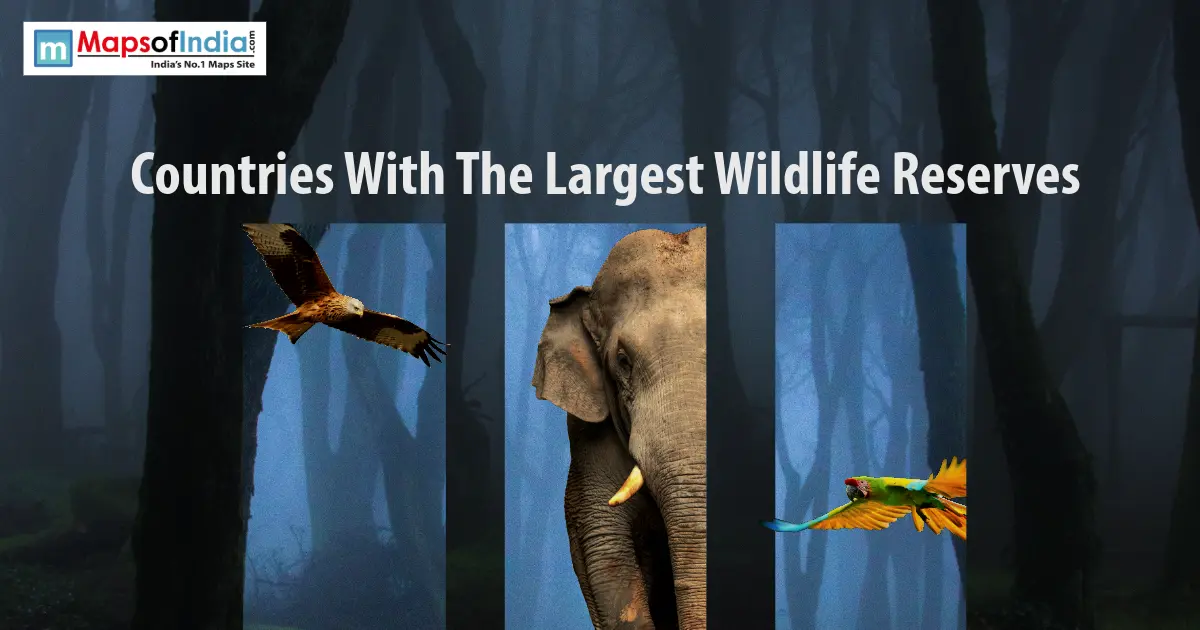
Greenland is home to the single largest protected land area on Earth. Northeast Greenland National Park covers 972,000 square kilometres, bigger than 166 of the world's 195 countries. This guide covers the countries with the largest wildlife reserves, why "largest" actually depends on how you measure it, and which nations protect the biggest share of their own land. Let's dig in.
What Counts as a "Wildlife Reserve"?
People use "wildlife reserve," "national park," and "protected area" pretty loosely, but they're not quite the same thing. A national park is a government-designated area protecting land and wildlife, usually open to visitors. A wildlife refuge focuses specifically on protecting animal habitats, sometimes with tighter access rules. A biosphere reserve balances conservation with sustainable human use of the land. A marine protected area covers ocean territory, not land at all. That last distinction matters a lot, since marine reserves are often far bigger than anything on land, and mixing the two skews most "biggest reserve" rankings.
Countries With the Largest Wildlife Reserves
Country | Reserve Name | Size (sq km) | Key Species |
| Greenland (Denmark) | Northeast Greenland National Park | 972,000 | Polar bears, musk oxen, Arctic foxes |
| Botswana/Namibia/Zambia/Zimbabwe/Angola | KAZA Transfrontier Conservation Area | ~440,000–520,000 (estimates vary) | Elephants, lions, African wild dogs |
| France (New Caledonia) | Natural Park of the Coral Sea (marine) | ~1,300,000 | Dugongs, sharks, sea turtles |
| Canada | Wood Buffalo National Park | 44,800 | Bison, whooping cranes |
| United States | Arctic National Wildlife Refuge | 78,050 | Caribou, polar bears, musk oxen |
| Namibia | Namib-Naukluft National Park | 49,768 | Oryx, desert-adapted elephants |
| Australia | Great Barrier Reef Marine Park (marine) | 344,400 | Sea turtles, dugongs, coral species |
Top Countries, In Depth
Greenland — The World's Largest National Park
Northeast Greenland National Park is the single biggest national park on the planet, full stop. It's also brutally remote. About 80% of it sits under the Greenland Ice Sheet, and fewer than 500 people visit each year. Polar bears, walruses, and musk oxen live here largely undisturbed, precisely because almost nobody else does.
Botswana — Africa's Conservation Leader by Land Percentage
Botswana has built its entire tourism identity around conservation. A large share of its land sits inside national parks, game reserves, and wildlife management areas, including the Okavango Delta and Chobe National Park, both genuine wildlife strongholds for elephants and big cats.
The KAZA Transfrontier Conservation Area
KAZA links Botswana, Namibia, Zambia, Zimbabwe, and Angola into one connected conservation zone. Size estimates genuinely vary by source, from around 440,000 up to 520,000 square kilometres, depending on exactly which parks and management areas get counted. Even at the lower estimate, it's larger than Italy. It supports the largest remaining elephant population on Earth.
Canada — Scale and Boreal Wilderness
Canada's protected areas lean heavily on sheer size and northern wilderness. Wood Buffalo National Park alone covers 44,800 square kilometres, larger than Switzerland, protecting the world's largest population of free-roaming bison.
United States — Refuges and National Parks
The US runs one of the largest protected-area networks in the world, spread across national parks, wildlife refuges, and forests. The Arctic National Wildlife Refuge in Alaska alone spans 78,050 square kilometres, home to caribou herds, polar bears, and one of the last truly undeveloped Arctic ecosystems left in the country.
Australia — Most Protected Areas by Count
Australia doesn't necessarily win on single-reserve size, but it wins on sheer number of protected areas, thousands of them, spanning everything from small nature reserves to the enormous Great Barrier Reef Marine Park, which alone covers 344,400 square kilometres of ocean.
Land Reserves vs. Marine Reserves
Here's where a lot of "biggest reserve" lists get misleading. Marine protected areas are frequently enormous, often far bigger than anything on land. France's Natural Park of the Coral Sea, around New Caledonia, covers roughly 1.3 million square kilometres, larger than France and Germany combined. If you include marine reserves in a "biggest protected area" ranking, Greenland's national park doesn't even crack the top ten globally. That's exactly why this guide keeps land-based reserves and marine ones clearly separated, rather than blending two very different kinds of protected space into one misleading number.
Countries With the Highest Percentage of Protected Land
Total size is one measure. Percentage of a country's own land protected is a completely different, and arguably more meaningful, one. Venezuela protects more than half its territory, somewhere around 54 to 56% depending on the source, including sprawling parks like Canaima. Slovenia sits close behind, around 54.5%. Bhutan protects somewhere between 42% and roughly 50% of its land, again depending on exact methodology, spread across national parks and biological corridors that also double as wildlife migration routes. Brunei and Luxembourg both protect over 44% of their respective territories too. These percentages genuinely shift depending on which database and year you check, so treat any single decimal point with a bit of healthy scepticism.
Conclusion
"Biggest wildlife reserve" honestly depends on what you're actually measuring. Greenland wins on raw land size. Marine parks like the Coral Sea reserve dwarf it once ocean territory counts. Venezuela and Slovenia win on percentage of national territory protected. And Botswana's KAZA shows what genuine cross-border cooperation can achieve for wildlife that doesn't recognize national borders in the first place. Whichever angle interests you most, one thing is clear: real conservation happens at every scale, not just the biggest number on the map.
FAQs
What is the largest wildlife reserve in the world?
On land, Northeast Greenland National Park holds that title at 972,000 square kilometres. If marine reserves are included, several ocean-based protected areas are actually far larger.
Which country has the most national parks?
The United States and Australia both rank among the countries with the highest total number of protected areas, spanning national parks, refuges, and marine reserves.
What's the difference between a wildlife reserve and a national park?
A national park is typically a broader, government-designated protected area, often open to visitors, while a wildlife reserve or refuge focuses more narrowly on protecting specific animal habitats, sometimes with tighter access restrictions.
Which African country protects the most land?
Botswana is widely recognised as a regional leader here, anchoring the KAZA Transfrontier Conservation Area alongside Namibia, Zambia, Zimbabwe, and Angola.
Why do "largest reserve" rankings vary so much between sources?
Because different sources define boundaries differently, some include buffer zones or connected wildlife management areas, others don't, and marine versus land-based reserves get measured on completely different scales.
Are marine protected areas bigger than land-based ones?
Often, yes, significantly. France's Natural Park of the Coral Sea alone covers more area than several of the largest land-based national parks combined.
What is the KAZA Transfrontier Conservation Area?
It's a cross-border conservation zone linking protected areas across five southern African countries, Botswana, Namibia, Zambia, Zimbabwe, and Angola, into one connected wildlife corridor, home to the largest remaining elephant population on Earth.
Which country protects the highest percentage of its own land?
Venezuela and Slovenia both rank at or near the top, each protecting roughly half or more of their total national territory, though exact percentages vary somewhat depending on the data source used.