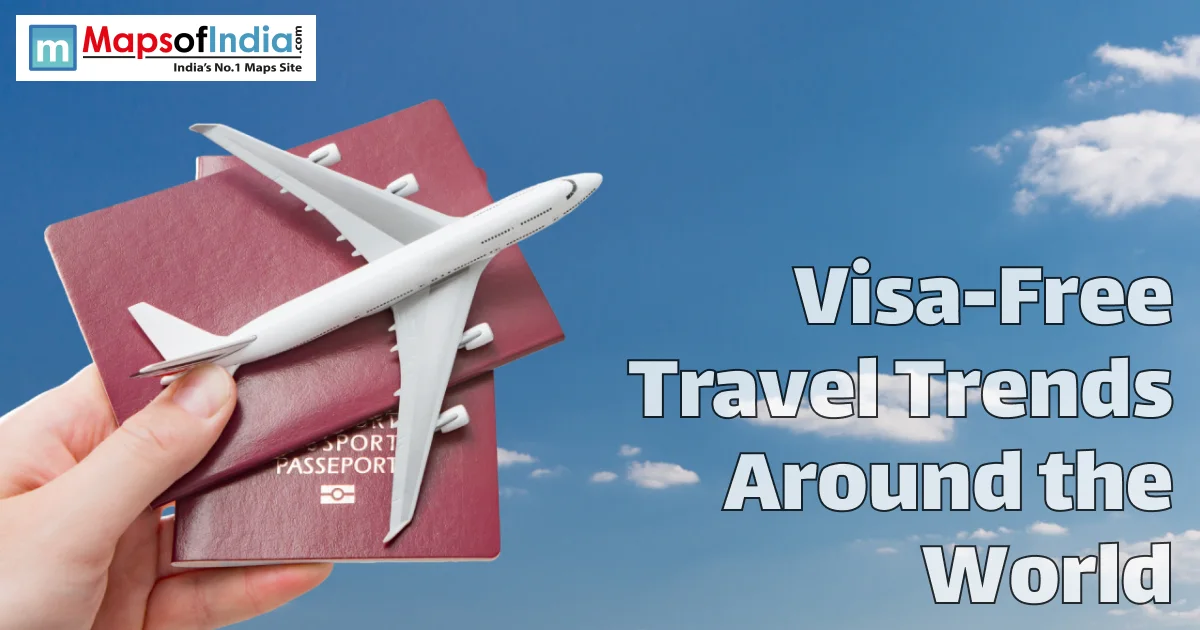
The gap between the world's most and least mobile passports just hit a record high. Singapore's passport now opens 192 destinations visa-free. Afghanistan opens just 24. That is a 168-destination gap, the widest ever recorded by the Henley Passport Index. This article answers a simple question: what is actually changing in visa-free travel trends this year, and why? We cover the biggest shifts, the new passport rankings, and what all of this means if you are planning your next trip.
What Does "Visa-Free Travel" Actually Mean?
Visa-Free vs Visa-on-Arrival vs E-Visa
These three terms get mixed up often, but they mean different things. Visa-free means you need no visa at all. You just show your passport and enter. Visa-on-arrival means you still need a visa, but you get it at the airport or border, usually with a quick payment and stamp. An e-visa means you apply online before you travel, and you receive approval digitally, without visiting an embassy in person.
Reciprocal Agreements
Most visa-free access comes from a deal between two countries. Country A lets Country B's citizens in without a visa. Country B does the same in return. This is called a reciprocal agreement. It explains why passport power often shifts in pairs. When one country tightens its rules, the other side frequently responds the same way.
The Biggest Visa-Free Travel Trends in 2026
Rise of Regional Travel Blocs
Regional blocs continue to expand shared visa-free zones. ASEAN nations, Gulf Cooperation Council states, and African Union members are all pushing toward easier movement within their own regions, even where global mobility stays uneven.
Digital Nomad and Long-Stay Visa-Free Extensions
More countries are stretching their standard tourist windows or adding dedicated long-stay visa routes, aimed squarely at remote workers who want to stay longer than a typical 30 or 90-day tourist stamp allows.
Biometric/E-Gate Expansion Reducing Visa Friction
Biometric e-gates are speeding up entry even in countries that still require a visa on paper. This does not remove the visa requirement itself. It just makes the physical border crossing faster once you already have approval.
Countries Tightening vs Loosening Visa Policy
This trend cuts both ways in 2026. China has opened visa-free access to 77 nationalities, adding more than 40 countries in just two years. The US, by contrast, only allows 46 nationalities to enter visa-free, which places it 78th on Henley's separate Openness Index, far below its own passport-power ranking of 10th.
Which Passports Gained the Most Visa-Free Access This Year?
Top-Ranking Passports
Rank | Country | Visa-Free Destinations | Note |
| 1 | Singapore | 192 | Holds the top spot in the 2026 ranking |
| 2 | Japan, South Korea, UAE | 188 | Tied for second |
| 3 | Denmark, Luxembourg, Spain, Sweden, Switzerland | 186 | Five countries share third place |
| 4 | Austria, Belgium, Finland, France, Germany, Greece, Ireland, Italy, Netherlands, Norway, Portugal | 185 | Eleven countries share fourth place |
| 5 | Hungary, Malta, Poland | 184 | Three countries share fifth place |
| 6 | United Kingdom | 183 | Down from 3rd place in 2006 |
| 10 | United States | 180 | Down from 1st place in 2006 |
| 71 | India | 55 | India's current rank is 71st, not 80th |
| Last | Afghanistan | 24 | Lowest-ranked passport globally |
Figures above come from the Henley Passport Index, which updates several times a year. A rival ranking, the Arton Capital Global Passport Power Rank, uses a different method, one that also counts visa-on-arrival access. Under that system, the UAE actually ranks first, not Singapore. Same passports, different scoring rules, different winner.
Passports That Lost Access
The US has recorded the third-largest 20-year ranking decline of any country, behind only Venezuela and Vanuatu, falling from 4th place in 2006 to 10th today. The UK follows a similar pattern, dropping from 3rd to 7th over the same period. Both declines reflect shifting diplomatic relationships more than any single policy change.
Regional Breakdown of Visa-Free Trends
Asia-Pacific
Asia now dominates the very top of the passport rankings. Singapore, Japan, and South Korea all sit in the top two spots, reflecting two decades of steady diplomatic dealmaking across the region.
Europe & Schengen Updates
European passports remain heavily clustered near the top, with Sweden and a large group of EU countries all sitting within a few destinations of Singapore. Schengen's shared visa system continues to give member states a strong collective advantage.
Middle East & Gulf States
The UAE has become one of the standout stories of the past 20 years, adding roughly 150 visa-free destinations since 2006. That is the single biggest climb of any passport in the ranking's history.
Africa
African Union initiatives continue pushing for easier intra-continental travel, though most African passports still rank well below the global top tier on both major indexes.
Americas
The US and several Latin American countries have seen mixed results this year, with the US notably sliding down the rankings even as its own visa-free destination count technically ticked upward slightly through 2026.
Why Countries Are Opening (or Closing) Borders?
Tourism Economy Recovery
Easier entry directly supports tourism revenue, which is exactly why many countries keep expanding visa-free access even when other diplomatic relationships stay tense.
Diplomatic/Reciprocity Strategy
As one industry analyst put it, mobility is becoming a real tool of soft power. Countries that open their borders to more nationalities, as China has done recently, often use that openness deliberately to build diplomatic goodwill.
Security and Overtourism Concerns
Not every country is moving in the same direction. Some destinations are tightening entry rules specifically to manage overtourism or security concerns, even while their own citizens gain more access abroad.
What This Means for Travelers in 2026?
How to Check Visa-Free Status Before Booking
Do not take for granted the rule from the past! Visa requirements can change all year long, and sometimes with little notice, so it is important to verify the requirements as of your travel date.
Tools and Resources for Real-Time Visa Requirement Checks
Official government travel warning websites are the best, along with your destination country's immigration website. Passport index sites can be a helpful guide to planning, but they can't replace an official check before booking.
Tips for Maximising Visa-Free Windows
Know your exact allowed stay length before you travel. Many visa-free windows are strict, with durations of 30 days in some countries and 90 days in others; overstaying even briefly can lead to fines or future entry bans.
Conclusion - The Future of Borderless Travel
Global mobility is splitting into two very different stories at once. Passports at the top keep gaining access, and the gap between the most and least mobile passport holders keeps growing. Asia's rise, the UAE's remarkable 20-year climb, and China's push toward openness all point toward a shifting balance of power in global travel. Watch this space closely next year, since a single diplomatic shift can move a country several places up or down the ranking within months.
FAQs
What is the most powerful passport for visa-free travel in 2026?
Singapore holds the top spot on the Henley Passport Index, with visa-free access to 192 destinations. A separate ranking from Arton Capital instead places the UAE first, since it uses a different scoring method.
Which countries recently became visa-free for tourists?
China has expanded visa-free access to 77 nationalities, adding more than 40 countries in just the past two years, one of the most significant openness shifts of any major country recently.
How long can I stay in a visa-free country?
This varies by country, commonly 30 or 90 days, though some agreements allow shorter or longer stays. Always check the specific rule for your destination before you travel.
Do visa-free agreements apply to all nationalities equally?
No. Visa-free access is set individually between countries, so your own passport's access has no bearing on what another nationality receives from the same destination.
Is visa-free travel increasing or decreasing globally?
Both, depending on where you look. Top-ranked passports keep gaining access, while lower-ranked passports are becoming increasingly isolated, widening the overall global mobility gap.
Why do passport ranking indexes sometimes disagree?
Different indexes count access differently. Henley only counts visa-free destinations. Arton Capital also includes visa-on-arrival access, which is exactly why the two rankings can crown different countries as "most powerful."
Why has the US passport dropped in the rankings?
The US has fallen from 4th place in 2006 to 10th today, the third-largest 20-year decline of any country, reflecting shifting diplomatic relationships rather than one single policy change.
What is the difference between passport "power" and passport "openness"?
Power measures how many destinations your own passport can enter visa-free. Openness measures how many other nationalities your own country lets in visa-free. A country can rank very differently on each, as the US does: 10th in power but only 78th in openness.