

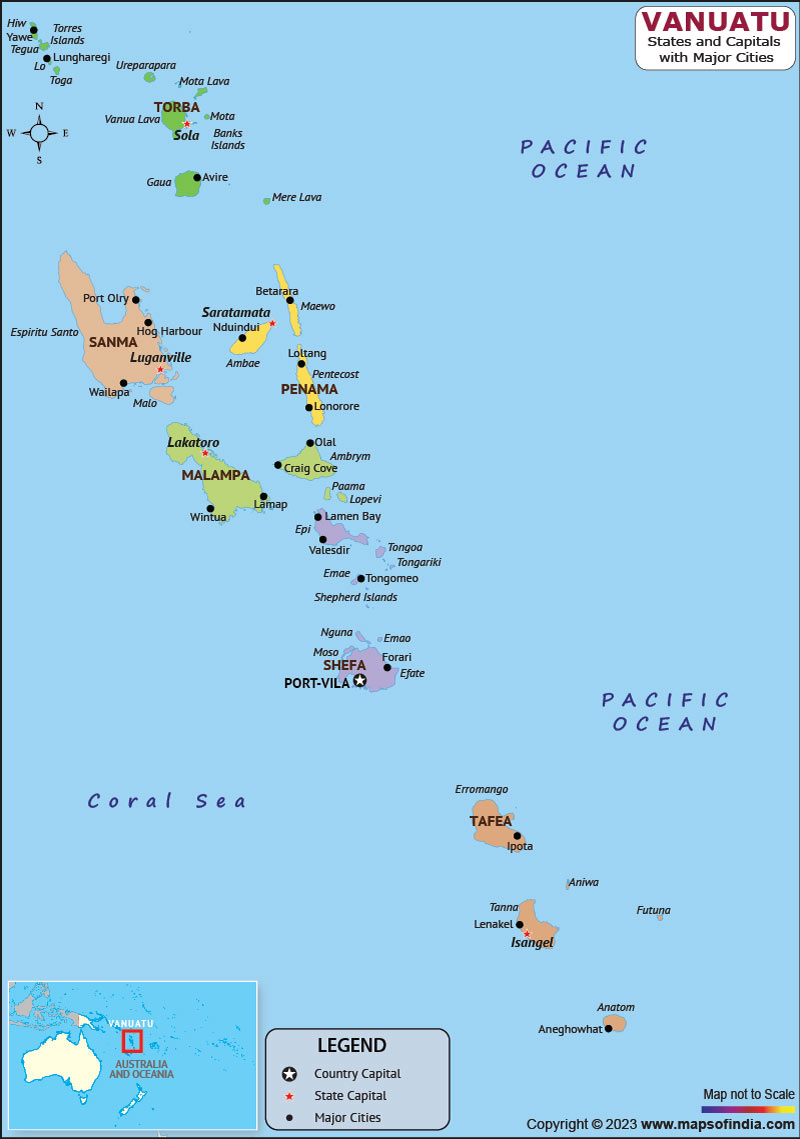



Vanuatu is a remote and beautiful nation situated in the South Pacific Ocean, approximately 1,750 kilometers east of Australia. The country is made up of over 80 islands, many of which are volcanic in origin. Its tropical climate, stunning coral reefs, and lush rainforests make it a popular destination for travelers looking to explore the natural beauty of the region.
History:
The history of Vanuatu dates back thousands of years, with the first inhabitants believed to have arrived from Southeast Asia. Over time, the indigenous populations developed their own unique cultures and languages, with many of these traditions still celebrated today.
In the late 19th century, the islands were colonized by both the British and the French, with the country eventually gaining independence in 1980. During World War II, the islands were the site of a major battle between the Allied forces and the Japanese, with many remnants of the war still visible today.
Culture:
Vanuatu is home to a rich and diverse cultural heritage, with many different indigenous groups living throughout the country. Traditional customs and practices, such as the ceremonial dance known as the Naghol or land diving, are still an important part of everyday life in many areas.
Language:
Vanuatu is home to over 100 different languages, making it one of the most linguistically diverse countries in the world. While English and French are the official languages, many indigenous languages are still spoken throughout the country, particularly in rural areas.
Geography:
Vanuatu is located in the South Pacific Ocean, east of Australia and north of New Zealand. The country is made up of over 80 islands, with the majority of the population living on the main islands of Efate, Santo, and Tanna.
The geography of Vanuatu is characterized by lush rainforests, stunning coral reefs, and active volcanoes. The country is also known for its unique biodiversity, with many plant and animal species found only in Vanuatu.
| Official Name | Republic of Vanuatu |
| Capital | Port Vila |
| Population | 307415 |
| Area | 12,189 km2 |
| Currency | Vatu |
| Religion | Christianity |
| Language | English, Bislama |
| Major Cities | Luganville, Norsup, Port-olry |
FAQs
Q1: Where is Vanuatu located?
Vanuatu is an island country in the South Pacific Ocean, located east of Australia and northeast of New Caledonia. It is part of the Melanesian region of the Pacific.
Q2: How many islands make up Vanuatu?
Vanuatu is an archipelago of about 80 islands, with major islands including Espiritu Santo, Malakula, Efate, and Tanna. Many of the islands are mountainous and volcanic.
Q3: Is Vanuatu an active volcanic country?
Yes. Vanuatu lies along the Pacific Ring of Fire and has several active volcanoes. Mount Yasur on Tanna Island is particularly famous for its frequent volcanic activity.
Q4: What is Vanuatu famous for?
Vanuatu is known for its volcanic islands, coral reefs, tropical beaches, traditional cultures, diving, and unique natural landscapes. Its underwater environments are particularly popular with divers.
Q5: What is the highest point in Vanuatu?
Mount Tabwemasana, on Espiritu Santo Island, is the highest point in Vanuatu at approximately 1,879 metres above sea level.
Q6: What is Vanuatu's geography like?
Vanuatu has a predominantly volcanic and mountainous landscape, with tropical forests, coral reefs, coastal plains, beaches, and deep valleys. The islands stretch broadly from north to south across the South Pacific.
Q7: What is the climate of Vanuatu?
Vanuatu has a tropical climate, generally warm and humid throughout the year. The islands experience a wetter season and a drier season, while tropical cyclones can occur during the warmer months.
Last Updated on: September 11, 2026

