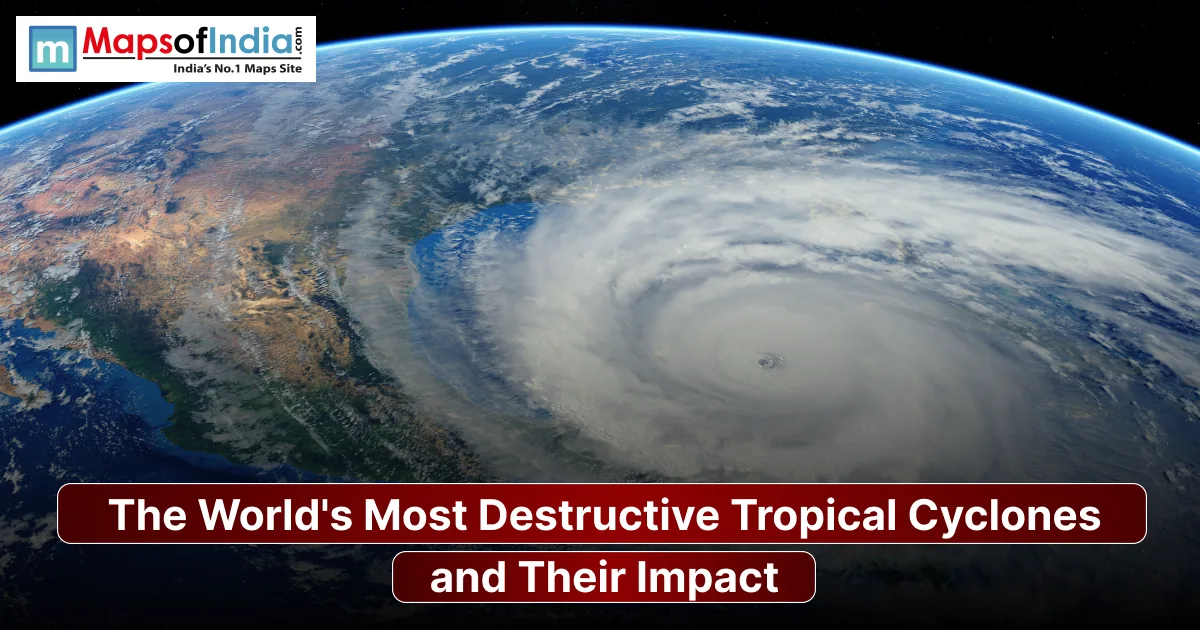
Tropical cyclones are among the most powerful and destructive natural disasters on Earth. Forming over warm tropical oceans, these rotating storm systems can bring extremely strong winds, torrential rainfall, storm surges and widespread flooding. They affect coastal communities, destroy infrastructure, disrupt economies and sometimes cause enormous loss of human life. Although tropical cyclones are known by different names in different regions, including hurricanes and typhoons, their underlying formation and characteristics are similar.
Over the years, several tropical cyclones have caused catastrophic destruction across Asia, North America, the Caribbean and the Indian Ocean region. From the devastating Bhola Cyclone of 1970 to Hurricane Katrina in 2005, these storms demonstrate the immense destructive power of nature.
What Is a Tropical Cyclone?
A tropical cyclone is an intense low-pressure weather system that develops over warm ocean waters. It forms when warm, moist air rises from the ocean surface, creating an area of low pressure. Surrounding air moves towards this region, rises and releases heat as water vapour condenses into clouds. This process strengthens the storm and creates a rotating system.
Tropical cyclones are generally classified according to their location. They are called hurricanes in the Atlantic Ocean and the northeastern Pacific Ocean, typhoons in the northwestern Pacific Ocean, and cyclones in the Indian Ocean and South Pacific.
These storms can cause destruction through several mechanisms, including powerful winds, coastal storm surges, heavy rainfall, flash floods and landslides. Their impact depends on their intensity, size, movement, duration and the vulnerability of the affected region.
The World's Most Destructive Tropical Cyclones
Several tropical cyclones in recorded history have caused extraordinary destruction. Some are remembered for their death toll, while others caused extensive economic damage and transformed coastal landscapes.
1. Bhola Cyclone (1970) – Bangladesh
The Bhola Cyclone of November 1970 remains one of the deadliest tropical cyclones in recorded history. It struck the coastal regions of what was then East Pakistan, now Bangladesh, particularly the low-lying islands and areas surrounding the Ganges-Brahmaputra delta.
The cyclone generated a devastating storm surge that inundated coastal settlements and agricultural land. Hundreds of thousands of people lost their lives, with commonly cited estimates ranging from 300,000 to 500,000.
The disaster destroyed homes, crops, livestock and fishing communities. It also exposed serious weaknesses in disaster preparedness and early-warning systems, highlighting the vulnerability of densely populated delta regions.
2. Super Typhoon Haiyan (2013) – Philippines
Super Typhoon Haiyan, locally known as Yolanda, struck the Philippines in November 2013. It was among the strongest tropical cyclones ever recorded at landfall, with estimated sustained winds reaching approximately 315 km/h in some assessments.
The city of Tacloban and surrounding coastal areas suffered particularly severe destruction. A massive storm surge flooded residential neighbourhoods, swept away buildings and damaged critical infrastructure.
More than 6,300 people died in the Philippines, while millions were affected. Homes, schools, roads, airports and healthcare facilities were damaged or destroyed. The disaster also led to large-scale displacement and a prolonged recovery process.
3. Hurricane Katrina (2005) – United States
Hurricane Katrina struck the Gulf Coast of the United States in August 2005 and became one of the country's costliest natural disasters.
Although the hurricane weakened before making landfall, its storm surge and widespread flooding caused catastrophic damage. New Orleans experienced particularly severe consequences when failures in the city's flood-protection system led to extensive inundation.
More than 1,800 people died, and the economic damage was estimated at approximately US$125 billion at the time. Thousands of homes were destroyed, businesses were forced to close, and hundreds of thousands of residents were displaced.
Katrina exposed major weaknesses in flood protection, emergency response and urban disaster management.
4. Cyclone Nargis (2008) – Myanmar
Cyclone Nargis struck Myanmar in May 2008, severely affecting the Ayeyarwady Delta and surrounding coastal regions. Its powerful winds and storm surge devastated low-lying settlements.
The cyclone killed approximately 138,000 people, including those reported missing and presumed dead. Entire villages were destroyed, agricultural fields were flooded, and fishing communities lost their livelihoods.
The destruction was particularly severe because many coastal settlements had limited access to cyclone shelters, reliable warnings and emergency services. Recovery efforts were further complicated by difficulties in delivering humanitarian assistance.
5. Cyclone Amphan (2020) – India and Bangladesh
Cyclone Amphan was one of the strongest storms to affect the Bay of Bengal in recent decades. It developed in May 2020 and intensified into a super cyclonic storm before weakening ahead of landfall.
It struck parts of West Bengal and Bangladesh, causing extensive damage to houses, electricity networks, roads, agricultural fields and coastal infrastructure.
Kolkata and the Sundarbans region experienced severe impacts from strong winds, heavy rainfall and storm surges. Millions of people were affected, while numerous communities faced displacement and interruptions to essential services.
The disaster also highlighted the growing importance of coastal protection and resilient infrastructure in densely populated regions.
6. Hurricane Maria (2017) – Caribbean
Hurricane Maria devastated several Caribbean islands in September 2017, particularly Dominica and Puerto Rico.
The storm brought destructive winds, heavy rainfall and widespread flooding. Puerto Rico experienced a prolonged electricity blackout after its power network was severely damaged. Telecommunications, transportation, hospitals and water supplies were also disrupted.
The hurricane caused thousands of deaths directly and indirectly, according to later estimates, and resulted in enormous economic losses. Its impact demonstrated how a powerful cyclone can disrupt essential services long after the storm itself has passed.
Major Impacts of Tropical Cyclones
Tropical cyclones affect communities in several ways, with consequences that can continue for months or years.
Loss of human life: Strong winds, storm surges, flooding and landslides can cause fatalities, particularly in densely populated coastal regions.
Damage to infrastructure: Roads, bridges, airports, ports, electricity networks and communication systems can suffer extensive damage, affecting transportation and emergency services.
Economic disruption: Agriculture, fisheries, tourism, manufacturing and local businesses often experience substantial losses. The cost of reconstruction can place considerable pressure on national economies.
Environmental destruction: Cyclones can damage mangrove forests, erode coastlines, contaminate freshwater sources and destroy natural habitats. Saltwater intrusion can also affect agricultural land.
Displacement of communities: Destroyed homes and damaged essential services force residents to move temporarily or permanently, creating challenges related to housing, healthcare, education and employment.
How Can Countries Reduce Cyclone Damage?
Although tropical cyclones cannot be prevented, their impact can be reduced through effective preparedness and disaster management. Accurate weather forecasting, satellite monitoring and early-warning systems help authorities identify approaching storms and alert vulnerable communities.
Cyclone shelters, evacuation routes, stronger building standards and resilient coastal infrastructure are equally important. Mangrove conservation and coastal vegetation can also help reduce wave energy and protect some vulnerable shorelines.
Public awareness, emergency supplies and coordinated evacuation plans further improve community preparedness.
Conclusion
The world's most destructive tropical cyclones demonstrate how powerful natural weather systems can transform entire regions within hours. Disasters such as the Bhola Cyclone, Haiyan, Katrina and Nargis have caused enormous human and economic losses, leaving lasting effects on affected communities.
With climate change influencing ocean temperatures, rainfall patterns and coastal risks, strengthening cyclone preparedness has become increasingly important. Better forecasting, effective early warnings, resilient infrastructure and community awareness can help reduce future losses and protect vulnerable populations.
FAQs
1. What is the most destructive tropical cyclone in recorded history?
The Bhola Cyclone of 1970 is considered the deadliest tropical cyclone in recorded history. It struck East Pakistan (now Bangladesh) and parts of India, causing an estimated 300,000 to 500,000 deaths, largely due to a devastating storm surge.
2. Which tropical cyclone caused the highest number of deaths?
The Bhola Cyclone of November 1970 caused the highest recorded death toll from a tropical cyclone. Its storm surge flooded low-lying coastal areas, destroying villages and displacing millions of people.
3. Which tropical cyclone was the strongest to make landfall?
Super Typhoon Haiyan, known locally as Yolanda, made landfall in the Philippines in November 2013 with exceptionally powerful winds. It caused widespread destruction, particularly in Tacloban and surrounding coastal communities.
4. What are the major impacts of tropical cyclones?
Tropical cyclones can cause storm surges, coastal flooding, heavy rainfall, strong winds and landslides. They also damage homes, roads, bridges, agricultural fields and communication networks, resulting in economic losses and displacement.
5. Which tropical cyclone caused severe damage in India in 2020?
Cyclone Amphan caused extensive destruction in eastern India in May 2020, particularly in West Bengal and Odisha. It damaged houses, uprooted trees, disrupted electricity supplies and affected agricultural land.
6. What is the difference between a tropical cyclone, hurricane and typhoon?
Tropical cyclone, hurricane and typhoon refer to the same type of powerful rotating storm. The name varies by location: hurricanes occur in the Atlantic and northeastern Pacific, typhoons in the northwestern Pacific, and cyclones in the Indian Ocean and South Pacific.
7. How can coastal communities prepare for destructive tropical cyclones?
Coastal communities can reduce cyclone risks through early-warning systems, timely evacuation, cyclone shelters and disaster preparedness plans. Strengthening buildings, protecting coastal ecosystems such as mangroves and keeping emergency supplies ready can also help minimise loss of life and property.