

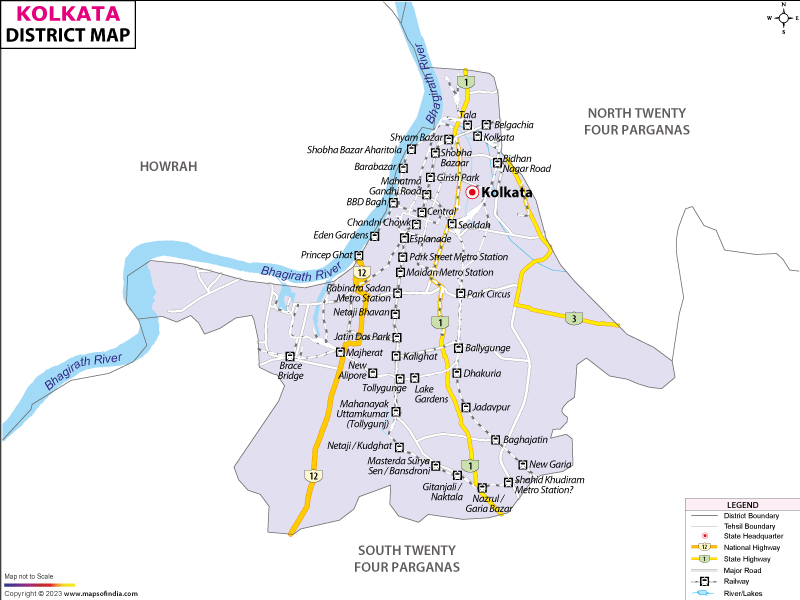





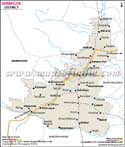
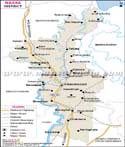
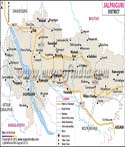
Kolkata history is a complicated story that has been influenced by the spread of culture and the development of commerce as well as the intellectual movement and political movements which were essential in shaping modern India. The city is situated on the banks of the Hooghly River, as shown on the West Bengal map, and it was created as a result of a group of villages, which included Sutanuti, Kalikata, and Gobindapur that were gradually turned into an urban center under the influence of the Europeans.
The history of Kolkata started in the late seventeenth century when the English East India Company started trading in 1690 with the leadership of Job Charnock. It was a great trading hub because of its strategic riverine position to facilitate the trade in textile, opium, indigo, and other commodities. In 1700, Fort William was built and the city became significant in terms of military and administrative authority. After the Battle of Plassey in 1757 and the Battle of Buxar in 1764, the British political dominance in Bengal was well established and Kolkata became the base of British power in the Indian subcontinent.
In the late eighteenth and early nineteenth centuries, the city of Kolkata was the capital of British India and the most significant in the subcontinent. This is the time when cities were growing very fast and ports, railways and state institutions were being established along with a rich mercantile stratum. The growth of colonies was however accompanied with severe exploitation, inequality as well as recurrent famines, most notably the deadly famine of 1770 that really shook Bengal.
The nineteenth century saw the beginning of an intellectual cultural overhaul that is called the Bengal Renaissance. Kolkata became the hub of social reform, education and contemporary political ideology. Writers, thinkers and reformers attacked conventional ways of doing things and advanced the ideas of rationalism, social equality and nationalism. The opening of learning institutions, press, literary clubs added to the status of the city as the intellectual center of India.
A major part of the Indian freedom struggle was also played out in Kolkata. In 1905, with the division of Bengal, there was a massive outcry, which led to reinforcement of nationalist movements. The city life turned out to be marked by revolutionary activities, political groups/organizations as well as mass mobilization. Even after the British India capital was transferred to Delhi in 1911, Kolkata was still a significant hub of political activism.
The time during independence in 1947 brought drastic changes. The Indian partition contributed to massive movement of people, social strife, and economic hardships as the refugees of East Pakistan moved into the city. During the several decades that followed, industrial decline, political disturbance and labor movements became common in Kolkata, especially in the middle of the twentieth century.
Culture
Kolkata has a multifaceted and dense culture that was formed through the centuries of intellectual life, expression, and religious pluralism and interaction. The city is often considered to be one of the most important cultural capitals in India, long traditionally being the hub of literature, art, theatre, music, and social thought. Its cultural character is that of an ongoing conversation between tradition and modernity with the mark of the impact of historical experiences and joint creativity.
Kolkata relies on literature and intellectual life as the main sources of its culture. The city has given birth to generations of writers, poets, philosophers and thinkers that have influenced modern Indian thought. The process of reading, debating, and artistic discussion is a part of everyday life, which can be observed in bookshops, cultural societies, and other public places. This vigorous literary culture has given rise to the culture of critical thinking, social awareness and political participation.
The central part in the cultural expression of the city is played by performing arts. There is practice and appreciation of theatre, music and dance among social groups. There is no dominant form of classical and modern but both presence of each other and especially theatre is a kind of media through which social commentary and political reflection is reflected. There are classical and devotional traditions of music and modern and experimental ones, as the city is open to the art innovations.
The culture of Kolkata is lively and has a lot of visual beauty due to the religious and festival life. The city has become associated with mass celebrations of the people that are a combination of ritual, art as well as community involvement. Festivals are no longer regarded as the domain of religious practice but they are also a means of artistic innovation, craftsmanship, socialisation. Urban spaces are transformed into a communal cultural space through pandals, fancy adornments, and performances consisting of an audience.
Kolkata culture is also deeply infused with visual arts and craftsmanship. The city has a long history of painting, sculpture and modern art with the help of galleries, art schools and exhibitions. Some of the traditions of craft such as clay work, textiles, and decorative arts are also significant in daily life and in the festival culture and keep connections between the cities and the neighborhoods.
Another characteristic feature of Kolkata is the food culture which traces the influences of historical factors, resources available and social practices as well. The cuisine is based on a variety, seasonality, and the balance of flavor.
Language
Kolkata’s linguistic attributes are indicative of the long-established administrative, educational, literature, and cultural hub of the city. The language in Kolkata has grown in an urban setting, influenced by colonial rule, intellectual movements and also continuous interaction between the local and global influences. It serves as a means of communication as well as a strong means of cultural expression, creativity and social identity.
Another key feature of the development of Kolkata was the role of language in the historical development that made it an intellectual center. Proliferation of printing presses and newspapers, journals and educational institutions during the colonial era led to prevalence of literacy and debate. Diverse literary forms became the means of social restructuring, political consciousness and cultural revolution. Literary work was prolific, which enhanced the formation of contemporary Indian intellect and nationalism.
The conversation can be characterized by humor, subtlety, and the inclination towards narration and argumentation. Language is further entrenched in the life of families, interaction and informal social hubs.
Linguistic awareness in the city has heavily been informed by education. The schools, universities and research institutions promote reading of classical texts, contemporary literature as well as the systems of global knowledge. This has established a multilingual and intellectual open environment, in which translation, interpretation and cross-cultural communication are very desirable.
Geography
Kolkata geography has been instrumental in its historical evolution, urbanism, economy and nature of the environment. The city is located on the eastern bank of Hooghly River which is a major distributary of the Ganga and is being found in eastern India. This riverine environment has traditionally given Kolkata strategic advantages in terms of trade, transport and communication and thus it has become one of the most significant urban centres of the east.
The location of Kolkata is in the lower delta Ganga-Brahmaputra delta which is one of the largest and fertile deltas in the world. The city is built on a fairly flat, low alluvial plain that is made by sediment deposits over millenia. The soil is highly alluvial and of high fertility, and which in the past sustained farming and a thick human population. Nevertheless, the low-altitude also led to the waterlogging and flooding of the area, particularly in time of excessive rainfall.
The river Hooghly has been the core of the geographical and economical value of Kolkata. It opened the route to Bay of Bengal and facilitated the growth of ports, docks and trading routes in the colonial era. The river still affects the industrial sectors, transport systems and patterns of settlement of the city up to date. There exist many canals and drainage systems that are linked to the river system but over time their usefulness has been diminished due to the growth of cities.
Kolkata has a tropical wet and dry climate that is brought about by monsoon. There can be hot and humid summers and mild and rather dry winters. The monsoon seasons replenish water resources through heavy rains that are usually necessary to maintain water reserves, however, the flat terrain and the large population of the city make drains and floods common. Humidity is prevalent with most part of the year affecting the way of life and mode of construction.
The city has been experiencing an outward urban expansion, extending from its initial riverfront center to neighboring wetlands and countryside. The eastern edges were once marshy with natural wetlands which were ecological buffers. A big part of this landscape has been changed due to urban development and infrastructure, however, these regions continue to play a vital role in waste management and environmental equilibrium.
| Facts of Kolkata District | |
|---|---|
| State | West Bengal |
| District | Kolkata |
| District HQ | Kolkata |
| Population (2011) | 4496694 |
| Growth | -1.67% |
| Sex Ratio | 908 |
| Literacy | 86.31 |
| Area (km2) | 185 |
| Density (/km2) | 24252 |
| Tehsils | Kolkata |
| Lok Sabha Constituencies | Kolkata Dakshin, Kolkata Uttar |
| Assembly Constituencies | Kolkata Port, Bhabanipur, Rashbehari, Ballygunge, Chowringhee, Entally, Beleghata, Jorasanko, Shyampukur, Maniktala, Kashipur-Belgachhia |
| Languages | Bengali, Hindi, English |
| Rivers | ------ |
| Lat-Long | 22.575974,88.365383 |
| Travel Destinations | Belur Math, Birla Mandir, Chitteswari temple, Dakshineshwar Temple, Deshbandhu Memorial, Gandhi Ghat, Jain Temple, Japanese Buddhist Temple, Job Charnock's Mausoleum, Marble Palace, Missionaries of Charity, Nakhoda Mosque, Saheed Minar, Shovabazar Thakurbari, St.Andrews Church, ST. John's Church, ST. Paul's Cathedral, Tipu Sultan Mosque, Victoria Memorial, Kalighat Temple, Thanthania Kalibari, Pareshnath Temple, Agri Horticultural Garden, Energy Park, Girish Mancha, Nature Study Park, Bana Bithi, Horticulture Garden, Nicco Park and Resorts, Botanical Gardens, Lal Dighi, Rabindra Sarobar/ Rabindra Sarobar Stadium, Kolkata Maidan, Mangal Pandey Park, Rabindra Sadan / Nandan, Eden Gardens, Millennium Park, Science City, Swabhumi, Zoological Garden, Yuba Bharati Krirangan etc. |
| Government Colleges/Universities | University of Calcutta, Jadavpur University, St. Xavier's College, West Bengal University of Technology, Indian Institute of Management, Presidency University, Indian Statistical Institute, Netaji Subhas Open University, University of Kalyani, Rabindra Bharati University, Scottish Church College, Vidyasagar College, RCC Institute of Information Technology, Seth Anandram Jaipuria College, Indian Institute of Engineering Science and Technology, Bethune College, Surendranath College, Medical College and Hospital, West Bengal University of Health Sciences, Aliah University, Marine Engineering and Research Institute, Indian Institute of Social Welfare and Business Management, City College, Netaji Subhash Engineering College, KPC Medical College and Hospital etc. |
FAQs
Q.1:When is the most appropriate time to visit Kolkata?
The climate of Kolkata is pleasant and good to go sightseeing and do other outdoor activities between October and March because the weather is favorable.
Q.2:Is Kolkata safe for tourists?
Tourists visiting Kolkata will most likely feel safe in the city, particularly in central and popular locations. Tourists are asked to be vigilant and stay in groups, not to stay out late and not visit secluded areas.
