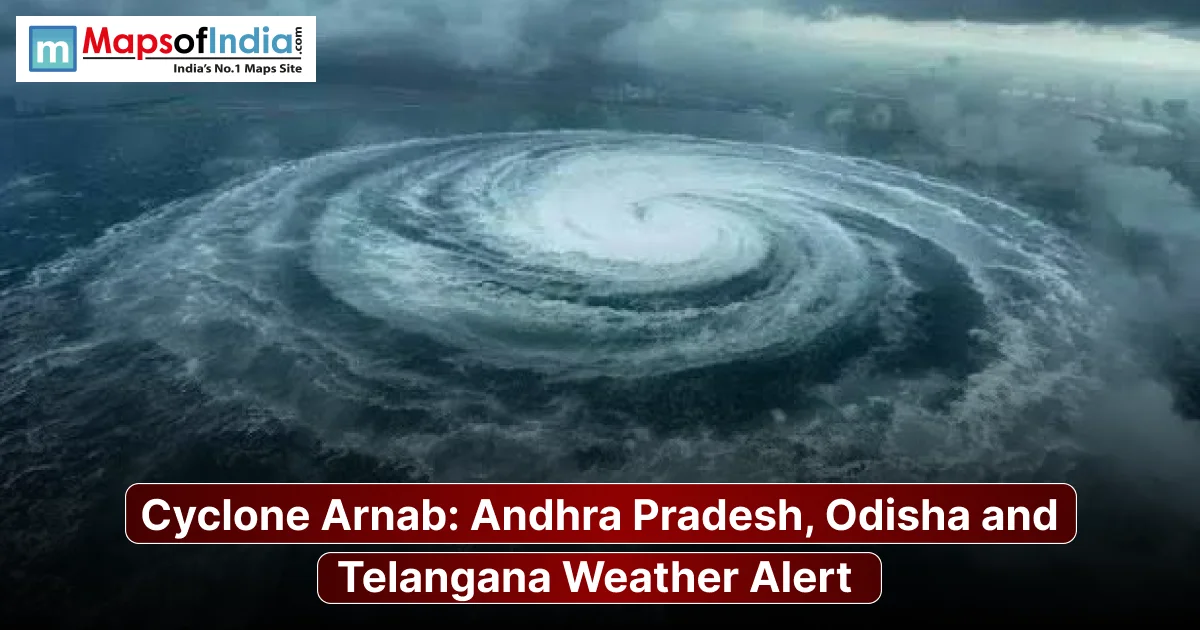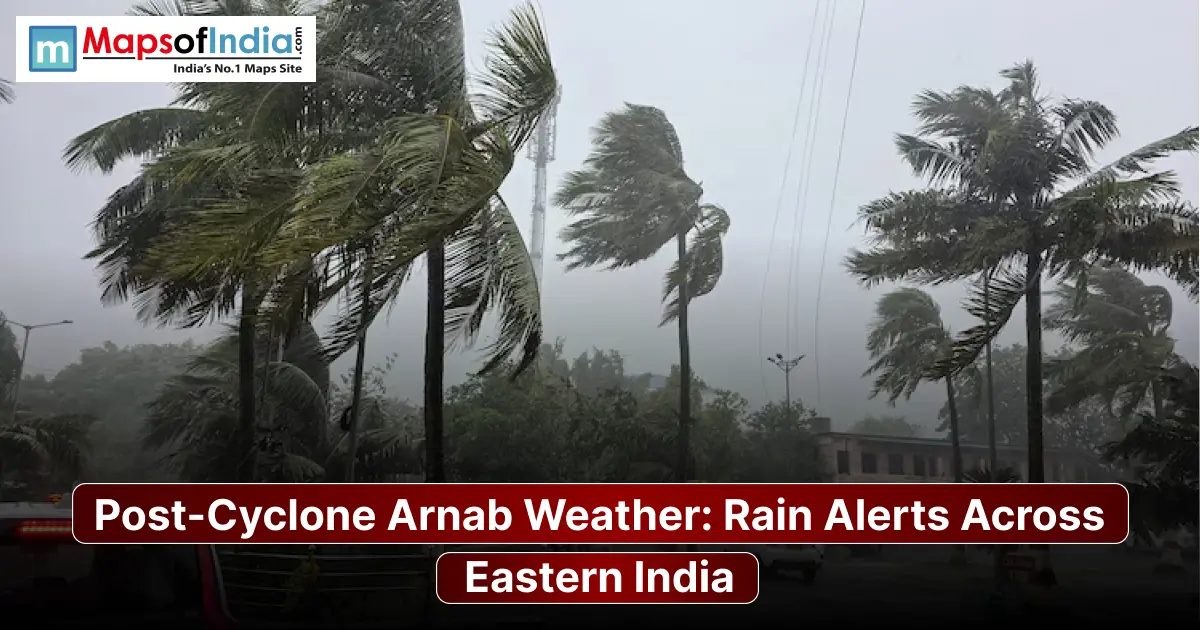
Even after Cyclone Arnab weakened after hitting the coastal areas of Andhra Pradesh, its effects are still felt in the weather in several regions of the Union. The remnants of the cyclone are causing widespread rainfall, thunderstorms and gusty winds over parts of eastern and central India, though the cyclone has weakened significantly. Unsettled weather conditions are being observed in several states including Bihar, Jharkhand, Odisha, West Bengal, Chhattisgarh and Uttar Pradesh, with the possibility of heavy to very heavy rainfall at isolated places.
The weather system has weakened into a depression over south Chhattisgarh and adjoining south Odisha as it went on land, the India Meteorological Department (IMD) said. Even though the system is expected to further weaken, the circulation still has an impact on rainfall activity in neighbouring states. The post-cyclone weather condition has thus become a significant issue for the people, farmers, commuters and local administrations in the eastern states of India.
Cyclone Arnab Weakens After Making Landfall
Cyclone Arnab formed in the Bay of Bengal and strengthened into a very severe cyclonic storm. It passed over the Andhra Pradesh and Yanam coast on October 28 with strong winds and heavy rains over several coastal regions of the state. The weather caused a lot of disruption in Andhra Pradesh; trees were down, houses damaged, roads flooded, and normal activities were affected.
The cyclonic storm also brought heavy rainfall and strong winds in some parts of neighbouring state Odisha. Thousands were evacuated from places where they are vulnerable along the coast of Andhra Pradesh and Odisha as the authorities got ready for the imminent storm.
After landfall, the cyclone weakened slowly over land. The system had weakened to a depression over south Chhattisgarh & adjacent south Odisha by 29 October. It continued to move northward, and it continued to have an impact on weather conditions in the central and eastern parts of the country.
But once a cyclone weakens, its effect does not cease. The rest of the circulation can still carry moisture, fuel cloud build-up, and cause heavy rainfall anywhere away from the initial landfall.
IMD Issues Rain Alerts Across Eastern India
As the remains of Cyclone Arnab roll over land, the IMD has predicted rainfall in various states. Some regions in Bihar, Uttar Pradesh, Jharkhand, Odisha, West Bengal and Sikkim are likely to witness disturbed weather.
Heavy to very heavy rainfall is likely at isolated places, with extremely heavy rainfall possible at isolated places over Bihar on October 30. East Uttar Pradesh is also expected to receive heavy to very heavy rainfall at isolated places.
The rainfall will be of similar nature in parts of Sub-Himalayan West Bengal and Sikkim. Heavy rain is also likely in isolated parts of Jharkhand, and thunderstorms with lightning and gusty winds will occur in Odisha.
Heavy to very heavy rainfall is also forecast in the Andaman and Nicobar Islands, with thunderstorms and squally weather expected in isolated places.
The impact of the weaker cyclone can be felt over a vast geographical area, impacting even states far away from the coast, which is evident in these weather conditions.
State-Wise Weather Outlook After Cyclone Arnab
Bihar: Bihar is among the states facing a significant rainfall threat. Heavy to very heavy rainfall is expected at isolated places on October 30, with extremely heavy rainfall possible in some areas. Continuous rainfall could lead to waterlogging, reduced visibility and disruptions to road transportation. Residents in low-lying areas should remain alert to local weather warnings.
Jharkhand: Isolated parts of Jharkhand may receive heavy rainfall as the weather system influences the region. Rainfall accompanied by thunderstorms could affect daily activities, particularly in areas with poor drainage. Local authorities and residents should monitor weather updates and take precautions during periods of intense rainfall.
Odisha: Although Cyclone Arnab has weakened, Odisha continues to experience the effects of its remnants. Isolated heavy rainfall and thunderstorms accompanied by lightning and gusty winds are possible. The southern and western parts of the state may remain particularly sensitive to changing weather conditions as the system moves inland.
West Bengal and Sikkim: Sub-Himalayan West Bengal and Sikkim are expected to receive heavy to very heavy rainfall at isolated places. Rainfall in hilly areas can increase the possibility of temporary road disruptions, waterlogging and localised landslides, particularly where slopes are already saturated. Travellers should check local conditions before undertaking journeys.
Uttar Pradesh: Eastern Uttar Pradesh is likely to receive heavy to very heavy rainfall at isolated places on October 30. Rainfall activity may continue in parts of northeastern Uttar Pradesh over the following days. Cloudy skies, thunderstorms and localised waterlogging could affect transportation and outdoor activities.
Chhattisgarh: Chhattisgarh has been directly influenced by the inland movement of Cyclone Arnab. The depression over south Chhattisgarh and adjoining south Odisha brought heavy rainfall to parts of the region. As the system weakens further, rainfall activity is expected to gradually change, although localised showers may continue.
Why Does Heavy Rain Continue After a Cyclone Weakens?
This is one of the most asked questions after the cyclone has passed away, that is, why the rainfall persisting after the cyclone has passed away may still continue.
Tropical cyclones are accompanied by a large circulation of clouds, moisture, and disturbances in the air. As it crosses land, it slowly weakens since it is no longer fueled by the heat and moisture of warm ocean waters.
However, the system does not disappear immediately. Its remaining circulation can continue moving inland, carrying moisture and creating favourable conditions for cloud formation and rainfall.
As air rises within these weather systems, it cools and condenses, producing clouds and precipitation. Depending on atmospheric conditions, this process can result in widespread rainfall, thunderstorms and isolated episodes of very heavy rain.
Cyclone Arnab demonstrates how a storm can weaken significantly after landfall while continuing to influence weather across several inland states.
Possible Impact on Transportation, Agriculture and Daily Life
Post-cyclone rainfall can create challenges even after the immediate threat of strong cyclonic winds has passed. Heavy rainfall over short periods can overwhelm drainage systems, leading to waterlogging in urban and rural areas. Roads may become difficult to navigate, while low-lying settlements can face temporary flooding.
Agriculture is another sector that may experience the effects of prolonged rainfall. Standing crops, particularly in areas with already saturated soil, can be vulnerable to waterlogging and damage. Excessive rainfall can also delay harvesting, transportation and other agricultural activities.
In hilly regions of West Bengal and Sikkim, heavy rainfall may increase the risk of landslides and temporary road blockages. Localised disruptions to electricity, communication and public transportation may also occur in areas receiving intense rainfall.
Residents should avoid crossing flooded roads, stay away from fallen electrical wires and follow instructions issued by local authorities.
Safety Precautions During Post-Cyclone Rainfall
Even though Cyclone Arnab has weakened, residents in affected states should continue following weather advisories. Heavy rainfall and thunderstorms can create hazardous conditions, particularly in areas prone to flooding.
People should avoid unnecessary travel during intense rainfall and remain indoors during thunderstorms. Farmers should take precautions to protect harvested crops and agricultural equipment wherever possible. Residents living near rivers, drainage channels and low-lying areas should remain alert to possible waterlogging and rising water levels.
Fishermen and coastal communities should also follow official marine weather advisories before resuming normal activities.
The IMD and state disaster management authorities remain important sources of information during changing weather conditions. Residents should rely on official warnings rather than unverified social media updates.
What to Expect From India's Weather After Cyclone Arnab?
Cyclone Arnab's weakening marks the end of its intense cyclonic phase, but its atmospheric influence is expected to continue affecting parts of India. Rainfall activity across Bihar, Uttar Pradesh, Jharkhand, Odisha, West Bengal and Sikkim remains a concern, particularly in areas forecast to receive heavy to very heavy precipitation.
The IMD has also indicated that other developing weather systems over the Bay of Bengal could influence rainfall patterns in the coming days. Therefore, the weather situation across eastern and southern India will require continued monitoring.
The post-cyclone situation highlights the importance of preparedness even after a major storm makes landfall. While the immediate threat from destructive cyclonic winds may have reduced, heavy rainfall, waterlogging and localised flooding can continue to affect communities. Residents should remain cautious, follow official weather alerts and take necessary precautions until conditions improve.
FAQs
1. What is the current status of Cyclone Arnab?
Cyclone Arnab weakened after making landfall along the Andhra Pradesh coast and subsequently moved inland as a depression over south Chhattisgarh and adjoining Odisha.
2. Which Indian states are affected by post-Cyclone Arnab rainfall?
Bihar, Odisha, Jharkhand, West Bengal, Sikkim, Chhattisgarh and Uttar Pradesh are among the states experiencing or expecting rainfall associated with the remnants of Cyclone Arnab.
3. Which states are under heavy rainfall alert after Cyclone Arnab?
Bihar, eastern Uttar Pradesh, Jharkhand, Sub-Himalayan West Bengal and Sikkim are among the regions facing heavy rainfall warnings, with isolated areas potentially receiving very heavy rainfall.
4. Why does heavy rainfall continue after Cyclone Arnab weakens?
Even after a cyclone loses strength, its remaining low-pressure circulation can carry moisture inland and generate clouds, thunderstorms and heavy rainfall over neighbouring regions.
5. Did Cyclone Arnab make landfall in Andhra Pradesh?
Yes. Cyclone Arnab made landfall along the Andhra Pradesh and Yanam coast on October 28, 2026, bringing strong winds and heavy rainfall to coastal areas.
6. Can post-cyclone rainfall cause flooding and landslides?
Yes. Continuous or intense rainfall can cause urban waterlogging, river flooding and drainage problems. In hilly regions such as Sikkim and northern West Bengal, saturated slopes may increase the risk of landslides.
7. What precautions should people take during post-Cyclone Arnab rainfall?
People should avoid flooded roads, stay indoors during thunderstorms, keep away from fallen electrical wires, follow local evacuation instructions and regularly