

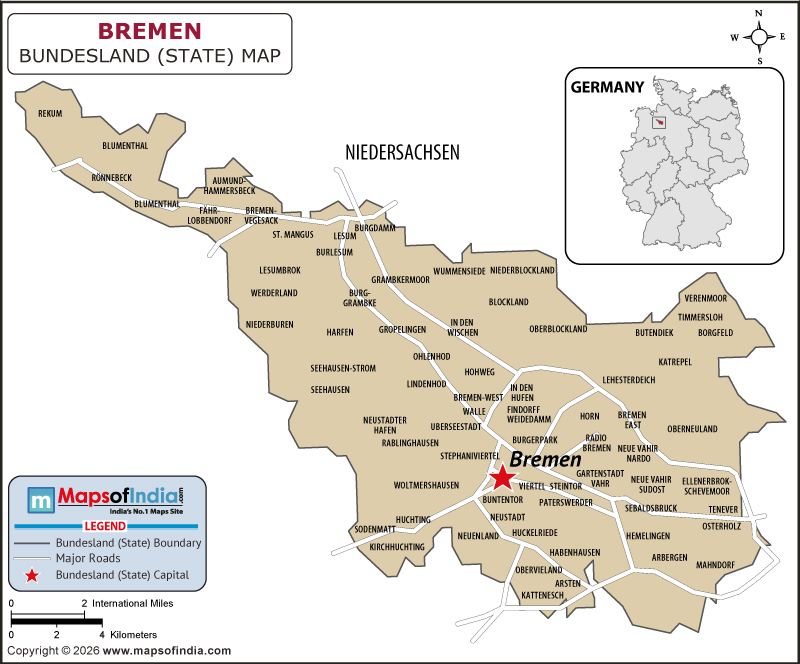



| Country | Germany |
| Region | Bremen |
| Area | 419.38 km2 (161.92 sq mi) |
| Population | 680,130 |
Introduction
Bremen is among the oldest and loveliest cities in northern Germany. It is popular for its long history, nice welcoming people, and stunning streets; Bremen presents a calm way of life in combination with modern life and ancient heritage. It's not just a place of buildings and roads; it's filled with stories, culture, and surprises. In this article, we will discuss its history, culture, language, and geography, as well as answer some of the frequently asked questions about this fascinating place.
History
Bremen has a rich and intriguing past spanning more than 1,200 years. It is one of the oldest cities in northern Germany and has featured in the country’s history. The history of Bremen goes back to the 8th century, when it was just a little village by the River Weser. Being situated on the river had been a factor in its growth, particularly in trade and shipping. As time passed, it turned from a little town into a good and great city.
Bremen began to develop in the 11th and 12th centuries. It became part of a league of powerful cities known as the Hanseatic League. This was a confederation of trading cities in Northern Europe that had tied together for mutual protection and the enhancement of each other’s trade. By those means, Bremen became rich and ranked as an important city. Ships from Bremen travelled all over Europe, carrying goods like wool, salt, and wine.
Bremen was transformed into a free city as well. This allowed them their own rules and leaders, so they didn’t have to follow the rules of local kings or others. The people of Bremen were very proud of their freedom, and this spirit can still be felt in the city even now. They built places like the Bremen Town Hall, which remains a hallmark of independence and pride. The Roland Statue around the corner is another example; it features a knight dedicated to the fight for people’s rights and freedom.
Bremen became increasingly involved in international trade in the 19th century. It constructed the port of Bremerhaven to assist with its shipping. Goods from all corners of the planet came here, and many Germans eager to emigrate to America also departed from its port.
Bremen was heavily damaged in World War II. It was bombed from the air because it had large factories and shipyards. Countless buildings were shattered, and the city would need to be recreated after the war. This was a hard thing to do, but the Bremen people got it done to reclaim their city. Today, when you go for a walk in Bremen, you realise how well the old and new buildings stand side by side.
Today, Bremen is famous for its clean streets, great culture, and smoothly running life. It’s also proud of its past and tells the world that through museums, old buildings, and stories. From all over the world, tourists travel to Bremen to explore how the town developed from a modest riverside settlement to one of the most popular cities in Germany.
Culture
The people of Bremen are friendly and living a vibrant life. Here, people value simple things like music, art, food, and local customs. An interesting feature here is the old architecture as well as the street art, which is colourful. It is calm yet peaceful at the same time. It attracts visitors from all over Germany as well as the world.
One of the most well-known features of Bremen’s culture is the Bremen Town Musicians. This is the story of four animals - a donkey, dog, cat, and rooster who have grown old and retire to Bremen to become musicians. They never make it to the city, but their tale becomes a symbol for hope and freedom. A statue of these animals stands near this city’s Bremen Town Hall, and many visitors touch the legs of the donkey, by tradition, for good luck.
Bremen also loves festivals. The year’s biggest event is the Bremen Freimarkt, which began more than 900 years ago. It takes place in October and is one of the oldest fairs in Germany. There are rides, games, local food, music, and parades. People from neighbouring cities even travel in to take part in this fun time.
Music is very important in Bremen’s culture. Live music can be heard in parks, pubs, and public squares. There are also concerts and performances at such venues as the Die Glocke concert hall. Whether it’s classical music or modern songs, Bremen is a city for all kinds of musicians.
Art is also very popular in Bremen. Kunsthalle Bremen is a popular art museum that exhibits paintings from Germany and other parts of the world. There are murals and graffiti even on some of the streets in Bremen that show how local people express themselves. Many of these paintings have narratives, but others are just about making the city more colourful.
Food is another aspect of everyday life in Bremen. The people love the old and new dishes. In the winter, they consume Grünkohl mit Pinkel, a dish of kale cooked with sausages. There are also markets where locals buy fresh vegetables, cheese, bread, and other local products in Bremen.
They are known to be helpful and open-minded. Most of the people there participate in community events. You will notice clean parks, green spaces, and recycling bins visible around. The Bürgerpark is one of the favourite spots for family walks and jogs.
The city is also open to other cultures. You can find restaurants with the cuisine of various parts of the world, like Turkish, Indian, Italian, and so on. Schools, colleges, and community centres celebrate cultural days to promote community feeling among people.
The culture in Bremen is relaxed, creative, and open. It blends ancient tradition with modern practice. It doesn’t matter if you come here for the day or are a resident for years; once you leave, you’ll feel the warm vibe of the city and all its residents. The culture of Bremen is quiet and peaceful.
Language
German is the primary language of Bremen. People speak standard German in schools, offices, shops, and in their daily lives. Speaking with locals and reading signs, menus, and directions becomes easier if you know a bit of German.
Local German dialects, known as Low German or Plattdeutsch, were historically spoken by many in Bremen. That used to be the case in northern Germany. There are fewer speakers now, but if you visit some villages or community events, you might still hear it spoken. There are also some old people who have picked up a few words from this local speech.
Most young people and working people also speak English in Bremen; it may be somewhat less frequent in tourist areas or smaller hotels and restaurants. If you seek help in English, you will find that many people will do their best to answer. The schools also teach English, so students speak it quite well.
Geography
Bremen is a beautiful city located in the northwest area of Germany. It is situated on the River Weser, which runs through the city and extends to the North Sea. This river leaves a good deal for Bremen. It’s strengthened the city as a trading and shipping centre for decades. Today, the river contributes to the beauty of the city and is a major component of its economy.
Bremen is the smallest federal state in Germany, called the Free Hanseatic City of Bremen. These are two of Germany’s city states: Bremen and Bremerhaven. Bremerhaven, 60 km away, is located directly on the coast. It is a major port city as well.
Bremen is not big, but properly built. It is separated into distinct districts, each with a different vibe. The Altstadt, or old town, is in the middle and has narrow roads, old buildings, and popular tourist attractions such as the Bremen Town Hall. Other districts, such as Schwachhausen and Neustadt, are newer and have parks, shopping, and housing.
The weather in Bremen is quite moderate and pleasant throughout the year. Summers are cool and winters are cold, but not very cold. Temperatures usually range from 2°C to 22°C throughout the year. Rain is frequent, so it’s best to bring an umbrella. Snow falls in winter but doesn’t stay long.
Parks are spread throughout the city. Among the most popular is the Bürgerpark, one of Germany’s largest city parks. It’s where people come to walk, jog, play, or rest. The Rhododendron Park is also a nice area, especially when the flowers are in bloom during the spring.
Bremen is already located close to other large cities like Hamburg and Hannover, which you can reach relatively easily by train or car. It also has its own airport, which is connected to the rest of Europe.
Geographically, Bremen is the perfect combination of nature, water, and urban life. It’s not too busy, and the air feels pure. Whether you love rivers, green parkland, or peaceful streets, you’ll find them all in Bremen. The city’s structure, comfortable climate, and natural environment make it a nice place to live or to visit.
| Category | Details |
|---|---|
| Country | Germany |
| Region | Bremen |
| Area | 419.38 km2 (161.92 sq mi) |
| Population | 680,130 |
FAQs
Q.1: In which part of Germany is Bremen?
Bremen is located in the northwestern part of Germany, along the River Weser, about 60 km from the North Sea.
Q.2: Is Bremen worth visiting?
Yes, Bremen is a nice and beautiful city to visit with a lot of history and friendly people, and you can also visit a lot of cool places.
Q.3: What are the most popular sights to visit in Bremen?
There are many sightseeing opportunities, including the Bremen Town Hall, St. Peter’s Cathedral, the Schnoor Quarter, and the Böttcherstraße.
Q.4: What are some of the festivals celebrated in Bremen?
The most well-known one is the Bremen Freimarkt, which lasts from the end of October until mid-November. There are other minor festivals and music shows in the city all year round.
Last Updated on: August 27, 2026

