

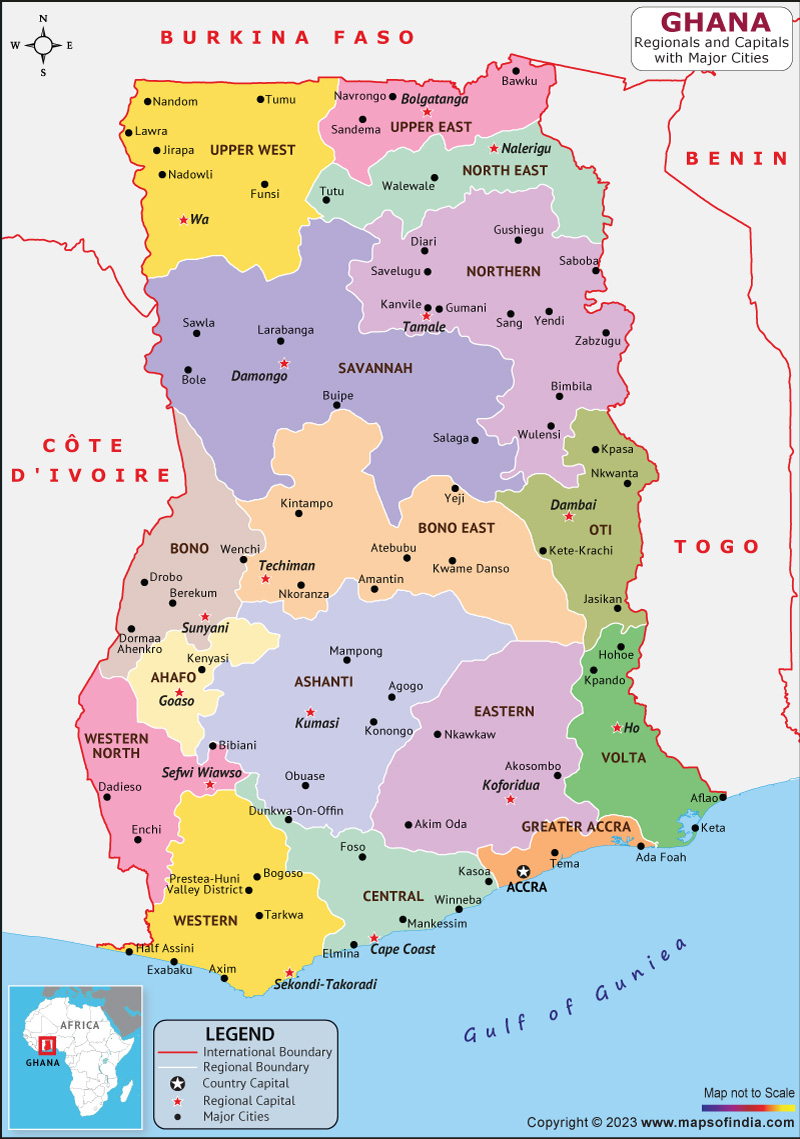





Ghana is a nation situated in the Western portion of the African continent. It gained independence from British colonial rule on March 6, 1957, and has since become one of Africa's most stable democracies. The country is known for its rich history, diverse culture, and beautiful landscapes.
History
Ghana has a long and complex history. The region that is now Ghana was inhabited by various ethnic groups, including the Ashanti, Fante, and Ewe, long before European contact. The Portuguese were the first Europeans to arrive in Ghana in the late 15th century, followed by the Dutch, British, and Danes. In the 19th century, the Ashanti Empire became a major power in the region, engaging in trade with European countries and fighting wars against neighboring states.
British colonial rule began in the late 19th century and lasted until Ghana's independence in 1957. During this time, Ghana became an important center for the slave trade, and many Ghanaians were forcibly taken to the Americas. Ghana's independence movement was led by Kwame Nkrumah, who became the country's first president. Since then, Ghana has experienced periods of political instability but has maintained a relatively stable democracy.
Culture
Ghana has a rich and diverse culture, with many different ethnic groups practicing their own traditions and customs. One of the most well-known aspects of Ghanaian culture is its music and dance. The country is famous for its highlife music, which originated in the early 20th century and combines African rhythms with Western jazz and swing music.
Language
The majority language of the country is English, which is used in government, education, and the media. However, there are many other languages spoken in the country, including Twi, Fante, Ewe, and Ga.
Geography
Ghana is situated on the Western coast of the African Continent and is bordered by Togo to the eastern front, Burkina Faso to the northern front, and the Gulf of Guinea to the southern front. The country has a diverse landscape that includes forests, savannas, and coastal plains.
| Official Name | Republic of Ghana |
| Capital | Accra |
| Population | 32103042 |
| Area | 238,535 km2 |
| Currency | Cedi |
| Religion | Christianity |
| Language | English |
| Major Cities | Kumasi, Tamale, Takoradi |
FAQs
Q.1. What is Ghana's geographical location in Africa?
Ans. Ghana is located in West Africa, along the Gulf of Guinea. It lies between Côte d'Ivoire to the west, Burkina Faso to the north, and Togo to the east.
Q.2. Why is Ghana called the Gold Coast?
Ans. Ghana was formerly called the Gold Coast during the colonial period because of the region's rich gold deposits and its historic importance in the gold trade.
Q.3. What is Ghana's coastline like?
Ans. Ghana has a coastline of about 550 kilometres along the Gulf of Guinea. The coast features sandy beaches, lagoons, fishing communities, and historic forts and castles.
Q.4. What is Lake Volta and where is it located?
Ans. Lake Volta is a vast man-made reservoir in eastern Ghana, created following the construction of the Akosombo Dam on the Volta River. It is important for hydroelectric power, fishing, transportation, and irrigation.
Q.5. What is the highest point in Ghana?
Ans. Mount Afadja (Afadjato), in the Volta Region near the Togo border, is generally regarded as Ghana's highest mountain, reaching about 885 metres above sea level.
Q.6. Which historical sites in Ghana are UNESCO World Heritage Sites?
Ans. Ghana's UNESCO-listed cultural sites include the Forts and Castles along the coast and the Asante Traditional Buildings. These sites reflect Ghana's colonial, trading, architectural, and cultural history.
Q.7. What are the main geographical regions of Ghana?
Ans. Ghana can broadly be divided into coastal areas, forest zones, and northern savanna regions. The landscape includes coastal plains, tropical forests, plateaus, river basins, and grasslands.
Last Updated on: September 10, 2026

