


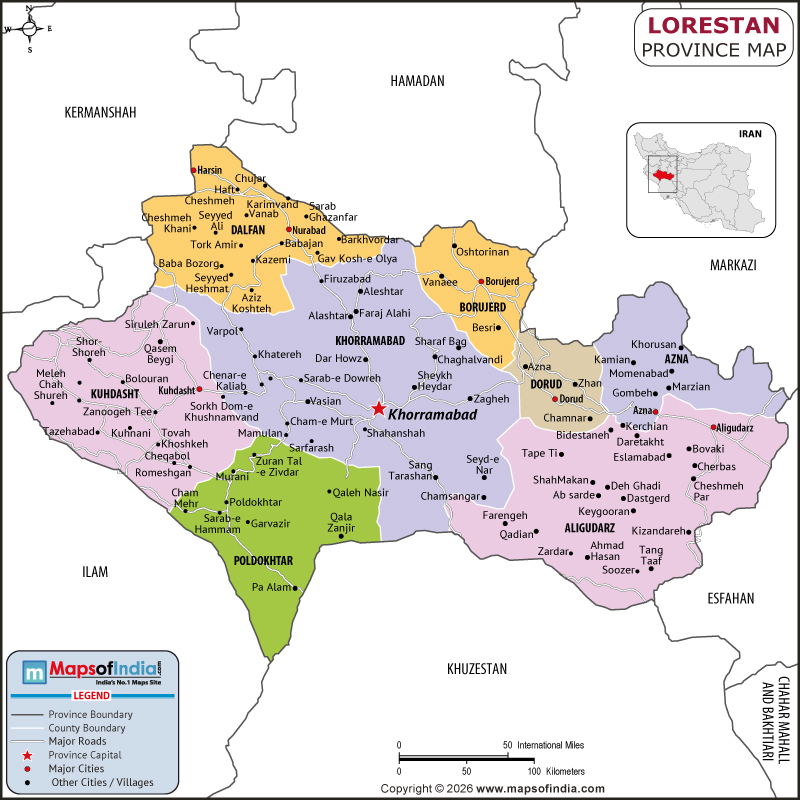



Lorestan is a western Iranian area known for its high mountains and strong traditions. It is home to the Lur people, who have been here for thousands of years. The Zagros Mountains and their flowing rivers shape the landscape. Lorestan enjoys a rich history, a complex culture, and a distinct language. Nature has traditionally played an essential part in local life. Even today, traditional customs hold importance. This location demonstrates a close connection between history, geography, and people.
History
Lorestan is a province in western Iran, known for its high mountains and deep valleys. It is a land with a long and complex history, shaped by geography, migration, and enduring tribal traditions. Human settlement in the region dates back thousands of years, and although its past can sometimes be difficult to trace, many historical remains still bear witness to its rich heritage.
Archaeological evidence shows that early humans lived in Lorestan in prehistoric times. Stone tools and cave dwellings discovered in the region indicate continuous habitation over many millennia. The mountainous terrain provided natural protection, while rivers and springs supplied water. Life in these early periods was simple and closely connected to nature.
Among the earliest known inhabitants of Lorestan were the Kassites, who settled in the region around 4,000 years ago. The Kassites were skilled warriors, particularly known for their use of horses, and they were also accomplished metalworkers. Numerous bronze artifacts have been discovered in Lorestan, commonly referred to as “Luristan bronzes.” These objects—including ornaments, tools, and weapons—demonstrate remarkable craftsmanship and creativity, despite the generally modest lifestyle of the people.
Lorestan later became part of larger political entities and held strategic importance during the Elamite period. The region acted as a corridor between the Iranian Plateau and Mesopotamia, and as a result, soldiers, traders, and travelers frequently passed through it. This position exposed Lorestan to cultural exchange as well as repeated conflicts.
With the rise of the Achaemenid Empire, Lorestan came under Persian control. While imperial authority governed the region, local tribes continued to manage everyday affairs. Roads were built and trade expanded, but tribal customs and local leadership remained strong. People lived in small communities and maintained their traditional ways of life.
After the fall of the Achaemenids, Lorestan experienced successive periods of rule under the Seleucids and later the Parthians. The Parthian era was especially significant, as local rulers enjoyed a greater degree of autonomy. Lorestan was not tightly controlled from the imperial center, allowing native culture and traditions to survive.
During the Sasanian period, Lorestan once again gained importance. The Sasanians sought strong frontiers and loyal provinces, leading them to build settlements and fortifications in the region. Zoroastrianism was promoted as the state religion, although many local beliefs and older traditions continued alongside it, creating a diverse religious landscape.
The arrival of Islam in the seventh century marked another major transformation. Arab forces entered Lorestan, but the region’s rugged mountains made conquest difficult, and some tribes initially resisted. Over time, Islam gradually spread and was adopted by the population, often blending with local customs. This fusion gave Lorestan a distinct cultural character within the Islamic world.
For long periods, Lorestan remained semi-independent, with strong tribal groups controlling trade routes and defending their territories. Even powerful empires such as the Seljuks never fully dominated the region. During the Safavid era, the central government attempted to strengthen its authority over Lorestan and actively promoted Shi’a Islam. While religious life changed, tribal leaders continued to wield significant influence, and tensions between the state and local tribes were common.
Under the Qajar dynasty, Lorestan faced numerous challenges. Weak central governance, poor infrastructure, and frequent tribal conflicts made life difficult for many inhabitants. Poverty was widespread, but strong community bonds helped people endure. During this period, music, poetry, and storytelling became important means of preserving identity and sharing collective experiences.
In the twentieth century, Lorestan gradually became more integrated into the modern Iranian state. Urban development expanded, schools and roads were built, and traditional tribal life began to change. While some customs faded, many others endured. Migration to towns increased as people sought new economic opportunities, yet a strong sense of pride in Lur heritage and history continues to define the people of Lorestan today.
Culture
Lorestan’s culture is rich and vibrant, deeply rooted in centuries of tribal life and shared history. The majority of the population consists of Lurs, who are widely known for their courage, warmth, and strong sense of loyalty to family and community. Social bonds are highly valued, and cooperation and mutual support play an essential role in everyday life.
In many parts of Lorestan, tribal customs and traditions are still observed. Some people continue to follow traditional tribal laws, which shape social behavior and conflict resolution. Hospitality is one of the most respected cultural values. Guests are treated with great honor, and even families with limited means will offer tea and food. Refusing hospitality or ignoring a guest’s needs is considered disrespectful.
Music is one of the most important elements of cultural expression in Lorestan. Traditional music accompanies weddings, festivals, and social gatherings. Instruments such as the sorna and dohol are commonly used, producing powerful and energetic sounds that reflect the emotions and strength of the people.
Music is closely connected to dance, which is often performed in groups. Dancers usually hold hands and move in circular patterns, symbolizing unity, solidarity, and collective strength. Men and women often dance separately but follow the same rhythm, creating a harmonious and visually striking performance.
Traditional clothing in Lorestan reflects identity and cultural pride. In rural areas and tribal communities, these garments are still commonly worn. Men typically wear long shirts with loose trousers, while women dress in colorful, patterned outfits complemented by scarves and jewelry. Many colors and designs carry symbolic meanings, even though these meanings may not always be widely known today.
Food is another important part of cultural life. Meals are generally simple but hearty, based on bread, dairy products, rice, and meat. Dishes are prepared using local ingredients, and eating together is highly valued. Sharing food is seen as a sign of friendship and unity, and eating alone may be viewed as unusual.
Marriage customs hold great significance in Lorestan. Weddings are major social events that can last several days and include large gatherings, abundant food, music, and dancing. Families from different areas come together, strengthening social ties. Even when minor disagreements arise, the celebrations emphasize joy and togetherness.
Storytelling and oral history are deeply respected traditions. Elders pass down stories about ancestors, heroes, and past struggles, keeping the collective memory alive. Although these stories may change slightly over time, their core messages and cultural values remain trusted and meaningful.
Language
The main language spoken in Lorestan is Luri, which is used by the majority of the population. Luri is an ancient Iranian language closely related to Persian. Many of its words resemble Persian vocabulary, though the accent, pronunciation, and style of speech are distinct.
Lorestan is home to several dialects of Luri, the two most prominent being Luri-e Bozorg and Luri-e Kuchik. Each area has its own way of speaking, and even neighboring villages may use different words or sounds. Because of these variations, people can often identify someone’s place of origin simply by listening to their speech.
Luri is primarily a spoken language and is widely used in everyday life, including at home, in social gatherings, and in local markets. When dealing with government offices, education, or formal situations, Persian is usually spoken. As a result, most people in Lorestan are bilingual and switch naturally between Luri and Persian without conscious effort.
The language carries strong emotional and cultural significance. Luri is frequently used in poetry, storytelling, and traditional music. Many of Lorestan’s folk songs are sung in Luri and express themes such as pride, love, nature, and sorrow. These songs remain popular and deeply meaningful to the local population.
Luri preserves many older words and expressions that are no longer common in modern Persian, giving the language a strong historical character. At the same time, modern Persian vocabulary is gradually influencing Luri, especially among younger generations. This change has raised concerns among some elders, who fear that excessive influence may alter the traditional form of the language.
Geography
Lorestan is located in western Iran and is characterized by a predominantly mountainous landscape. The province lies within the Zagros Mountain Range, whose peaks and ridges cover much of the region. These mountains have played a crucial role in shaping the history, lifestyle, and culture of the people who live there.
The terrain of Lorestan is rugged and uneven, marked by high mountains and deep valleys. Even today, some areas remain difficult to access. As a result, settlements are often widely spaced and relatively isolated from one another. In the past, this geography made travel slow and challenging, but it also helped protect local tribes from outside invasions and influences.
Lorestan is rich in rivers and streams fed by mountain snowmelt and rainfall. Several important rivers originate in the region, providing fresh water for daily life and agriculture. The Dez River, which rises in the mountains of Lorestan, is among the most notable. Fertile valleys along these waterways support gardens, farmland, and human settlements.
The climate of Lorestan varies with the seasons and altitude. Winters are cold, especially in higher elevations where snow can cover the mountains for several months. Summers are generally mild in mountainous areas but warmer in lower valleys. Spring is considered the most beautiful season, as rainfall brings greenery and widespread blooming across the landscape.
The province also contains forests and grasslands, with oak trees being particularly common. These natural areas provide resources such as wood and grazing land for animals. Livestock herding, especially of sheep and goats, is an important part of the local economy and traditional way of life.
Lorestan is widely admired for its natural beauty, enhanced by dramatic mountains, flowing rivers, and numerous waterfalls scattered throughout the region. These features attract visitors from different parts of Iran and contribute to Lorestan’s reputation as one of the country’s most scenic provinces.
Quick Facts
| Country | Iran |
| Region | Lorestan |
| Area | 28,294 km2 (10,924 sq mi) |
| Population | 1,760,649 |
FAQs
Q1: What is Lorestan known for?
Lorestan is well known for its rugged mountains, scenic waterfalls, rich Lur culture, traditional music, and ancient bronze artifacts known as Luristan bronzes, which reflect the region’s long and creative past.
Q2: What type of climate does Lorestan have?
Lorestan experiences cold winters and mild to pleasant summers. Spring is green and lively, while temperatures vary by elevation, with mountainous areas being colder than valleys.
Q3: What foods are common in Lorestan?
Lorestan cuisine is simple yet filling, commonly featuring bread, dairy products, grains, meat, and locally grown herbs. Meals are often shared with family members and guests as a sign of hospitality.
Q4: Do people still practice tribal traditions?
Yes, many people in Lorestan continue to practice tribal traditions. Elders are highly respected, hospitality is deeply valued, and customs are especially well preserved in villages and rural areas.
Last Updated on: April 15, 2026

MAPS OF INDIA
