


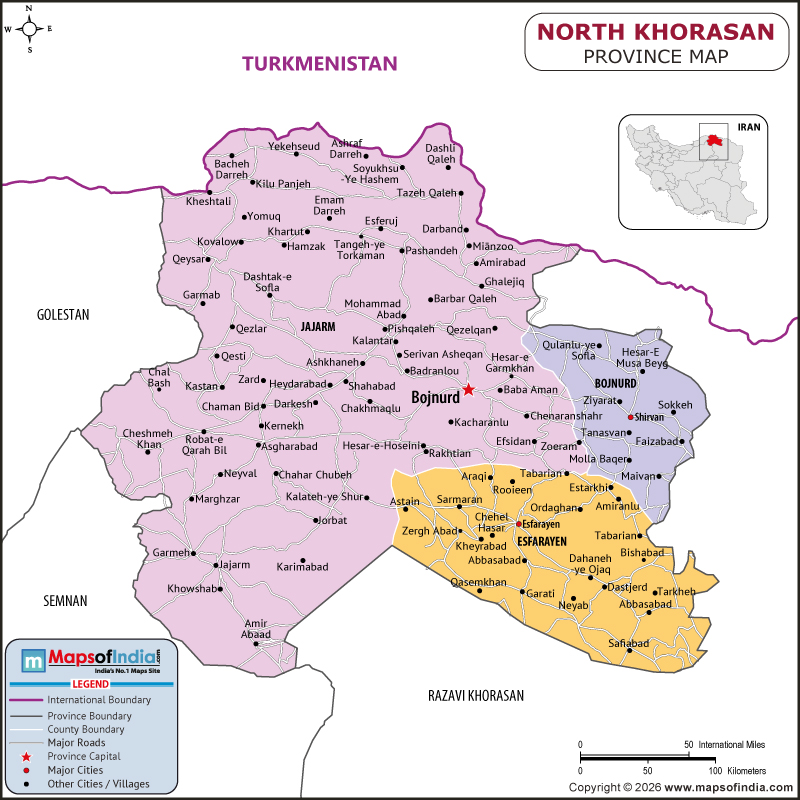



North Khorasan lies in northeastern Iran. It carries a deep and enduring past. The area is marked by its mountains, open plains, and varied communities. Different ethnic groups live here, each preserving and sharing their traditions. Daily life remains humble and closely tied to the land and its long history. Once part of Greater Khorasan—a region of major importance in Iranian history—North Khorasan continues to uphold its old customs while slowly embracing modern changes. Its culture, language, and natural setting shows the legacy of many centuries.
History
North Khorasan is a region in northeastern Iran with a long and layered history. Human settlement in this area dates back to very early times, as the land offered favorable conditions for life. Mountains, rivers, and wide plains made the region suitable for habitation, encouraging people to settle and remain there. Early life was simple but resilient, shaped by close ties to nature.
In ancient times, North Khorasan was inhabited by small tribal communities. These groups initially relied on hunting and later turned to agriculture. Gradually, permanent villages formed where wheat and barley were cultivated, and livestock such as sheep and goats were raised. At first, trade was limited, but over time routes developed that later became important commercial paths. Due to its proximity to the Silk Road, traders passed through the region, bringing goods, ideas, and cultural interaction. During the Achaemenid Empire, North Khorasan became part of the imperial territory.
Afterward, Alexander the Great’s campaigns reached Iran, and North Khorasan experienced periods of conflict. Following Alexander’s death, the region came under the control of Hellenistic rulers for a time. Greek cultural elements blended with local traditions, influencing urban design and art, although local customs and lifestyles largely remained intact.
The rise of the Parthian Empire marked an important era for North Khorasan. Originating from northeastern Iran, the Parthians viewed the region as strategically significant. Trade flourished under their control, and the region benefited from its position along major routes. However, frequent wars, particularly with Rome, meant that peace was not always sustained. The Sasanian Empire later took control, strengthening agriculture and promoting Zoroastrianism. Fire temples were established, though heavy taxation sometimes made life challenging for ordinary people.
In the seventh century, Arab Muslim forces entered Iran, and North Khorasan became part of the Islamic world after a series of battles. Resistance was initially strong, but over time Islam spread across the region. Despite this transformation, the Persian language survived and remained central to daily life. Gradually, Islamic beliefs and Persian traditions merged, forming a new cultural identity.
In later centuries, Turkic tribes moved into the region, and dynasties such as the Ghaznavids and Seljuks ruled North Khorasan. These rulers built mosques, schools, and fortifications, strengthening Islamic institutions. Nevertheless, warfare continued, and many towns suffered damage. Despite hardships, the population endured, with religion playing a central role in everyday life.
Under the Safavid dynasty, North Khorasan became firmly integrated into a unified Iranian state. Shi’a Islam was declared the official religion, bringing major religious changes. Frequent conflicts with Uzbek tribes occurred, and populations were relocated from other regions to help defend the borders. These movements significantly shaped the demographic composition of the province.
During the Qajar era, North Khorasan remained largely rural. Weak central authority allowed tribal leaders to hold considerable power. Life for ordinary people was difficult, with agriculture and herding serving as the main livelihoods. Urban centers were few and small. In 2004, North Khorasan was officially established as a separate province. Today, it is home to diverse ethnic groups, including Kurds, Turkmen, Persians, and others. This diversity reflects centuries of migration, conflict, and coexistence, with the region’s culture, people, and landscape continuing to echo its rich past.
Culture
North Khorasan has a vibrant and living culture shaped by its long history and ethnic diversity. The province is home to various communities, including Kurds, Turkmens, Persians, and other smaller groups. As a result, cultural traditions in the region are rich, varied, and deeply rooted in everyday life. People value their customs and actively preserve them through daily practices and social events.
Family plays a central role in the cultural life of North Khorasan. Family ties are strong, and many people live close to their relatives. Elders are highly respected, and important decisions are often made collectively within the family. Hospitality is considered a core value, and guests are warmly welcomed. Offering food and tea to visitors is a common and meaningful tradition.
Music and dance are essential elements of cultural expression in the region. Kurdish and Turkmen music is especially popular, often performed using traditional instruments such as the dotar. Songs frequently reflect themes of love, nature, history, and folklore. Group dances are commonly performed during festivals and celebrations, characterized by simple movements and lively energy. Music is a vital part of weddings and other joyful gatherings.
Local cuisine reflects the region’s agricultural lifestyle and reliance on local produce. Common foods include bread, rice, dairy products, and meat, often prepared slowly and with care. Fresh herbs are widely used, adding flavor and fragrance to meals. Tea is the most popular beverage and plays an important social role, as people often gather to talk and connect while sharing tea. Food is not only for nourishment but also a symbol of sharing and community.
Religion also influences daily life in North Khorasan. The majority of the population practices Islam, and religious events and rituals are held in high regard. People regularly come together for prayers and religious celebrations, reinforcing a sense of unity.
Handicrafts represent another important aspect of local culture. Carpet weaving is widespread, and many women learn the craft from a young age. The patterns used often reflect local stories, beliefs, and symbols. Felt-making and needlework are also common, combining practical use with artistic expression.
Overall, the culture of North Khorasan is simple, warm, and welcoming. While life in the region may move at a slower pace, it is deeply meaningful. Traditions are passed down from generation to generation, and despite the influences of modernization, people continue to protect their cultural identity. This dedication keeps the culture of North Khorasan strong and alive.
Language
North Khorasan is a linguistically diverse region where more than one language and dialect is spoken. Many residents are multilingual, a result of different ethnic groups settling in the area over long periods of history. This diversity has created a rich mix of languages that gives the region a distinct cultural identity.
Persian is the primary and official language of North Khorasan. It is widely understood and used in schools, government offices, and workplaces. However, many families continue to speak their own local languages at home. Persian is often mixed with regional words and expressions, and the local accent may sound different from Persian spoken in other parts of Iran.
Kurdish is one of the most widely spoken regional languages in North Khorasan. Large Kurdish communities were settled in the region during earlier historical periods, bringing their language with them. Kurdish is commonly used within families and local communities and plays an important role in literature, music, and daily conversation. Older generations tend to speak Kurdish more fluently than younger people.
The Turkmen language is also spoken in certain areas, particularly in the northern parts of the province where Turkmen communities live. Turkmen belongs to the Turkic language family and differs noticeably from Persian in sound and structure. It is used at home as well as during cultural gatherings and is especially prominent in traditional songs and poetry.
In addition, some residents speak Turkish dialects and other small local languages. These languages are often passed down orally rather than in written form. While modern education has increased the use of Persian among younger generations, local languages have not disappeared.
In rural areas, it is common for people to switch easily between languages, using one language at home and another in public or professional settings. This multilingual practice is a normal part of daily life. Language remains a key element of personal and collective identity in North Khorasan, helping people stay connected to their history even as society continues to change.
Geography
North Khorasan is located in northeastern Iran and is known for its highly varied geography. The region includes mountains, plains, valleys, and some semi-arid areas, resulting in diverse landscapes from one place to another. People live in both mountainous areas and low-lying flatlands, adapting their lifestyles to the surrounding environment.
Mountain ranges are one of the most important geographical features of North Khorasan. The Aladagh and Kopet Dag ranges stretch across the province and play a major role in shaping the climate and daily life. Many villages are located near these mountains. Higher elevations generally have cooler temperatures and receive more rainfall and snowfall during winter. These mountains are also the source of small rivers, springs, and seasonal streams.
Between the mountain ranges lie fertile valleys and plains that are suitable for agriculture. In these areas, people cultivate crops such as wheat, barley, and various fruits. However, the land is not equally productive everywhere. In many places, water resources are limited, making farming challenging. As a result, communities often rely on seasonal rivers, underground water, and wells.
The climate of North Khorasan varies depending on altitude and location. Summers are usually hot and dry, especially in lower-lying areas. Winters can be very cold, particularly in mountainous regions, where heavy snowfall is common. During harsh winters, some remote villages may become difficult to access.
Most precipitation occurs during the winter and spring seasons, though overall rainfall is moderate. Periodic droughts can occur, affecting agriculture and daily life. Strong winds are also common in certain parts of the province. The geography and climate of North Khorasan have deeply influenced how people live, work, and settle in the region. Over generations, communities have adapted to these conditions, shaping a way of life closely connected to the land and environment.
Quick Facts
| Country | Iran |
| Region | North Khorasan |
| Area | 28,434 km2 (10,978 sq mi) |
| Population | 863,092 |
FAQs
Q1: What ethnic groups live in North Khorasan?
Many ethnic groups live in North Khorasan, including Kurds, Turkmens, Persians, and several smaller communities. This diversity developed over time as different rulers resettled populations in the region during various historical periods.
Q2: Which languages are widely spoken in the region?
Persian is the main and official language used in education and government offices. However, many residents speak Kurdish or Turkmen at home, and it is common for people to switch between languages in daily life.
Q3: What is the climate like in North Khorasan?
The climate varies depending on location. Summers are generally mild and dry, while winters can be very cold. In mountainous areas, heavy snowfall may occur and can affect transportation and agriculture.
Last Updated on: April 15, 2026

