


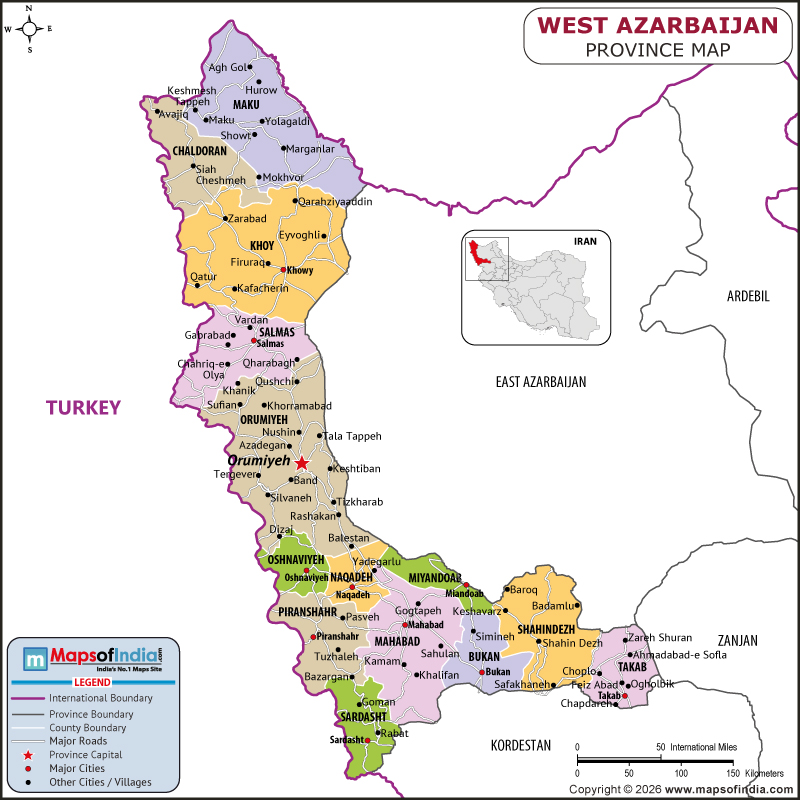



West Azerbaijan is located in Northwest region of Iran. It is renowned for its rich cultural heritage and long history. There are several ethnic groups and customs in the area. The area is shaped by plains, mountains, and Lake Urmia. Different languages and traditions are spoken by the locals. It is crucial for trade and communication with neighboring areas because of its border location.
History
West Azerbaijan has a rich and long past. This area was inhabited by numerous ancient peoples. This country was ruled by numerous empires. Due to its location, the area has always been significant. Mesopotamia, the Caucasus, and Anatolia are all nearby. It became a bridge between various cultures as a result.
West Azerbaijan was a part of early human settlements in antiquity. People lived here thousands of years ago, according to archeological sites. They reared animals and farmed the land.
One of the earliest known kingdoms in this area was the kingdom of Urartu, which was centered around Lake Van and existed from the 9th to the 6th century BCE. The Urartians were skilled stone builders and built forts and irrigation systems, and their remains can still be found in some parts of West Azerbaijan. After Urartu fell, the region was influenced by the Medes. It was an Iranian people who played a significant role in ending Assyrian power.
Greek influence spread throughout the area after Alexander the Great vanquished the Achaemenids. His generals oversaw various regions of the empire after his passing. West Azerbaijan joined the Seleucid Empire. Greek culture had an impact on governments and towns.
The Parthian Empire eventually seized power. Iran was dominated by the Parthians for a number of centuries. They gave local leaders some leeway. During this time, trade grew.
The Sasanian Empire became powerful after the Parthians. From the third to the seventh century CE, the Sasanians governed. Central control was reinforced. The official religion was Zoroastrianism. Numerous locations had fire temples constructed. West Azerbaijan was frequently a boundary area. The region was impacted by conflicts with the Byzantine and Roman Empires.
Arab Muslim forces arrived in the area in the seventh century. Islam gradually gained popularity. The new religion was gradually embraced by the locals. Arabic gained significance in education and administration. Persian language and culture have also endured over time. The area came to be a part of Islam.
West Azerbaijan was governed by many dynasties during the Middle Ages. Larger empires and regional leaders were among them. In the eleventh century, the Seljuk Turks arrived. They introduced Turkic culture and language. A large number of individuals in the area started speaking Turkic. For generations, this influenced the region's identity.
Later, in the thirteenth century, the Mongols conquered the area. Destruction resulted from their invasion. Numerous cities suffered damage. The Mongols eventually established the Ilkhanate. From Iran, they governed. During their reign, trade and art gradually restored. The nearby city of Tabriz rose to prominence.
West Azerbaijan saw continuous transformation during the ensuing centuries. The 16th century saw the rise of the Safavid Empire. Shia Islam became the official state religion under the Safavids. This has a profound effect on society. Numerous places of worship were founded. The Ottoman Empire and the Safavids frequently used the area as a battleground.
The region experienced volatility in the 18th century following the collapse of the Safavids. Different regions were controlled by local khans. Subsequently, the Qajar dynasty established central authority over the area. Boundaries became clearer. The region was impacted by relations with Russia and the Ottoman Empire.
West Azerbaijan saw social and political transformation in the late 19th and early 20th centuries. Trade with nearby areas grew. New concepts crossed national boundaries. The region was also impacted by Iran's Constitutional Revolution. People called for changes and rights.
Culture
West Azerbaijan boasts a vibrant and varied culture. Various communities reside in this area. Every group contributes to the province's cultural life. History, geography, and everyday experiences shape the culture.
A significant portion of the population consists of Azerbaijanis. Their primary language is Azerbaijani Turkish. Their culture is deeply intertwined with music, poetry, and oral traditions. Traditional songs and dances hold significance. Mugham music enjoys popularity in various regions. Individuals frequently perform songs at weddings and celebrations.
Kurds reside in various areas of West Azerbaijan as well. They possess a unique language and traditions. Kurdish music and dance are vibrant and significant. Group performances characterize traditional dances. They are often seen at festivities and social events. The narrative is significant in Kurdish culture as well.
Armenians and Assyrians form smaller groups in the area. They possess a lengthy history in this location. They practice Christianity and possess ancient churches. Religious celebrations significantly influence their cultural existence. They maintain their language, cuisine, and customs with attention.
Family occupies a pivotal position in the cultural framework of West Azerbaijan. Reverence for older individuals holds significant value. Individuals appreciate close family connections. Family gatherings frequently center social life. Hospitality is an important cultural principle. Visitors are handled with utmost attention and friendliness.
Food plays a crucial role in everyday living. The food is uncomplicated and full of taste. Individuals utilize regional components such as grains, dairy products, meats, and vegetables. Meals frequently consist of bread, rice, yogurt, and spices. Eating together is a usual social custom.
Cultural attire is still seen during important events. These garments vary between communities. Colors, patterns, and designs reflect cultural identity. In countryside regions, traditional attire is more prevalent. Crafts such as carpet weaving hold significant value as well. Rugs display regional patterns and craftsmanship
Festivals unite people. Many people celebrate Nowruz. It is the Persian New Year. People cook special meals and tidy their homes. The event includes visits and music. There are many other religious and regional celebrations.
Cultural variety is reflected in language. The area is home to several different languages. Many people are multilingual. This facilitates intercommunal communication.
Language
West Azerbaijan has a multilingual population. This demonstrates the region's cultural variety. Individuals from many ethnic backgrounds coexist. Language is vital to identity and day-to-day existence.
The most common language in the area is Azerbaijani Turkish. It is widely used in the marketplace and at home. The language is Turkic. It is delivered in an easy-to-understand manner. This language is frequently used in folktales and songs.
Many individuals also speak Kurdish. In many cities and villages, it is typical. Various dialects of Kurdish are spoken. Everyday conversations and cultural gatherings are conducted in Kurdish. It contributes to the preservation of Kurdish history and customs.
Iran's official language is Persian. It is utilized in government operations, workplaces, and educational institutions. Persian is understood by most individuals. In addition to their own tongue, many speak it. Persian facilitates communication amongst individuals from various regions of the nation.
The Armenian community speaks Armenian. It is typically utilized in houses, community centers, and churches. Religious and cultural life are intimately associated with the Armenian language. Assyrian Christians speak Assyrian. The language is quite old. It is utilized in family life and prayers.
People speak more than two languages in some places. Cities and border areas frequently experience this. Children are frequently exposed to a variety of languages as they grow up. This helps in their comprehension of various cultures.
Geography
West Azerbaijan is situated in Iran's northwest. The landscape of the area is rich and varied. The terrain is shaped by rivers, lakes, plains, and mountains. Climate, agriculture, and daily living are all impacted by this natural variety.
A significant portion of the area is covered by many mountain ranges. The Zagros range includes these mountains. In many places, they provide pleasant summers and chilly winters. Wintertime brings a lot of snow. The mountains safeguard the area and serve as natural boundaries.
Between the mountains lie lush lowlands. Both cultivation and habitation are supported by these plains. Crops like wheat, barley, and fruits are grown by humans. In certain places, orchards are common. Rainfall and river water make the land good for farming.
The region's most significant natural feature is Lake Urmia. It is among the Middle East's biggest salt lakes. There used to be fauna and birds in the lake. The water level has decreased in recent years. The lake is being restored and protected.
West Azerbaijan is traversed by several rivers. These rivers supply water for daily usage and cultivation. They also support the upkeep of green spaces. Lake Urmia is the destination of certain rivers. Others spill into nearby areas.
West Azerbaijan's climate varies depending on where you are. It's cooler in mountainous locations. The plains are drier and warmer. Most places have modest rainfall. Different plants and animals may thrive because of this diversity.
West Azerbaijan shares borders with other countries. It shares borders with Azerbaijan, Iraq, and Turkey. It is crucial for trade and travel because of its position. The area is connected to neighboring locations by roads and passes.
Quick Facts
| Country | Iran |
| Region | West Azerbaijan |
| Area | 37,437 km2 (14,455 sq mi) |
| Population | 3,265,219 |
FAQs
Q1: Which languages are spoken in West Azerbaijan?
Azerbaijani Turkish, Kurdish, Persian, Armenian, and Assyrian are spoken in the region.
Q2: What is the climate of the region?
The climate of West Azerbaijan is diverse. Winters in mountainous regions are chilly and covered in snow. The weather is warmer in plains. In general, summers are cool to warm. Most places have modest rainfall. Farming, grazing, and a variety of plant life are all supported by the climate.
Q3: What are the main occupations in the region?
Farming, animal husbandry, and trade are common occupations.
Last Updated on: April 15, 2026

