


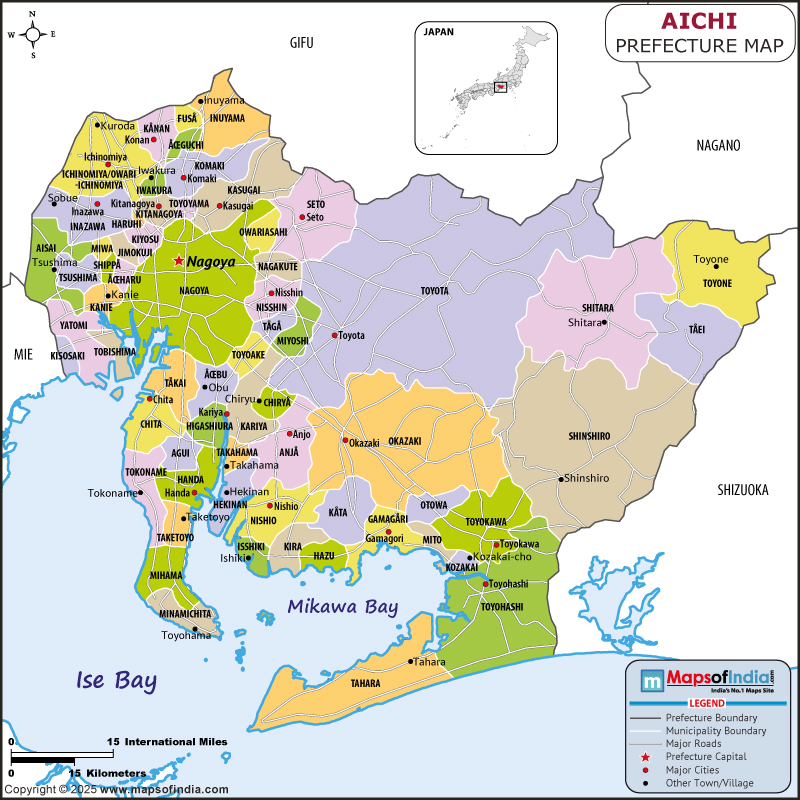



Aichi is a scenic and vibrant prefecture right in the centre of Japan. It borders Tokyo and is accessible by train or bus. Nagoya, the capital, is one of Japan's largest cities and has numerous shops, parks, and restaurants. Meanwhile, Aichi maintains its peacefulness and state of nature with rivers, beaches, and green fields. The prefecture is renowned for production, in the form of car manufacturing, but also possesses a couple of traditions that are enjoyed by the people. Tourists are able to view historic castles, cultural festivals and tasty food that reflect the region's culture. If you're interested in history, nature or trying some new foods, there's something for everyone within Aichi. It is a perfect place for families, tourists and students alike to experience the best of contemporary living and breathtaking landscapes in Japan.
History
Aichi has an interesting and rich history that demonstrates how the area developed over time. In the beginning, individuals dwelled in riverside and seaside villages. They were farmers, fishermen, and workers. The fact that Aichi is located close to the sea and the surrounding areas contributed to the area developing into a central area for trade and transportation.
During the Edo period (1603–1867), Aichi became a strategic area since it was located between Kyoto and Edo (modern-day Tokyo). The Tokugawa clan, which was one of Japan's powerful samurai clans, had an impact on the area. Nagoya, which is the capital of Aichi, was a thriving castle town. The castle was built in 1612 and drew many labourers, merchants and families to the city. Rice, cloth and other goods were sold by individuals, and this strengthened the economy.
In the Meiji period (1868–1912), Japan changed quickly, and so did Aichi. Roads and railways were built, and it was easy to travel from city to city. Factories were established, and schools and hospitals opened. Others moved to Aichi to work and study.
Aichi’s history took a big turn when Toyota Motor Corporation began its work in the city of Toyota in the 1930s. This helped Aichi become a centre for car making. Over the years, the industry grew, and many other companies started factories in the region. Today, Aichi is known worldwide for its technology and industrial production, especially cars.
Following World War II, Aichi was damaged but returned stronger than ever before. Citizens worked together to rebuild the city and its facilities. Roadways, schools and hospitals were restored, and new industry moved in. Folks settled in, and Aichi was a highly desirable place to reside.
With increasing development, Aichi never loses respect for its heritage. Traditional sites such as Inuyama Castle and Okazaki Castle remind people of the period of the samurai. Traditional festivals such as the Owari Tsushima Tenno Matsuri continue traditional practices. Local cultural centres and museums educate tourists on the region's history and art.
Aichi is more than a history of wars and trade. It is also a history of individuals, families, and communities. Efforts have been made over generations to build a peaceful and welcoming environment. The current residents are proud of the culture and tradition that they have inherited.
In short, Aichi's history is one of coexistence, growth and strength. From its early days as agricultural villages to today's industrial metropolis, Aichi has retained itself while continuing to grow. Whether you're interested in samurai castles or the automobile industry, Aichi's history goes a long way toward explaining its future and present day status. It's a place where tradition and modern life mix in perfect harmony.
Culture
Aichi also has both traditional and modern culture. The people who live here like preserving their old ways as well as learning about new ways of living. This coexistence makes the Aichi culture unique and open to tourists from all over the world.
Among the most important things about Aichi culture are its festivals. The Owari Tsushima Tenno Festival is one of the longest and most exciting ones in the area. Citizens gather to watch concerts, dances and ornate floats. Another popular event is the Inuyama Festival, where regional traditions are showcased through processions and shows. These festivals afford families time to spend with one another and show their affection for their home.
The prefecture has its own cooking style that is enjoyed by many. Misokatsu, a pork cutlet topped with luscious miso sauce, is one such popular dish. Hitsumabushi, grilled eel served over rice, is another favourite. Most restaurants utilise local produce, and tourists savour freshly caught seafood from the nearby ocean. The food remains the core of Aichi life because it brings individuals together and expresses the history of the land.
There are traditional arts and crafts in Aichi. Tokoname pottery is an extremely old form of Japanese pottery. Tourists can walk down pottery streets to see workshops where skilled artisans craft elegant work. Some families have made pottery for centuries, passing along their knowledge and techniques. These crafts are a way of reaching back into the past to make something used on a daily basis.
Football and baseball clubs are loved by kids and adults. Students are encouraged by local schools to engage in sports, learning how to work together and stay healthy. Families enjoy watching games together, which is an excellent way to socialise and have fun.
Aichi also appreciates nature in its culture. Beaches and parks are where families like to spend their time. People come together in spring to watch cherry blossoms bloom and in autumn to watch the coloured leaves.
In spite of the emergence of new houses and enterprises, Aichi still maintains its cultural character. Ancient castles, shrines and hometown industries speak of the pride of heritage among the people. On the other hand, new schools and playgrounds provide means of education and development.
Aichi’s culture is about sharing, learning, and living together. It is open-minded toward new ideas as well as ancient customs and therefore a space for all the visitors. Whether you have attended a festival, enjoyed the regional cuisine or even relaxed in nature, there is something in Aichi culture that suits everyone.
Language
The official language of Aichi is Japanese. People of the prefecture speak standard Japanese at school, in offices and in stores. Locals also have a special local dialect, Nagoya-ben. It has words and terms of expression that differentiate it from the official one. Tourists might be addressed with varying pronunciations or words when they converse with individuals in towns or markets.
In cities like Nagoya, there are also English menus and signs. This helps tourists and visitors understand directions or try food without any difficulty. English is being learnt by most of the youngsters in schools so they can communicate while travelling or working with other foreigners.
Although Japanese is the indigenous language, locals of Aichi are friendly and accommodating to visitors. It makes your experience even more amazing if you know a few basic words in Japanese, such as 'hello' or 'thank you'. It indicates that you have respect for the culture, and it makes it easy for you to interact with others.
Aichi's language reflects its traditions and history. No matter if you are touring old castles or shopping at local markets, hearing the surrounding language puts you closer to the people and culture.
Geography
Aichi is a province in the middle part of Japan on Honshu Island. It is in the Chubu region and is surrounded by mountains and the sea. The landscape of Aichi is thus varied, from green meadows to shores. Because of its central location, Aichi is easily reached from most parts of Japan, and this makes it linked with other cities.
The capital of Aichi is Nagoya, which is a dense and urban city. There are many small towns and rural and farming regions surrounding it. The landscape in Aichi is relatively flat and is good for farming and city development. The Nobi Plain in the northern section of the prefecture is among the biggest flat areas in Japan. It is used mainly for rice and vegetable farming, and many farmers earn a livelihood here.
Aichi also has mountains, which lie primarily on the western border of the prefecture. The mountains are forested and provide breathtaking views to those visiting them. The mountains have snow during winter and are ideal for hiking and nature observation during summer.
The south region of Aichi is close to the sea. The Chita Peninsula and Atsumi Peninsula have long coastlines with beaches and fishing towns. The sea is a part of daily life. The people get fresh seafood, and many restaurants have good food made of it. You can reside by the sea or walk along the coast too.
There are many rivers running through Aichi, including the Kiso River and the Toyo River. The rivers bring water to the earth and assist in the cultivation of the land. Gardens and parks are usually constructed next to the rivers, so the rivers are lovely to look at.
Aichi geography remains in touch with both industry and nature. The soil is suitable for agriculture and residence, and the sea provides resources and beauty. Mountains and rivers keep the environment fresh and serene. Despite being modern, the prefecture remains safe and clean in its natural environment.
In short, Aichi is a combination of low plains, mountains, seashore and river geographically. Land and sea provide livelihoods for human life, from farming to fishing to urbanisation. You may choose to visit parks, relish fresh harvests or just relax at the sea, as Aichi's geography is full of good and interesting spots to visit.
Quick Facts
| Official Name | Aichi |
| Capital | Nagoya City |
| Area | 5,165 km² |
| Population | Approximately 7,500,000 |
| Currency | Japanese Yen (JPY) |
| Religion | Shinto and Buddhism (major), Christianity and others (minor) |
| Language | Japanese (official), local dialects also spoken |
FAQs
Q1: What dishes in Aichi must I try?
Tourists must not forget misokatsu, hitsumabushi (grilled eel on rice), and tenmusu (tempura shrimp on rice and seaweed). Hatcho miso is also favoured in the region.
Q2: What outdoor activities can I do in Aichi?
Outdoor activities in Aichi include hiking on the Nobi Plains, cycling at the Chita Peninsula, and beach hopping for swimming and fishing.
Q3: What are some tourist spots in Aichi?
Popular spots are Nagoya Castle, Inuyama Castle, Toyota Automobile Museum, and Tokoname Pottery Footpath.
Q4: How do I experience traditional Aichi culture?
You can experience traditional culture through local festivals, sightseeing at locations with histories, and walking around craft workshops in cities such as Tokoname and Asuke.
Last Updated on: April 15, 2026

