


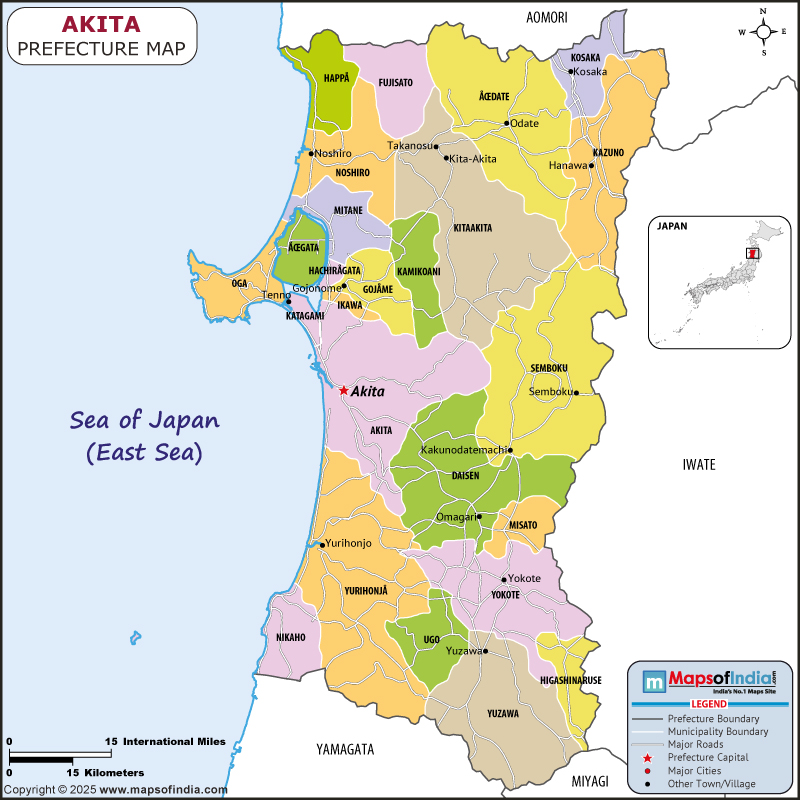



Akita is a lovely prefecture in northern Japan, situated on the largest island of Honshu. It is renowned for its natural landscape, hot springs, rice paddies, and ancient heritage. Most tourists go to Akita to witness its serene rural landscape, vibrant celebrations, and delicious foods. In contrast with large cities like Tokyo and Osaka, Akita is a less stressful place with nature and tradition intertwined. It is bordered by mountains, lakes, and the Sea of Japan. From winter snows to autumn rice harvesting, Akita presents the authentic rural spirit of Japan.
History
The history of the Akita is ancient and is closely bound to the land, the people, and their customs. Human beings had inhabited the area since the Jomon era, thousands of years ago. Pottery, tools, and villages that have been found to have been abandoned by human beings in Akita indicate that human beings survived on hunting, fishing, and agriculture even in prehistory. The good natural environment of Akita, with rivers, forests, and fertile lands, provided shelter for early communities to live and develop.
Over the subsequent centuries, rice cultivation became the focal point of life in Akita. Climate and soil conditions established in the area a proper climate for rice cultivation, and rice influenced the economy and culture also. Akita rice, i.e., the rice that is currently known as Akita Komachi, became a synonym for quality. Farmers engaged in planting, harvesting, and festival-making over the cycle of the rice together, and rice became the foundation of life within the prefecture.
In feudal rule, Akita was ruled by samurai clans. Among all the clans related to the history of Akita, perhaps the most famous is the Satake clan. They ruled the region for centuries, establishing rice farming, trade, and castle and town growth. The life of the samurai dominated Akita and can now be seen in cultural monuments and traditional festivals. Museums and historical places give people the opportunity to see how people lived before.
As Japan modernised in the late 19th century, Akita also began to change. Trains were constructed that made it easier to connect with the rest of Japan. Akita maintained its firm roots in nature and agriculture despite the development of modern industries. Agriculture continued to be at the forefront of life despite the growing modern industry.
The 20th century was a time of development and hardships. Akita, as well as the rest of Japan, suffered through World War II. The postwar era saw the region fighting to rebuild itself, once more concentrating on agriculture, forestry, and fishing. The citizens came together and rebuilt, and Akita resumed its peaceful existence.
Now, Akita's past is commemorated with festivities, customs, and everyday life. Festivals such as the Akita Kanto Festival, in which people walk along poles carrying lanterns, have their roots in harvest prayers. The Namahage tradition from ages past still instills discipline and protection in families. These are a few ways in which the past is preserved in the daily lives of Akita's people.
Akita's past is the history and tradition of the land. From earliest settlement to samurai control, and from transformation in today's time to preservation of culture, Akita has been in sync with holding tradition alongside progress. Its past is not a description of the past but an extension of how the Akitan people have kept their tradition alive.
Culture
The Akita culture is rich, warm, and deeply rooted in its traditions, nature, and lifestyle. The citizens of Akita have always lived in harmony with the earth and with the changing seasons. The heavy snows, harsh winters, and rich rice fields influenced their traditions, festivals, cuisine, and everyday lifestyle.
One of the most renowned aspects of Akita's culture is its festivals. The Akita Kanto Festival is famous throughout Japan. The dancers carry tall bamboo poles with strings of paper lanterns at the top during this season. The poles stand twelve metres tall and weigh a few kilograms. The view of glittering lanterns swaying against the dark sky is stunning and reminiscent. This is a celebration that started with praying for a harvest and, to date, represents the extent of agriculture's connection to communal life in Akita.
The Namahage tradition is another cultural treasure. It is observed during New Year in the Oga Peninsula region of Akita. Men wear Namahage demon costumes and straw robes and go door to door at night. They roar to the children, enquiring if they have been good. The Namahage are greeted with food and beverages by the families. This old practice is loaded with respect and discipline values, in addition to repelling evil spirits from homes. It has been a strong symbol of Akita's unique culture.
Food is also a crucial aspect of residing in Akita. Rice is well known, most notably Akita Komachi, considered one of the best in Japan. Rice has served as a foundation for a large number of traditional foods to be created from it. Kiritanpo is one such staple food, produced by grilling the pounded rice on sticks and normally served within hot pot soups with vegetables and chicken. Akita is famous not only for its sake, since the clean water and high-class rice make a fine and delicious drink. Sake and communal food consumed on holidays or reunions are a central element of Akita hospitality.
The Akita's heavy snow has also influenced local tradition. During winter, in certain villages, locals construct snow huts named Kamakura. The families inside the huts dine and drink beverages while offering prayers for the safety of water in the coming year. The practice provides an inviting atmosphere despite the cold weather outside.
Handicrafts and paintings are also integral to the culture of Akita. Handicrafts like Kabazaiku are made by craftsmen from the local area; they are handicrafts made from cherry bark. The handicrafts are polished exquisitely to a dazzling shine and are used in making tea boxes and other home decor. They show the patience and craftsmanship of people of Akita. Folk songs and dance are another cultural heritage that is transferred and sung at local festivals.
Akita culture is also the community spirit. Villages and towns usually unite to celebrate seasons, harvests, and festivals. They continue even in present times because individuals hold on to their heritage and innate relationship. Tourists have been known to experience the warmth and generosity of Akita residents, which is being described as one of the prefecture's most strong cultural characteristics.
In general, Akita culture is defined by its rice paddies, snowy winters, festive atmosphere, and close neighbourhood relationships. It is a culture that exists in the present but looks back with respect, so Akita is one of the most interesting areas in Japan.
Language
Japanese is Akita's predominant language. The inhabitants of Akita also possess a regional dialect known as the Akita-ben. The Akita-ben has an alternative sound and some words that are sometimes difficult to read for non-Akitans. For instance, certain words in Akita-ben have an extremely variant sound from usual Japanese, making the regional language distinct.
The Akita dialect itself is also one of the pillars of regional culture. It is proof of past geographical isolation, in which mountains made it difficult to travel from place to place. Although youths of today use standard Japanese at work and in school, Akita-ben is maintained in everyday life, particularly by elderly individuals.
Ainu, natives of the area also initially inhabited northern regions of Japan, like Akita. The area had adopted some of their culture and language, but now the native Japanese is spoken by the inhabitants of Akita. Travellers in Akita will discover regular Japanese dominating along with the native tongue, so the language used is diverse and interesting.
Geography
Akita's topography significantly affects its way of life, economy, and culture. Akita lies in the Tohoku area on the north-western coast of Honshu, Japan's largest island. It is bordered by mountains on the west and the Sea of Japan on the other sides, so Akita is blessed with sea and mountainous regions, which lead to the difference and the beauty of the region.
Akita's coastline is roughly 250 kilometres along the Sea of Japan. Delicacies such as fresh fish, squid, and crabs are an important component of coastal food. Coastal fishing villages subsist on the sea, and seaports also play a secondary role in trade. Sea climate also influences the Akita climate, where massive snowfall occurs in winter and refreshing summer winds blow. Akita has numerous famous festivals and a characteristic culture.
Akita is mountainous, forested, and has broad plains. The Ou Mountains are a natural border along the eastern boundary of the prefecture with surrounding territories. There are hot springs, ski resorts, and walking trails in the mountains. Mount Chokai on the Akita-Yamagata border is one of the most visited peaks. It is also called "Dewa Fuji" due to its resemblance to Mount Fuji. The mountain, apart from being a favourite destination for hiking, is also a major source of water supply for agricultural purposes.
Much of the landscape of Akita is also characterized by huge rivers that run across the region. Among the largest ones are the Omono River, Yoneshiro River, and Koyoshi River. These rivers run from the mountains to the Sea of Japan and have good soil for rice cultivation. Due to these rivers, Akita has been found to be among the best to cultivate rice in the entire nation for centuries. Rice fields cover vast stretches of the flat plains, particularly in the central region of the prefecture, with their emerald and amber hues based on the seasons.
Quick Facts
| Official Name | Akita Prefecture |
| Area | 11,637 km² |
| Population | Approximately 950,000 |
| Currency | Japanese Yen (JPY) |
| Religion | Shinto and Buddhism (major), Christianity and others (minor) |
| Language | Japanese (official), regional dialects also spoken |
FAQs
Q1: Where is Akita situated in Japan?
Akita is situated in the Tohoku region on Honshu's northwest coast in Japan. It is surrounded by mountains and encircled by the Sea of Japan.
Q2: What is Akita known for?
Akita is known for rice, hot springs, sake, Akita Inu dogs, and traditional festivals such as the Kanto Festival.
Q3: What is Akita's special food?
Akita is famous for Kiritanpo, which are grilled rice sticks that individuals prefer to have in hot pots, and fine sake produced from clean water and high-quality rice.
Q4: Is Akita worth visiting all year round?
Yes, Akita has something in every season. Winter is best for the snow festivals, spring has the cherry blossoms, summer is best for the festivals, and autumn has coloured leaves.
Last Updated on: April 15, 2026

